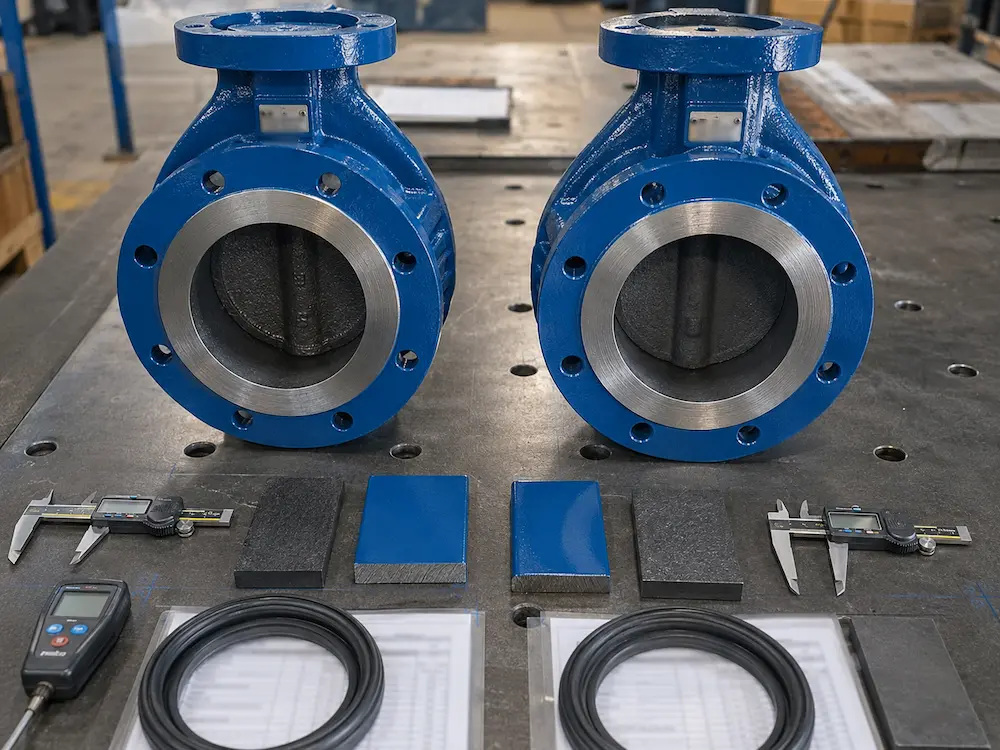
Cast iron vs ductile iron valve material is a common question in waterworks, wastewater, HVAC, fire protection, irrigation, and general utility pipeline projects. Both materials are used for valve bodies in butterfly valves, gate valves, check valves, strainers, air valves, and other low-to-medium pressure industrial valves.
Cast iron and ductile iron may look similar from the outside, especially after epoxy coating or paint. However, their mechanical performance is different. Ductile iron generally has better toughness, impact resistance, and strength than ordinary cast iron, which makes it more suitable for many modern water and wastewater valve applications.
This guide explains the difference between cast iron and ductile iron valve materials, when to choose each one, how coating and lining affect service life, and what buyers should confirm before ordering. For a broader overview of valve body, trim, seat, seal, gasket, and bolting materials, read our valve material selection guide.
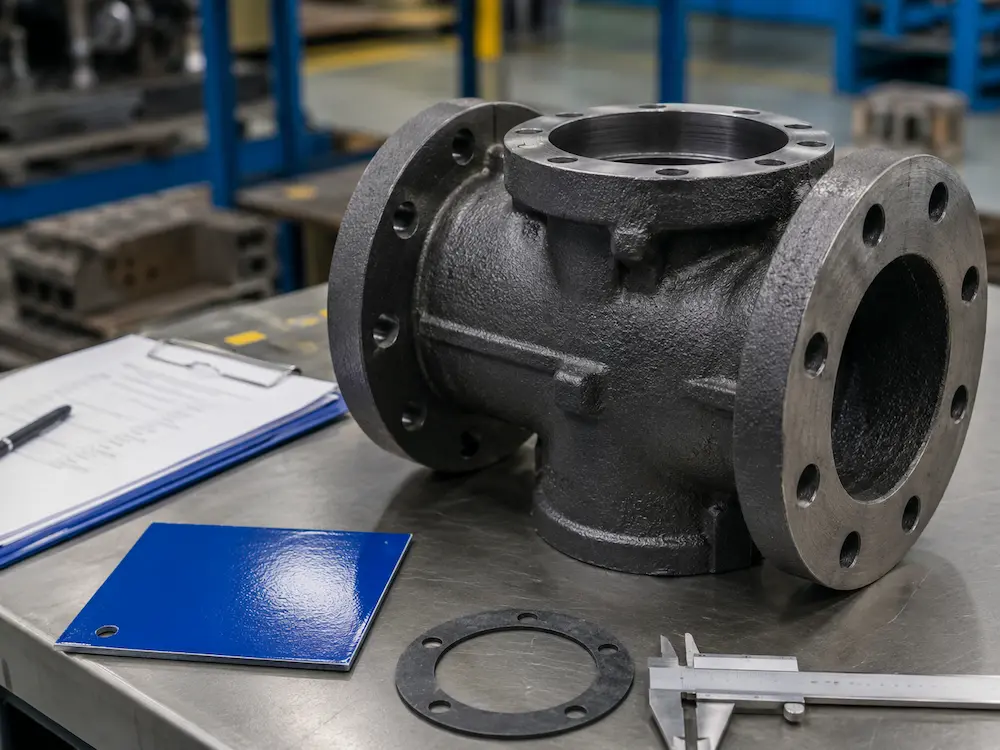
What Is Cast Iron Valve Material?
Cast iron is a traditional valve body material used in many water, HVAC, drainage, irrigation, and general utility systems. It is economical, widely available, and easy to cast into valve bodies with complex shapes.
Cast iron valves are commonly used where pressure, temperature, impact load, vibration, and mechanical stress are not severe. They are often selected for basic water service, low-pressure pipelines, building systems, and general non-critical applications.
Typical cast iron valve applications include:
- Low-pressure water pipelines
- HVAC chilled water and cooling water systems
- Building utility systems
- Irrigation systems
- Drainage and general water service
- Basic butterfly valves, gate valves, and check valves
- Cost-sensitive utility projects
Cast iron should not be selected for high-pressure, high-impact, severe vibration, high-temperature, steam, oil and gas, or critical industrial service without careful engineering review.
What Is Ductile Iron Valve Material?
Ductile iron, also called nodular cast iron or spheroidal graphite iron, is an improved iron casting material with better toughness and strength than ordinary cast iron. It is widely used in modern waterworks, wastewater, fire protection, and municipal valve applications.
Ductile iron is commonly used where buyers need better impact resistance, pressure capability, and long-term reliability than ordinary cast iron can provide. Many resilient seated gate valves, butterfly valves, check valves, and waterworks valves use ductile iron bodies with epoxy coating or rubber lining.
Typical ductile iron valve applications include:
- Municipal water supply
- Wastewater treatment
- Fire protection systems
- Water distribution networks
- Pump stations
- Buried pipeline systems
- Rubber lined butterfly valves
- Resilient seated gate valves
Ductile iron is often preferred over cast iron when the valve must handle higher pressure, buried installation, pipeline stress, external load, or more demanding water service.
Cast Iron vs Ductile Iron Valve Material: Main Difference
| Item | Cast Iron Valve | Ductile Iron Valve |
|---|---|---|
| Material Type | Traditional iron casting material | Nodular / spheroidal graphite iron casting material |
| Main Strength | Economical and widely available | Better toughness, strength, and impact resistance |
| Pressure Capability | Suitable for many low-pressure services | Better for low-to-medium pressure and many municipal systems |
| Impact Resistance | Lower | Higher |
| Common Applications | Basic water, HVAC, irrigation, drainage | Waterworks, wastewater, fire protection, buried service, pump stations |
| Cost | Usually lower | Usually higher than cast iron |
| Main Risk | Brittle failure risk under impact or stress | Needs proper coating, lining, and corrosion protection |
Why Ductile Iron Is Stronger Than Cast Iron
The main advantage of ductile iron is its graphite structure. Ordinary cast iron is more brittle, while ductile iron has a nodular graphite structure that improves toughness and impact resistance.
For valve buyers, this means ductile iron is usually more forgiving in real pipeline conditions. Water pipelines may experience installation stress, buried load, water hammer, pump vibration, flange misalignment, and operating impact. Ductile iron can better handle these conditions than ordinary cast iron in many applications.
Ductile iron is often preferred when:
- The valve is installed underground
- The pipeline may experience external load
- The valve is used near a pump station
- Water hammer or pressure fluctuation is possible
- The valve size is large
- The project requires better mechanical reliability
- The valve is used in municipal or fire protection service
Pressure Rating Considerations
Pressure rating is one of the most important factors when comparing cast iron and ductile iron valves. Cast iron is commonly used in low-pressure applications, while ductile iron is more suitable for many low-to-medium pressure water and wastewater systems.
The final pressure rating does not depend only on material name. It also depends on valve design, wall thickness, flange standard, face-to-face standard, seat structure, coating, testing standard, and manufacturer design.
Buyers should confirm:
- Nominal pressure rating, such as PN10, PN16, PN25, Class 125, or Class 150
- Valve design standard
- Flange drilling standard
- Hydrostatic test pressure
- Seat test requirement
- Pipeline pressure and pressure surge risk
- Whether water hammer may occur
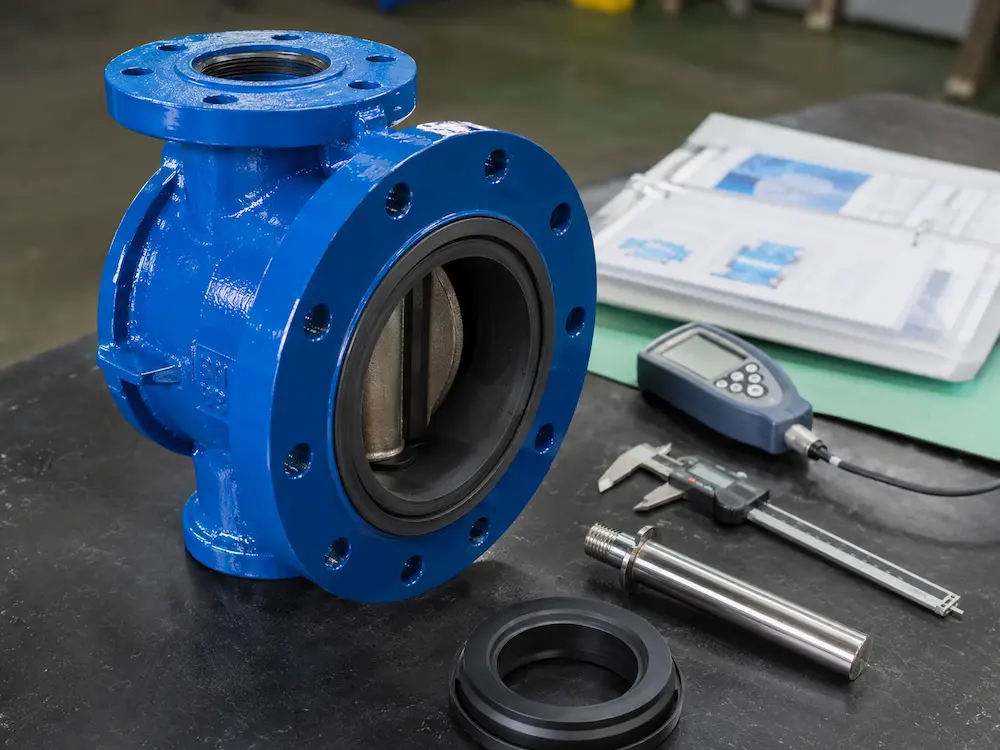
Corrosion Protection: Coating and Lining Matter
Cast iron and ductile iron both need corrosion protection in many water, wastewater, buried, and outdoor applications. The valve body material alone does not guarantee long service life.
Common protection methods include:
- Epoxy coating
- Fusion bonded epoxy coating
- Rubber lining
- Internal and external coating
- Disc coating
- Corrosion-resistant shaft material
- Suitable bolting and fasteners
For water and wastewater service, ductile iron with epoxy coating is a common solution. For abrasive or corrosive wastewater, rubber lined or specially coated valve designs may be more suitable.
For lined valves, buyers can review Vcore Valve’s rubber lined valve range.
Cast Iron vs Ductile Iron by Valve Type
Butterfly Valves
Cast iron and ductile iron are both used in butterfly valve bodies. Cast iron may be used for basic low-pressure water or HVAC service. Ductile iron is often preferred for water treatment, wastewater, fire protection, and municipal pipeline systems where better toughness is required.
Butterfly valve buyers should also check disc material, shaft material, liner material, seat material, and flange standard. For example, an EPDM lined butterfly valve may use ductile iron or cast iron body construction depending on pressure and project requirement.
Gate Valves
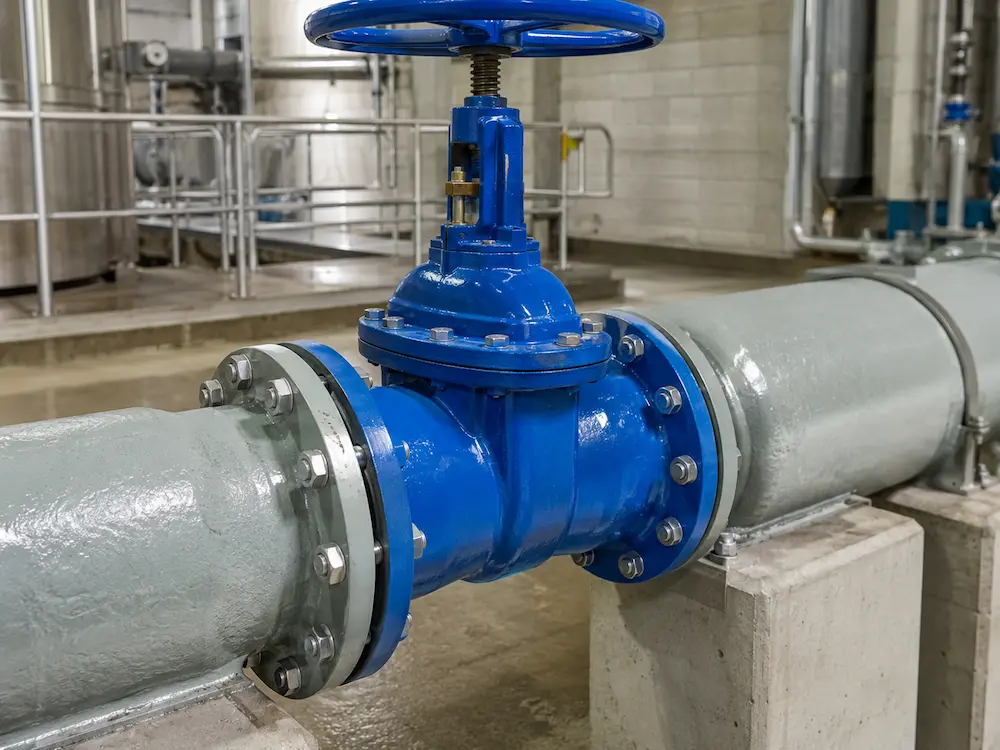
Ductile iron is widely used for resilient seated gate valves in water supply, wastewater, and fire protection systems. Cast iron gate valves may be used in some basic systems, but ductile iron is generally preferred for stronger pressure and impact performance.
For waterworks applications, buyers can review Vcore Valve’s ductile iron gate valve.
Check Valves
Cast iron and ductile iron check valves are used for water and wastewater backflow prevention. Ductile iron is often preferred near pump discharge lines because check valves may experience disc impact, pressure surge, vibration, and water hammer.
For broader selection details, read our industrial check valves selection guide.
Strainers and Air Valves
Cast iron and ductile iron are also used for strainers, air release valves, and utility pipeline accessories. The correct choice depends on pressure rating, medium, installation environment, and maintenance requirement.
Cast Iron vs Ductile Iron by Application
Water Treatment
Both cast iron and ductile iron valves may be used in water treatment systems. Ductile iron is often preferred for larger sizes, higher pressure, outdoor installation, and longer service life. EPDM seats and epoxy coating are common in many water treatment valve designs.
Wastewater
Wastewater may contain solids, chemicals, biological media, and corrosive components. Ductile iron with suitable coating or rubber lining is often more reliable than unprotected cast iron. Seat material and lining material should match the wastewater condition.
HVAC Systems
Cast iron valves may be suitable for many HVAC chilled water and cooling water systems where pressure and corrosion risk are controlled. Ductile iron may be selected when higher pressure, larger size, or better mechanical reliability is required.
Fire Protection
Ductile iron is commonly used in fire protection valves because strength, reliability, coating, and pressure rating are important. Buyers should follow applicable project standards and fire system requirements.
Buried Pipeline Systems
Buried valves may experience soil load, external corrosion, moisture, and access limitations. Ductile iron with suitable coating is often preferred for buried water and wastewater pipelines. Buyers should also consider valve box, extension stem, corrosion protection, and maintenance access.
For underground installation, read our buried valve guide.
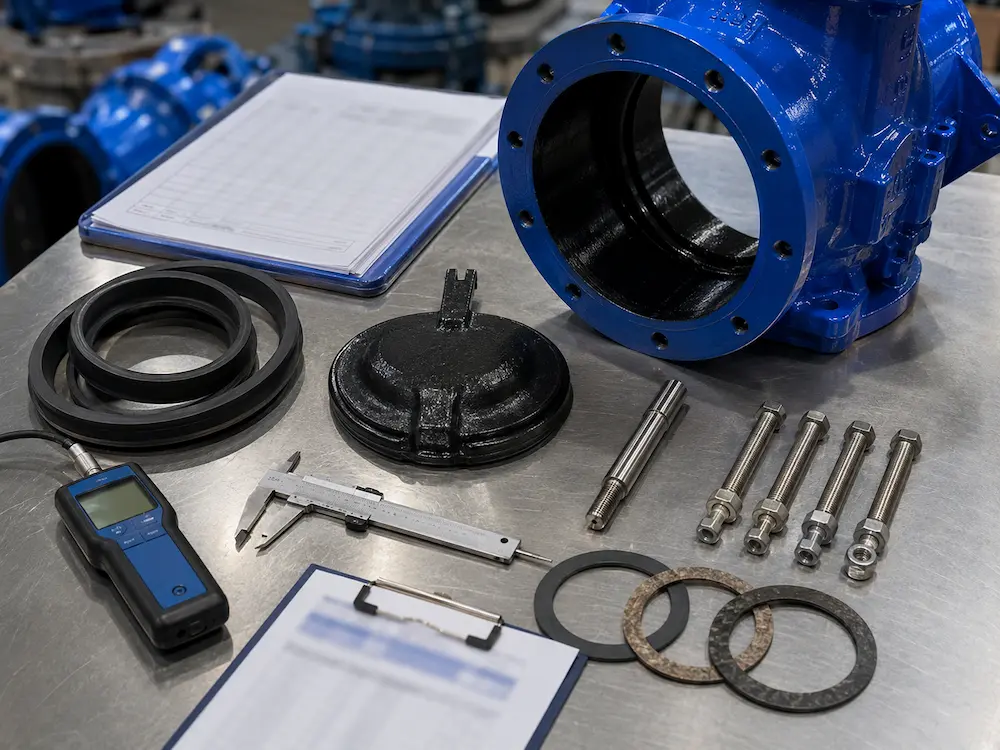
Seat, Disc, Stem and Bolting Materials Still Matter
Choosing cast iron or ductile iron body material does not complete the valve selection. The valve’s internal and external components must also match the service condition.
Buyers should check:
- Seat material: EPDM, NBR, PTFE, FKM, natural rubber, or metal seat
- Disc material: ductile iron coated disc, stainless steel, bronze, or project-specified material
- Stem material: stainless steel, carbon steel, or corrosion-resistant alloy
- Coating: epoxy, FBE, rubber lining, or special coating
- Bolting: carbon steel, stainless steel, galvanized, or coated bolting
- Gasket material and flange compatibility
For seat compatibility, read our valve seat materials selection guide.
Cast Iron vs Ductile Iron: Which Is Better?
Ductile iron is generally stronger and tougher than cast iron, but that does not mean ductile iron is always required. Cast iron can still be economical and practical for many low-pressure, non-critical water and HVAC applications.
The better material depends on pressure, pipeline stress, installation environment, impact risk, corrosion condition, service life expectation, and project specification.
| Question | Choose Cast Iron If | Choose Ductile Iron If |
|---|---|---|
| Is the pressure low? | Yes, and project allows cast iron | Pressure is higher or reliability margin is needed |
| Is impact or vibration possible? | Low impact and stable pipeline condition | Pump station, buried pipeline, surge, or vibration risk exists |
| Is cost the main concern? | Cost-sensitive basic service | Higher cost is acceptable for better toughness |
| Is the valve used underground? | Only if allowed and protected | Often preferred with suitable coating |
| What is the application? | Basic water, HVAC, irrigation, drainage | Waterworks, wastewater, fire protection, municipal systems |
Common Mistakes When Selecting Cast Iron or Ductile Iron Valves
Mistake 1: Treating Cast Iron and Ductile Iron as the Same
They are both iron casting materials, but ductile iron has better toughness and impact resistance than ordinary cast iron.
Mistake 2: Using Cast Iron Where Impact Load Is Possible
Cast iron may be vulnerable under impact, vibration, or severe pipeline stress. Ductile iron should be reviewed for more demanding conditions.
Mistake 3: Ignoring Coating and Lining
Iron-based valve bodies need proper protection in many water, wastewater, buried, or outdoor applications. Coating and lining are critical for service life.
Mistake 4: Selecting Body Material Only
A ductile iron body does not guarantee good performance if the disc, stem, seat, gasket, or bolting material is unsuitable.
Mistake 5: Ignoring Water Hammer
Pump discharge systems may create pressure surge and impact. Valve type, material, disc structure, and closing behavior should all be reviewed.
Mistake 6: Choosing Only by Price
Cast iron may reduce initial cost, but ductile iron may reduce replacement risk in demanding water and wastewater applications.
Information Buyers Should Provide Before Quotation
- Valve type: butterfly, gate, check, strainer, air valve, or other valve type
- Valve size and pressure rating
- Required body material: cast iron, ductile iron, or project-specified material
- Medium: clean water, wastewater, cooling water, slurry, or other fluid
- Operating pressure and test pressure
- Operating temperature
- Installation type: indoor, outdoor, buried, pump station, or marine environment
- Whether water hammer or pressure surge is possible
- Required seat, disc, stem, gasket, and bolting materials
- Required coating or lining
- Flange standard and face-to-face standard
- Required inspection and test documents
Related Valve Material Guides
- Valve Material Selection Guide — main guide for valve body, trim, seat, seal, gasket, and bolting materials.
- Valve Seat Materials Guide — explains EPDM, NBR, FKM, PTFE, PEEK, graphite, and metal seat selection.
- Industrial Check Valves Selection Guide — explains check valve types, materials, applications, and selection factors.
- Buried Valve Guide — explains underground valve applications and selection requirements.
- Rubber Lined Valves — product category for slurry, wastewater, and abrasive-corrosive applications.
Final Recommendations for Industrial Buyers
Cast iron and ductile iron valves are both useful for water, wastewater, HVAC, fire protection, irrigation, and general utility systems. Cast iron is economical and suitable for many basic low-pressure services. Ductile iron provides better toughness, strength, and impact resistance, making it more suitable for many modern waterworks and wastewater applications.
For simple low-pressure water or HVAC systems, cast iron may be acceptable when project standards allow it. For municipal water supply, wastewater, fire protection, buried pipelines, pump stations, larger sizes, or higher reliability requirements, ductile iron should usually be reviewed first.
If you need help selecting cast iron, ductile iron, carbon steel, stainless steel, rubber lined, epoxy coated, or special material valves, Vcore Valve can review your medium, pressure, installation condition, coating requirement, and project specification.
For industrial sourcing, the key question is not only “Is this valve iron?” The better question is: “Does the valve body material, coating, lining, seat, disc, stem, bolting, and pressure rating match the real pipeline condition?”
FAQ
1. What is the main difference between cast iron and ductile iron valves?
The main difference is toughness and impact resistance. Ductile iron is generally stronger and tougher than ordinary cast iron, making it more suitable for many waterworks, wastewater, fire protection, and buried pipeline applications.
2. Are ductile iron valves better than cast iron valves?
Ductile iron valves usually provide better strength, toughness, and impact resistance, but cast iron valves may still be economical and suitable for basic low-pressure water or HVAC service.
3. Where are cast iron valves commonly used?
Cast iron valves are commonly used in low-pressure water pipelines, HVAC systems, irrigation, drainage, and basic utility service where severe pressure, impact, vibration, or corrosion is not expected.
4. Where are ductile iron valves commonly used?
Ductile iron valves are commonly used in municipal water supply, wastewater treatment, fire protection, buried pipelines, pump stations, and water distribution systems.
5. Do cast iron and ductile iron valves need coating?
Yes, coating is often important for both cast iron and ductile iron valves, especially in water, wastewater, buried, outdoor, or corrosive environments. Epoxy coating, fusion bonded epoxy, rubber lining, or other protection may be required.
6. Can cast iron valves be used for high pressure?
Cast iron valves are generally used for low-pressure or non-critical service. For higher pressure, impact risk, or demanding applications, ductile iron, carbon steel, stainless steel, or other materials should be reviewed.