Aviation Fuel Ball Valve Selection: Manual, Electric or Pneumatic Actuation?
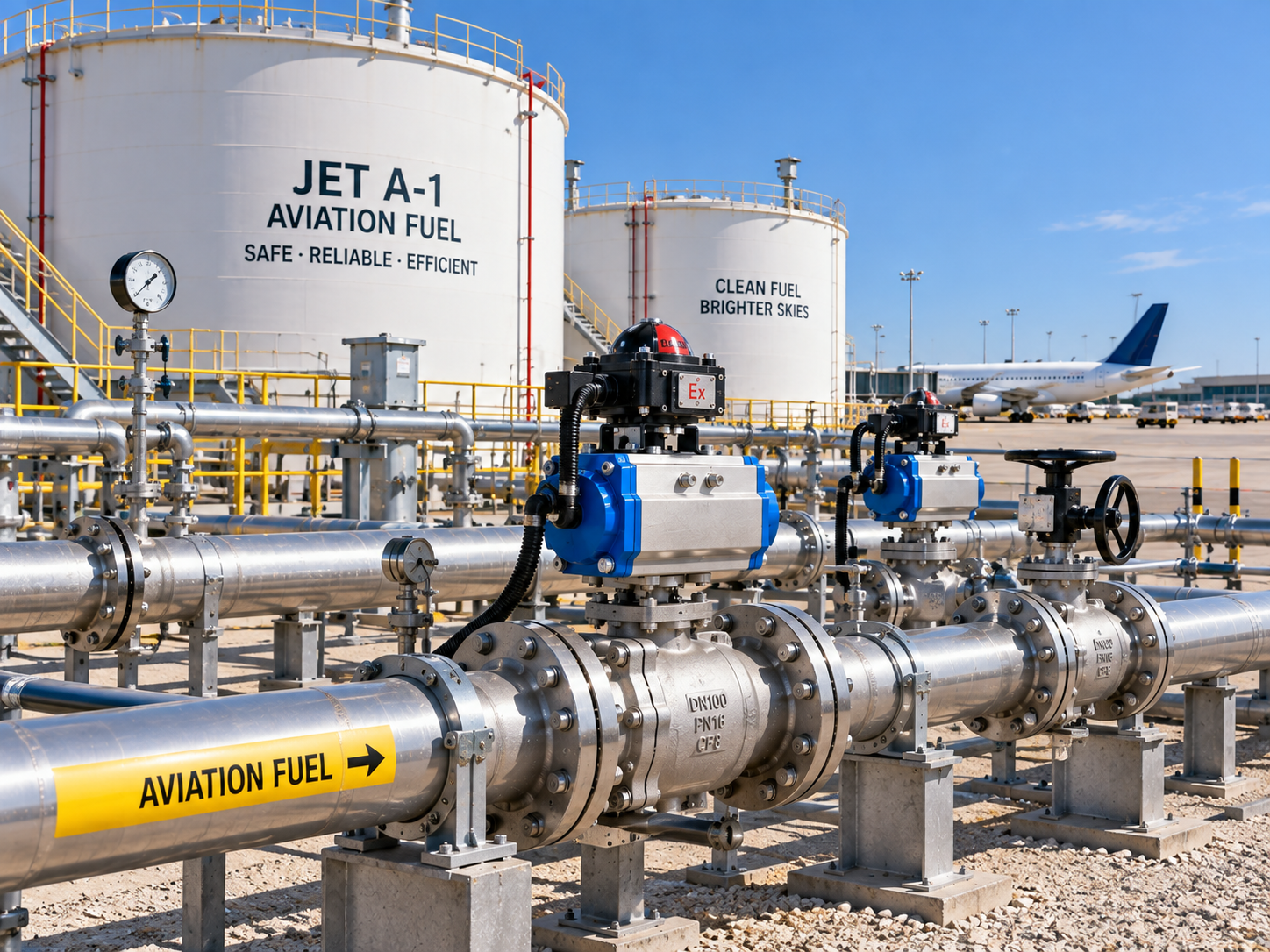
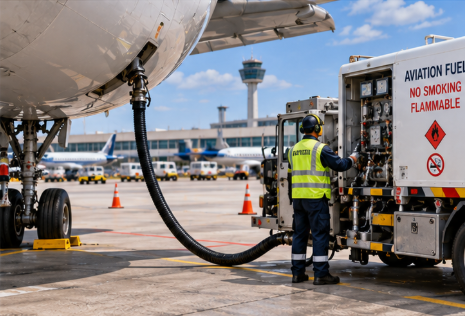
Aviation fuel is a flammable hydrocarbon product, so valve selection is not only about whether the valve can open and close. The package must provide reliable isolation, compatible sealing, appropriate electrostatic controls and correct integration with the airport fuel system’s operating and safety philosophy.
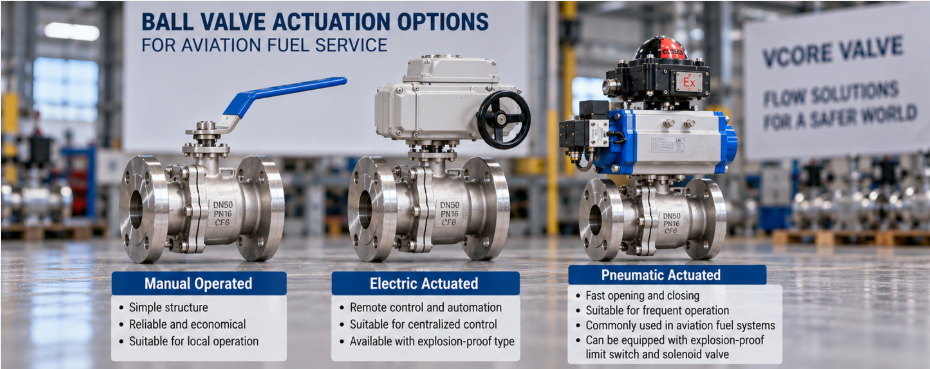
Ball valves are often considered for fuel isolation because quarter-turn operation is simple and a full-bore design can provide a relatively unobstructed flow path. The same valve can be supplied with a lever, gearbox, pneumatic actuator or electric actuator. The correct choice depends on operating frequency, remote-control requirements, available utilities, shutdown philosophy and hazardous-area classification.
1. Why Ball Valves Are Used in Aviation Fuel Systems
In fuel-transfer service, the valve is usually expected to provide dependable on-off isolation rather than continuous throttling. A full-port ball valve can reduce unnecessary restriction when fully open. Aviation-fuel facilities also place strong emphasis on system cleanliness, commissioning and maintenance because fuel quality must be protected throughout storage and hydrant distribution.
Typical project requirements may include full bore, blowout-resistant stem, anti-static construction, fire-safe design with applicable evidence, compatible seats and seals, flanged or welded ends, position indication and remote feedback.
2. Manual vs Electric vs Pneumatic Ball Valve
| Factor | Manual | Electric | Pneumatic |
|---|---|---|---|
| Power source | Operator | Electrical supply | Compressed air |
| Typical duty | Local on/off | Remote on/off or modulating | Fast remote on/off; modulating when engineered |
| Operating frequency | Low | Project dependent | Well suited to frequent cycling when correctly sized |
| Remote feedback | Added switch required | Commonly integrated | Limit-switch box or proximity sensors |
| Hazardous area | Electrical feedback still needs review | Actuator/accessories require suitable certification | Electrical accessories require suitable certification |
| Fail action | Remains manually positioned | Needs stored energy/backup if movement after power loss is required | Double-acting depends on air/control logic; spring-return can provide stored-energy action |
| Best fit | Local infrequent isolation | Remote sites without instrument air | Automated fuel systems with instrument air |
Manual Operation
A lever or gearbox is usually the simplest choice when the valve is accessible, operation is infrequent and no automatic shutdown or remote command is required. Large valves or higher operating torque may require a gearbox.
Electric Actuation
Electric actuation is useful where electrical power is readily available but instrument air is not. In classified areas, the actuator, terminal compartment, local controls, glands and accessories must meet the project hazardous-area requirements.
Pneumatic Actuation
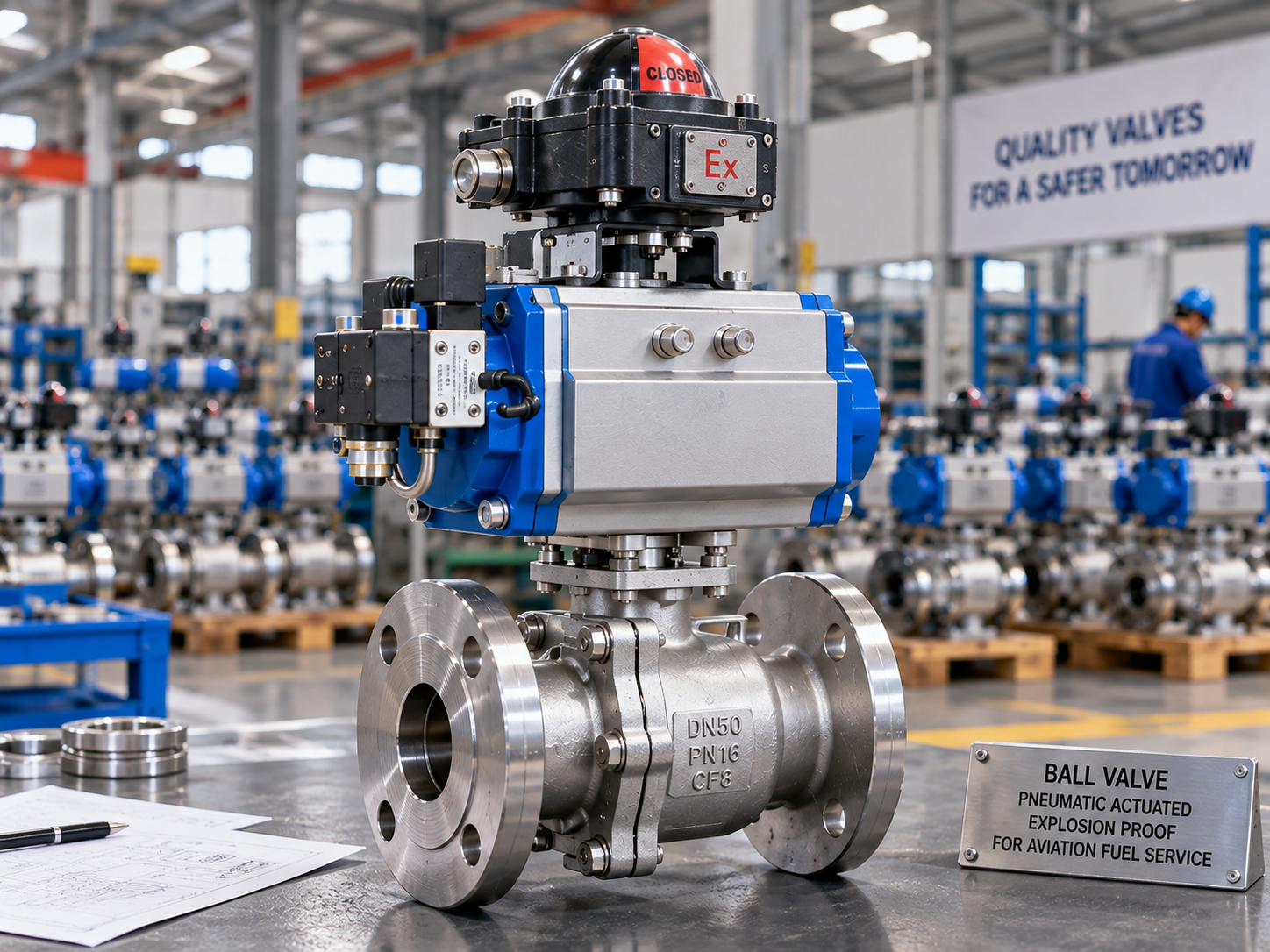
Pneumatic actuators are widely used on quarter-turn ball valves because they can provide compact torque output and relatively fast, repeatable stroking. Selection still requires actual valve torque, minimum available air pressure, required travel time, cycle frequency and accessory flow capacity.
3. Double-Acting Pneumatic Actuator
A double-acting pneumatic actuator uses compressed air to drive both opening and closing directions. For a 90-degree ball valve, rack-and-pinion or scotch-yoke mechanisms are commonly used. This configuration can suit aviation-fuel isolation where positive powered movement is required in both directions.
A typical package may include a double-acting actuator, Ex-rated solenoid valve, air filter regulator, open/closed proximity switches, visual position indicator, speed controls, tubing/fittings, bracket and coupling.
4. Explosion-Protected Proximity Limit Switches
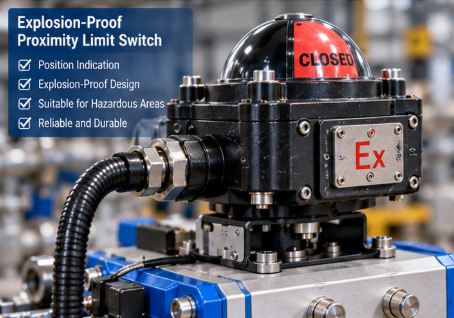
The actuator may be pneumatic, but its feedback devices are electrical. Proximity limit switches confirm fully open and fully closed positions to the control system. In a classified aviation-fuel area, they must be selected to the project’s explosion-protection scheme and area classification.
IECEx is an international certification system for equipment used in explosive atmospheres and is based on standards including the IEC 60079 series. Projects may instead or additionally specify ATEX, NEC/CEC or national requirements.
| Limit-Switch Item | Confirm in RFQ |
|---|---|
| Area classification | Zone or Division |
| Certification | IECEx, ATEX, NEC/CEC or project requirement |
| Gas group | Per hazardous-area study |
| Temperature class | Per project classification |
| Switch technology | Inductive proximity, mechanical or approved alternative |
| Signal | NAMUR, contact, PNP/NPN or control-system requirement |
| Enclosure | Ingress and corrosion protection |
| Cable entries | Thread and certified gland requirement |
5. How to Treat a -20°C to +150°C Requirement
If the project specifies -20°C to +150°C, verify that range against the valve pressure-temperature rating, seat, stem packing, body seals, actuator seals/lubricant, solenoid, proximity switches, cable glands and tubing. The +150°C value should be treated as a project valve-package design requirement unless the process datasheet specifically identifies it as the aviation-fuel operating temperature.
6. Seats, Anti-Static Design and Fire Safety
Seat selection depends on the actual fuel, additives, pressure, temperature, fire requirement and cycling duty. PTFE and reinforced PTFE are common soft-seat families for clean hydrocarbon isolation, while PEEK or engineered metal seats may be considered where the selected soft seat’s pressure-temperature limits are insufficient.
Because aviation fuel is flammable, the project may require electrical continuity/anti-static features between ball, stem and body. Fire-safe design addresses a different hazard. If fire-tested performance is required, specify the applicable standard and verify the certificate scope for the offered valve. Depending on the design and project, references may include API 607, API 6FA or ISO 10497.
Related Vcore content: Fire Safe Ball Valve and Ball Valves in Hazardous Locations.
7. Complete Aviation Fuel Valve Package Check
| Component | Key Check | Reason |
|---|---|---|
| Ball valve | Size, class, bore, materials, seat, leakage | Isolation performance |
| Actuator | Torque at minimum air pressure plus approved margin | Reliable full stroke |
| Double-acting system | Response after loss of air/signal | Defines shutdown behavior |
| Solenoid | Voltage, flow, Ex certification, failure state | Controls actuator air |
| Proximity switches | Ex certification and signal type | Position feedback |
| Anti-static | Required design/test evidence | Electrostatic continuity |
| Fire safe | Test standard and certificate scope | Fire-condition leakage performance |
| Temperature | Whole package qualified | Accessories may be limiting |
8. Example RFQ Configuration
Function: On-off isolation
Operation: Double-acting pneumatic quarter-turn actuator
Feedback: Open/closed explosion-protected proximity limit switches
Control: Ex-certified solenoid valve, voltage to be confirmed
Temperature: Project design range -20°C to +150°C, subject to complete package verification
Safety: Anti-static and fire-safe requirements per project specification
Area: Zone/Division, gas group and temperature class to be confirmed
Testing: Valve pressure/leakage test and assembled actuator functional test
Documents: GA, datasheet, actuator sizing, Ex certificates, applicable fire-test evidence, MTR and test reports
9. Which Actuator Should You Choose?
Manual: best for accessible, infrequently operated isolation points without automatic shutdown requirements.
Electric: practical where power is available, instrument air is not, and remote control is needed.
Pneumatic: practical where reliable compressed air is available and fast, repeatable quarter-turn operation is required. The shutdown philosophy should determine whether double-acting or spring-return is appropriate.
For a broader comparison, see the Valve Actuator Selection Guide and Valve Actuator Torque Sizing Guide.
10. RFQ Checklist
- Fuel type: Jet A, Jet A-1 or other.
- Valve size and bore.
- Pressure class and operating/design pressure.
- Operating and design temperature.
- Body, ball, stem, seat and seal materials.
- End-connection standard.
- Manual, electric or pneumatic operation.
- Double-acting or spring-return.
- Minimum/maximum instrument-air pressure.
- Opening/closing time.
- Required failure response.
- Solenoid voltage and failure state.
- Open/closed proximity switches.
- Hazardous-area Zone/Division.
- Gas group and temperature class.
- IECEx/ATEX/NEC/CEC requirement.
- Anti-static requirement.
- Fire-safe standard/certificate.
- Ingress/outdoor/corrosion requirements.
- Drawings, certificates and test reports.
Frequently Asked Questions
Is a pneumatic ball valve automatically explosion-proof?
No. Electrical accessories such as solenoid valves and proximity switches must still be suitable and certified for the specified hazardous area.
Is a double-acting pneumatic actuator fail-close?
Not inherently. It uses air to drive both directions; the required response after loss of air or command must be engineered separately.
Why use proximity limit switches?
They provide remote confirmation that the valve reached the required open or closed position. In a hazardous area, their certification and installation must match the project classification.
Can the valve package be specified for -20°C to +150°C?
Yes, if the complete valve, seat, seals, actuator and accessories are qualified for that project design range.