Quick Overview
When choosing the right valve for your industrial system, it’s important to understand the differences between non-lubricated and lubricated plug valves. While both are commonly used for flow control in various applications, each type has its own advantages and limitations. In this article, we will compare non-lubricated plug valves with lubricated plug valves, focusing on their construction, performance, applications, and maintenance requirements.
Introduction: Understanding Plug Valves and Their Importance
In the world of industrial valve systems, plug valves are widely used for controlling the flow of liquids, gases, and slurries. They feature a cylindrical or tapered plug that rotates within a valve body to control the flow of fluid. Plug valves are especially popular in systems requiring tight shut-off, quick open/close operations, and resistance to corrosion and wear.
There are two main types of plug valves: non-lubricated and lubricated. Understanding the key differences between these two valve types will help you choose the most suitable valve for your application, ensuring optimal performance and reliability.
User Pain Points: Common Issues Faced by Valve Users
1. Sealing Problems
Both non-lubricated and lubricated plug valves are designed to provide a reliable seal, but improper operation or wear can lead to leaks, which compromise system efficiency.
2. Maintenance Costs
Depending on the type of valve, regular maintenance is essential. Non-lubricated valves tend to wear faster in high-friction applications, while lubricated valves require periodic servicing to ensure their lubricant remains effective.
3. Performance Under Harsh Conditions
In some applications, valves need to withstand high temperatures, pressures, or aggressive chemicals. Understanding the limits of each valve type is crucial to preventing failures in demanding environments.
Solutions: Comparing Non-Lubricated and Lubricated Plug Valves
1. Non-Lubricated Plug Valves: Advantages and Limitations
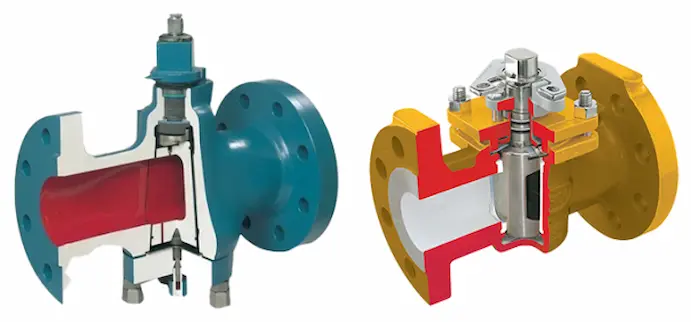
Non-lubricated plug valves do not rely on lubrication to create a smooth seal. Instead, they use tight-fitting plugs and a durable seat material to ensure a reliable seal. These valves are commonly used in lower-pressure applications and are ideal for systems where lubrication is not practical or desired.
Advantages:
-
No Lubricant Requirements: Since there is no need for periodic lubrication, maintenance costs can be lower.
-
Simplicity: Fewer moving parts mean that the design is often simpler and easier to maintain.
-
Clean Operations: They are often used in food, pharmaceutical, or other clean environments where contamination from lubricants is a concern.
Limitations:
-
Wear and Tear: Without lubrication, non-lubricated plug valves can experience more wear, especially under high friction conditions.
-
Limited Pressure Tolerance: These valves are better suited to low- to medium-pressure applications.
2. Lubricated Plug Valves: Advantages and Limitations
Lubricated plug valves, as the name suggests, rely on a lubricant to reduce friction between the plug and the valve body. This type of valve is ideal for high-pressure or high-temperature applications, where a smoother operation is required.
Advantages:
-
Reduced Friction: The lubricant allows for smoother operation and reduces the wear and tear on internal components.
-
Enhanced Sealing: The lubricant improves the sealing properties, making it suitable for more demanding applications.
-
Higher Pressure Tolerance: Lubricated valves can handle higher pressures and temperatures than their non-lubricated counterparts.
Limitations:
-
Lubricant Maintenance: These valves require regular lubrication to ensure proper performance, which can add to the maintenance cost.
-
Potential for Contamination: In some applications, the lubricant may contaminate the flow media, which is undesirable in sensitive industries.
-
Complexity: Lubricated valves often have more components and are more complex to maintain.
Case Study: Valve Selection for a Chemical Processing Plant
A chemical processing plant required a valve solution for controlling the flow of corrosive chemicals under high pressure. After evaluating the needs of the system, the plant chose lubricated plug valves due to their higher pressure tolerance and enhanced sealing capabilities. The valves were designed with a specialized lubricant to prevent corrosion and wear, ensuring the long-term performance of the system.
In a different section of the plant, where contamination was a concern, non-lubricated plug valves were installed for controlling lower-pressure flow. The simplicity and lower maintenance requirements of the non-lubricated valves provided the best solution for the application.
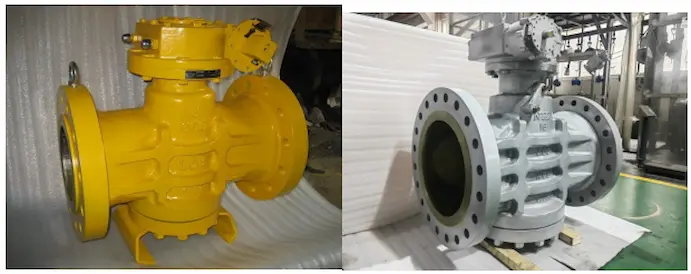
Data Analysis: Valve Performance Comparison
Here’s a side-by-side comparison of key features of non-lubricated and lubricated plug valves:
| Feature | Non-Lubricated Plug Valve | Lubricated Plug Valve |
|---|---|---|
| Friction | Higher friction, may lead to faster wear | Lower friction, smoother operation |
| Sealing | Relies on tight-fitting plugs and seats | Enhanced sealing with lubricant |
| Maintenance | Minimal maintenance required | Regular lubrication needed |
| Pressure Tolerance | Suitable for low- to medium-pressure systems | Suitable for high-pressure systems |
| Ideal Applications | Clean environments, low-pressure systems | High-pressure, high-temperature systems |
Trends Insights: Growing Demand for Plug Valves
The global demand for plug valves, especially lubricated plug valves, is growing as industries face higher pressure and temperature requirements. With the rise of more complex industrial systems, the need for valves that provide precise control, reliable sealing, and longer operational life is increasing.
In addition, industries are focusing on reducing downtime and improving efficiency, making reliable valves like lubricated plug valves an essential part of modern industrial systems. Manufacturers are constantly innovating to improve the performance of plug valves, focusing on enhancing materials and lubricants for better durability and easier maintenance.
Style Suggestions for Plug Valve Selection
-
Assess Pressure and Temperature Requirements: Always select the valve based on the pressure and temperature conditions of your system. If high pressures are involved, lubricated plug valves may be the better option.
-
Consider Environmental Conditions: If contamination from lubricants is a concern, non-lubricated plug valves are a more suitable choice.
-
Regular Maintenance: Ensure that lubricated plug valves are regularly serviced and lubricated to maintain their performance. Non-lubricated valves require less maintenance but should be inspected periodically for wear.
Conclusion: Selecting the Right Plug Valve for Your System
Choosing between a non-lubricated and lubricated plug valve ultimately depends on your system’s specific needs. Non-lubricated valves are ideal for clean, low-pressure applications where simplicity and minimal maintenance are key. On the other hand, lubricated plug valves are perfect for high-pressure, high-temperature environments, offering smoother operation and enhanced sealing.
At Vcore Valve, we provide both non-lubricated and lubricated plug valves, tailored to meet the needs of various industries. Whether you’re looking for reliable performance in a low-pressure system or need a robust solution for high-pressure applications, our team can help you select the perfect valve.
FAQs
1. What is the difference between non-lubricated and lubricated plug valves?
Non-lubricated plug valves rely on tight-fitting plugs and seats, while lubricated plug valves use a lubricant to reduce friction and improve sealing.
2. When should I use a lubricated plug valve?
Lubricated plug valves are ideal for high-pressure, high-temperature systems where smoother operation and enhanced sealing are required.
3. Do non-lubricated plug valves require maintenance?
Yes, while non-lubricated valves require less maintenance than lubricated valves, they should still be regularly inspected for wear.
4. Can lubricated plug valves cause contamination?
Yes, in some applications, lubricants can contaminate the flow media. It is important to ensure that the lubricant is compatible with the process fluids.
5. What are the benefits of using a non-lubricated plug valve?
Non-lubricated plug valves offer simpler design, lower maintenance costs, and are ideal for clean applications where lubrication is not desirable.
References
-
Lubricated vs Non-Lubricated Valve Performance