Quick Summary
Knowing when a valve is open or closed is crucial for efficient system operation, whether it’s in plumbing, industrial applications, or HVAC systems. Valve open or closed position can be checked by handle direction, stem movement, handwheel position, gear indicator, actuator feedback, limit switch signal, flow response, and valve tag records. For critical isolation, position indication should be verified by the operating procedure rather than relying on handle direction alone. In this guide, we explain how to determine when a valve is fully open or closed, highlighting key valve types and their operations.
Opening Scenario: A Common Dilemma
Picture this: You’re overseeing a critical industrial operation. The pressure gauge is fluctuating, and you’re unsure whether the valve is fully open or closed. Misjudging the position could lead to serious issues like pressure loss, system inefficiency, or even damage to sensitive equipment. How can you ensure you’re operating your valves correctly?
User Pain Points
Valve Mispositioning Risks System Efficiency
Incorrectly identifying whether a valve is open or closed can cause system inefficiency, pressure fluctuations, and, in some cases, system failure.
Difficulty in Manual Valve Operation
In systems with manual valves, it’s not always easy to discern whether the valve is fully open or closed, particularly in remote or hard-to-access areas.
Inadequate Valve Maintenance
Regular maintenance is critical to ensure that valves operate smoothly. Over time, valves may not fully open or close due to wear and tear, making the process even more difficult.
Solutions & Expert Recommendations
Use Visual Indicators or Valve Positioners
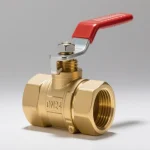
To avoid confusion, consider valves with visual position indicators. For instance, many ball valves have a handle that points in the direction of the flow when open, and a perpendicular direction when closed.
Install Automated Valve Actuators
Automated actuators and position feedback can reduce manual identification errors, but position signals should be checked against actuator travel, limit-switch setting, valve torque, air or power supply, and actual process response in critical service.
Regular Valve Inspections and Maintenance
Perform regular inspections to ensure valves are not malfunctioning due to wear. Lubricating moving parts and replacing seals will help maintain the correct operation of the valve over time.

Typical Misoperation Scenarios
Case 1 – Industrial Steam System
In steam or hot-water systems, a partially open isolation valve may cause pressure fluctuation, noise, temperature instability, or poor heat transfer. The valve position should be checked from handwheel travel, stem position, gear indicator, and system response.
Case 2 – Residential Plumbing
In water or HVAC systems, a ball valve handle may appear open, but the valve may still be partially closed if the handle stop is damaged, the handle was reinstalled incorrectly, or the stem connection is misaligned.
Data & Technical Comparison
| Valve Type | How to Check Open / Closed Position | Important Caution |
|---|---|---|
| Ball valve | Handle usually parallel to pipe = open; perpendicular = closed | Applies mainly to standard manual two-way ball valves; verify after handle or actuator changes |
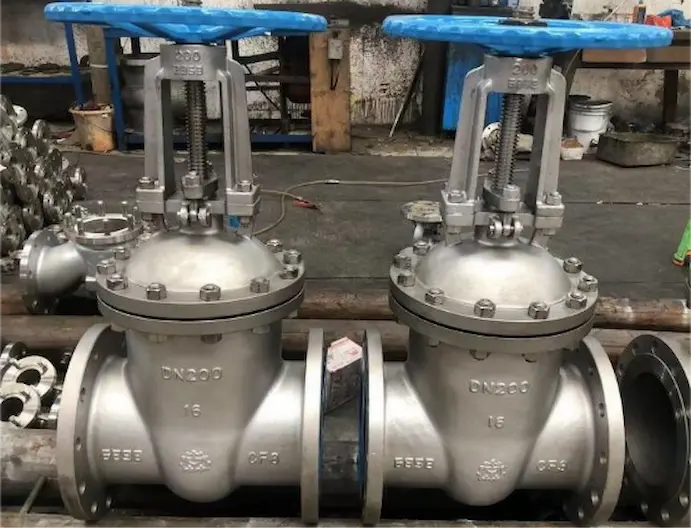
| Gate valve | Handwheel turns multiple times; rising stem rises when opening | Non-rising stem gate valves may need position indicator or turn count |
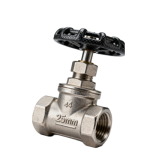
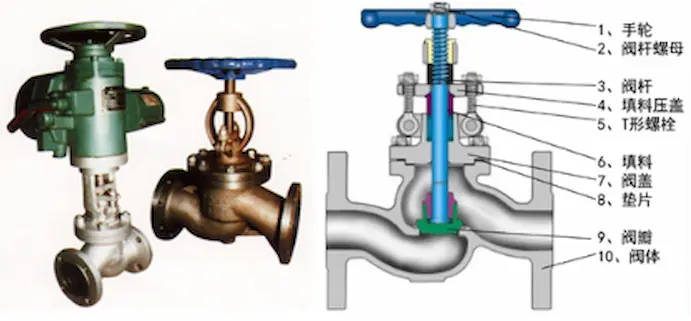
| Globe valve | Handwheel/stem travel indicates disc position | Partial opening is common because globe valves are often used for throttling |
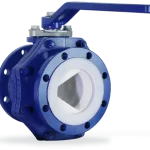
| Butterfly valve | Lever, gear indicator, or actuator indicator shows disc position | Disc position may not be obvious from outside without indicator |
| Check valve | Opens automatically with forward flow and closes on reverse flow | Cannot be manually judged like isolation valves unless there is inspection access or external indicator |
| Actuated valve | Limit switch, positioner, local indicator, or control-system feedback | Signal must match actual valve travel and torque condition |
Market Trends & Industry Insights
-
Increasing Demand for Automated Valve Systems: With increasing automation in industrial processes, valves with actuators and positioners are becoming more popular to provide accurate control over flow and reduce human error.
-
Smart Valves for Remote Monitoring: The rise of Industry 4.0 has made remote monitoring of valve positions essential. Many new valves come with integrated sensors that send real-time data to central systems.
Style/Usage Tips
-
Ball Valves for Quick Operation: Choose ball valves for applications that require frequent on/off operation, such as in plumbing or HVAC systems.
-
Globe Valves for Precision Flow Control: When precision is required for throttling, globe valves are the best choice. They’re often used in heating and cooling systems where consistent flow is critical.
-
Use Check Valves in Preventative Applications: Always use check valves when preventing backflow is crucial, especially in systems with pumps or water pipelines.
Conclusion
Understanding when your valve is open or closed is essential for maintaining system efficiency, preventing damage, and ensuring safe operation. Whether you are in the industrial, HVAC, or residential sectors. Correct valve-position identification should combine visual indicators, mechanical travel, actuator feedback, system response, and maintenance records. For critical isolation, always follow the site operating and safety procedure.
👉 Contact Vcore Valve today for expert advice on valve selection, installation, and maintenance. Our team is here to help you choose the right valve for your system, ensuring smooth and efficient operation.
FAQ
Q1: How can I determine if a valve is fully open?
A: Most valves feature a visual indicator. For example, ball valves will have a handle parallel to the flow direction when fully open. Alternatively, valve actuators often have position sensors that provide feedback.
Q2: Can I use a gate valve for throttling?
A: Gate valves are generally not recommended for throttling as they tend to wear out quickly. Globe valves are a better option for precise flow control.
Q3: How do I know when a valve is completely closed?
A: For many manual two-way ball valves, a perpendicular handle usually indicates the closed position. For other valve types, check the handwheel, stem travel, gear indicator, actuator feedback, or manufacturer marking. A closed position indication does not guarantee leak-tight shutoff; leakage depends on seat condition, debris, pressure differential, and test requirements.
Q4: Are automated valves more reliable than manual ones?
A: Automated valves, especially those with positioners, offer more reliable and accurate control compared to manual valves. They also reduce the risk of human error.
Q5: Can I install a valve without professional help?
A: While some simple installations can be done without professional assistance, it’s best to consult a professional for proper installation, especially for high-pressure or complex systems.