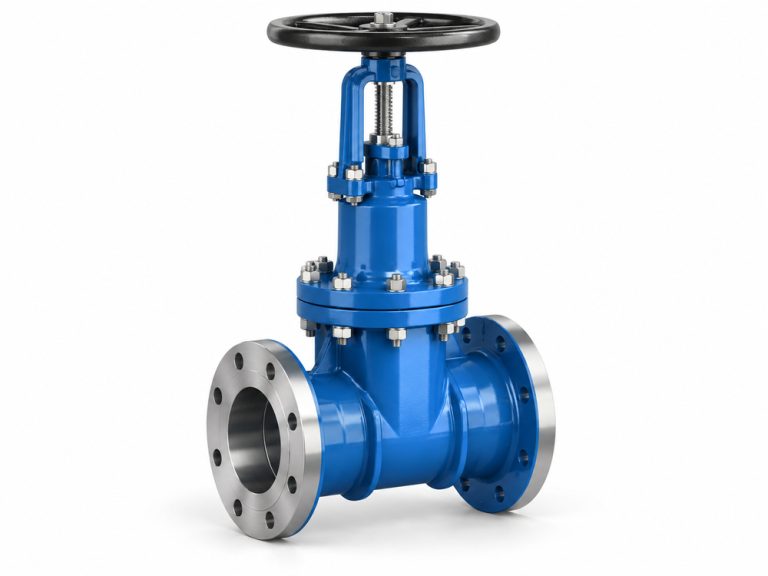
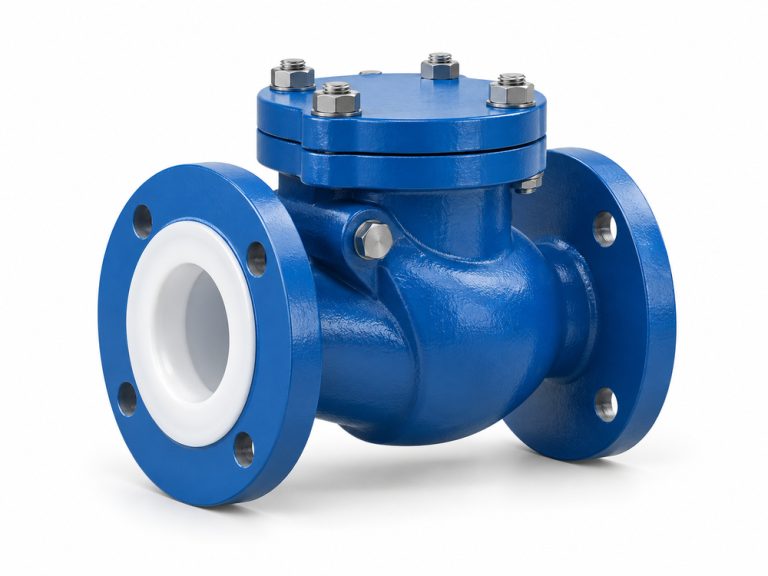
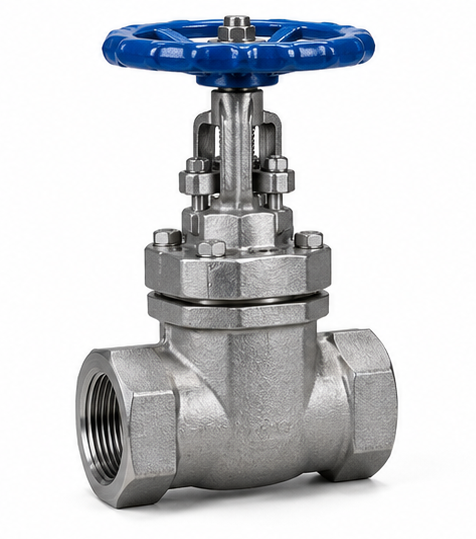
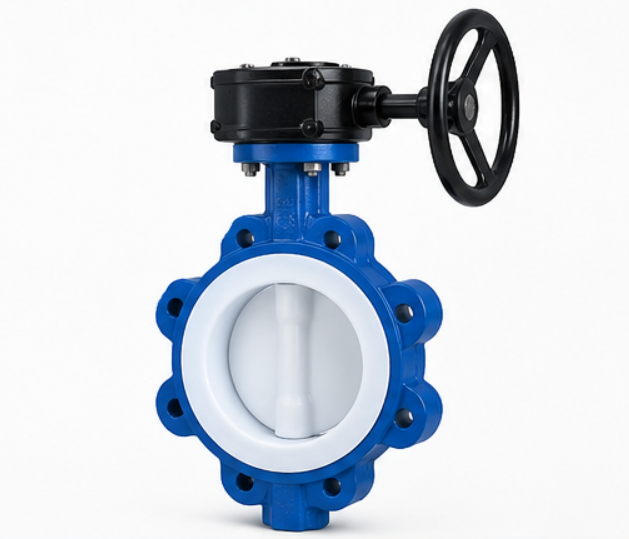
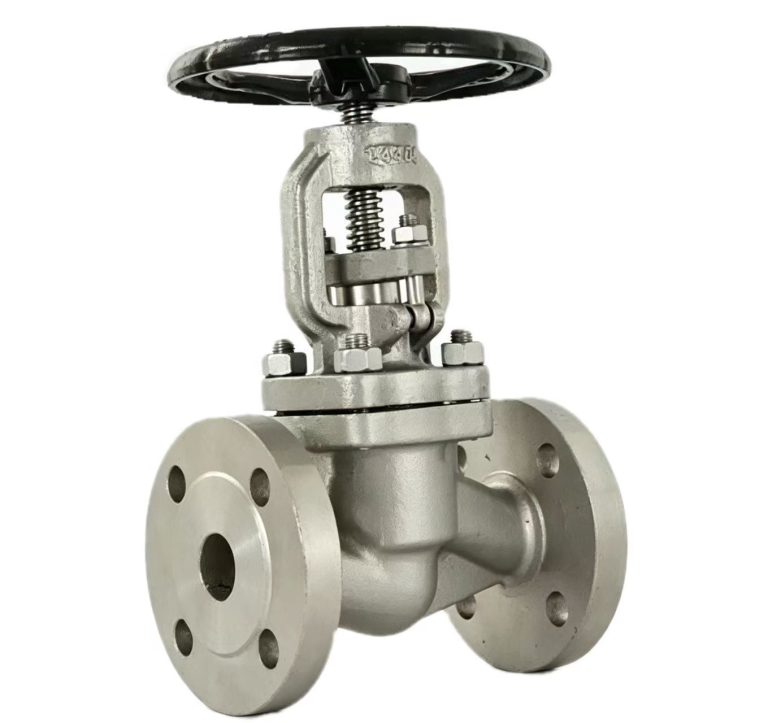
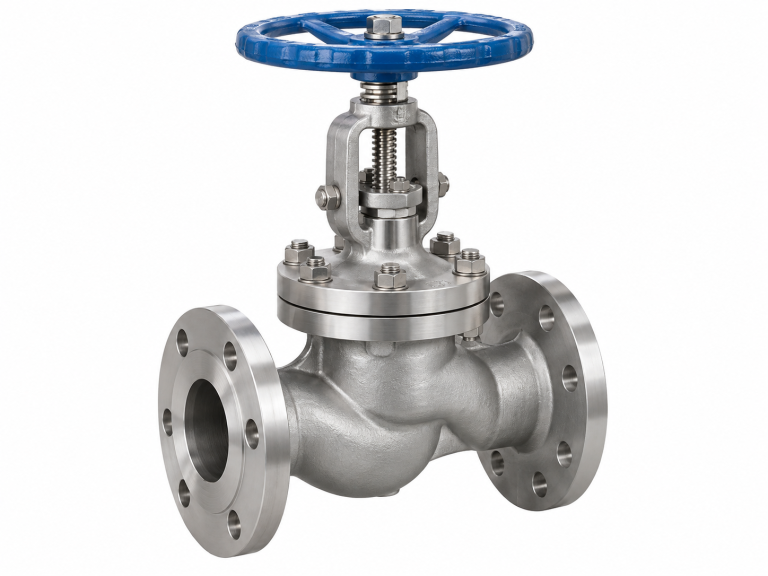
Compared with an unlined metal check valve, the rubber lined structure helps isolate the valve body from corrosive or abrasive media. This makes it suitable for selected water treatment, wastewater, chemical wastewater, slurry and pump discharge applications where both backflow prevention and internal body protection are required. For related lined valve options, you can also review our rubber-lined valve category.
Product Overview
| Product Name | Rubber Lined Swing Check Valve |
|---|---|
| Valve Type | Swing check valve / non-return valve |
| Main Function | Automatic backflow prevention |
| Lining Material | EPDM, natural rubber, NBR, neoprene or other rubber lining based on media |
| Body Material | Ductile iron, cast iron, cast steel, carbon steel or stainless steel |
| Disc Structure | Swing disc, hinged disc or project-specific check structure |
| Connection Type | Flanged, wafer swing type or project-specific connection |
| Common Applications | Pump discharge, wastewater, water treatment, slurry, chemical wastewater, seawater and industrial process lines |
| Key Selection Factors | Medium, flow velocity, pressure, installation orientation, water hammer risk, rubber compatibility and solids content |
 What Is a Rubber Lined Swing Check Valve?
 What Is a Rubber Lined Swing Check Valve?
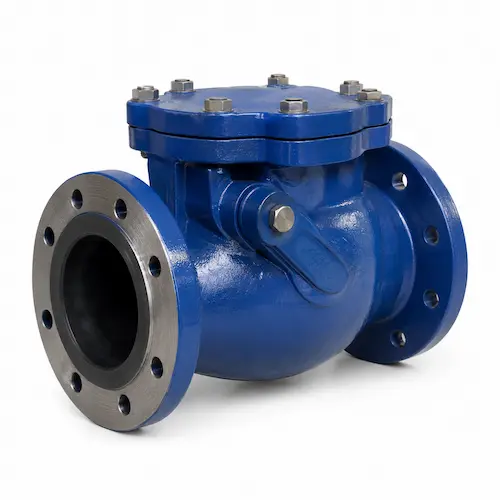
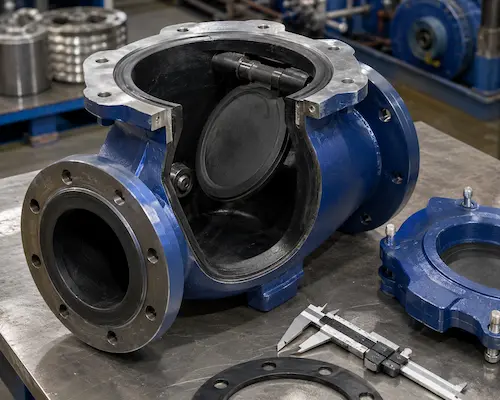
A rubber lined swing check valve is designed to allow flow in one direction and automatically prevent reverse flow. Inside the valve body, the swing disc rotates around a hinge or shaft. When the pump starts and forward flow reaches sufficient velocity, the disc opens. When the pump stops or reverse flow begins, the disc swings back to the seat and closes.
The rubber lining is applied to the internal flow-contacting area of the valve body. Depending on design, the disc or sealing surface may also use rubber, coated metal or corrosion-resistant material. This lining structure helps protect the valve body in corrosive wastewater, seawater, chemical drainage or abrasive service where a bare metal body may corrode or wear too quickly.
For buyers comparing check valve structures, Vcore Valve also provides other check valve products such as wafer swing type check valves and stainless steel swing check valves for different pipeline requirements.
How the Swing Check Structure Works
The swing check valve uses flow pressure to operate automatically. It does not require an external actuator. When forward flow is present, the disc moves away from the seat and allows the medium to pass. When the flow slows down, stops or reverses, the disc returns toward the seat by gravity, reverse pressure or flow reversal.
This structure is commonly used in pump discharge lines because the valve can help prevent discharged fluid from flowing backward into the pump when the pump stops. However, the system designer should consider flow velocity, pump stop conditions, pipe layout and water hammer risk. If the flow reverses too quickly, a standard swing check valve may close suddenly and generate impact.
Main Structural Features
- Swing disc operation for automatic one-way flow control.
- Rubber-lined internal body to reduce metal exposure to corrosive or abrasive media.
- Fuller flow path than many lift-style check valves, depending on design and size.
- Flanged or wafer swing options for different pump discharge and pipeline layouts.
- Suitable for horizontal pipelines and selected vertical upward-flow installations, depending on design.
Rubber Lining and Media Protection
The rubber lining is one of the most important parts of this valve. It protects the internal metal body from direct contact with the process medium. In pump discharge lines, the valve may handle wastewater, treated water, seawater, slurry, chemical drainage or abrasive solids. A correctly selected rubber compound can reduce corrosion and wear in suitable conditions.
Rubber material should be selected according to the actual medium. EPDM is often used for water and wastewater. Natural rubber may be considered for selected abrasive slurry service. NBR is more suitable where oil resistance is required. Neoprene or other rubber compounds may be selected according to the specific chemical and mechanical conditions. For a broader comparison of lining materials, you can refer to our guide on rubber lined valves for chemical and slurry applications.
Material Options
| Component | Common Options | Selection Note |
|---|---|---|
| Body | Ductile iron, cast iron, cast steel, carbon steel, stainless steel | Ductile iron or cast steel is commonly selected for industrial pump discharge and wastewater service. |
| Lining | EPDM, natural rubber, NBR, neoprene or project-specific rubber | Lining material must match medium, temperature, chemical concentration and solids content. |
| Disc | Rubber-lined disc, coated ductile iron disc, stainless steel disc | Disc material affects sealing, corrosion resistance and wear performance. |
| Hinge / Shaft | Stainless steel or alloy steel depending on design | Should be selected according to corrosion risk, operating frequency and mechanical load. |
| Seat Area | Rubber seat, lined seat, replaceable seat or metal-supported resilient seat | Seat design affects shutoff performance and maintenance planning. |
| External Coating | Epoxy coating, fusion bonded epoxy or project-specific anti-corrosion coating | Useful for humid pump rooms, wastewater plants and outdoor installations. |
Technical Specifications
| Specification Item | Available / Typical Options |
|---|---|
| Product Type | Rubber lined swing check valve |
| Valve Function | Automatic backflow prevention |
| Nominal Size | Project-based; common industrial sizes available according to valve type |
| Pressure Rating | PN10, PN16, Class 125, Class 150 or project-specific pressure class |
| Body Material | Ductile iron, cast iron, cast steel, carbon steel or stainless steel |
| Lining Material | EPDM, natural rubber, NBR, neoprene or other suitable rubber compound |
| Disc Type | Swing disc, rubber-lined disc or coated disc depending on design |
| Connection Type | Flanged, wafer swing type or project-specific connection |
| Flange Standard | ANSI, DIN, EN, JIS or project-specific drilling |
| Installation | Horizontal pipeline preferred; vertical upward flow possible for selected designs |
| Suitable Media | Water, wastewater, seawater, slurry, mild chemical wastewater and selected abrasive media |
| Not Recommended For | Media incompatible with the selected rubber compound, severe water hammer, high-temperature service beyond rubber limits or slurry with unsuitable velocity/particle conditions |
| Testing | Shell test, seat test, visual lining inspection and functional operation test according to project requirement |
| Documentation | Pressure test report, material certificate, inspection report, packing photos and project documents as required |
 Applications in Pump Discharge Lines
 Applications in Pump Discharge Lines
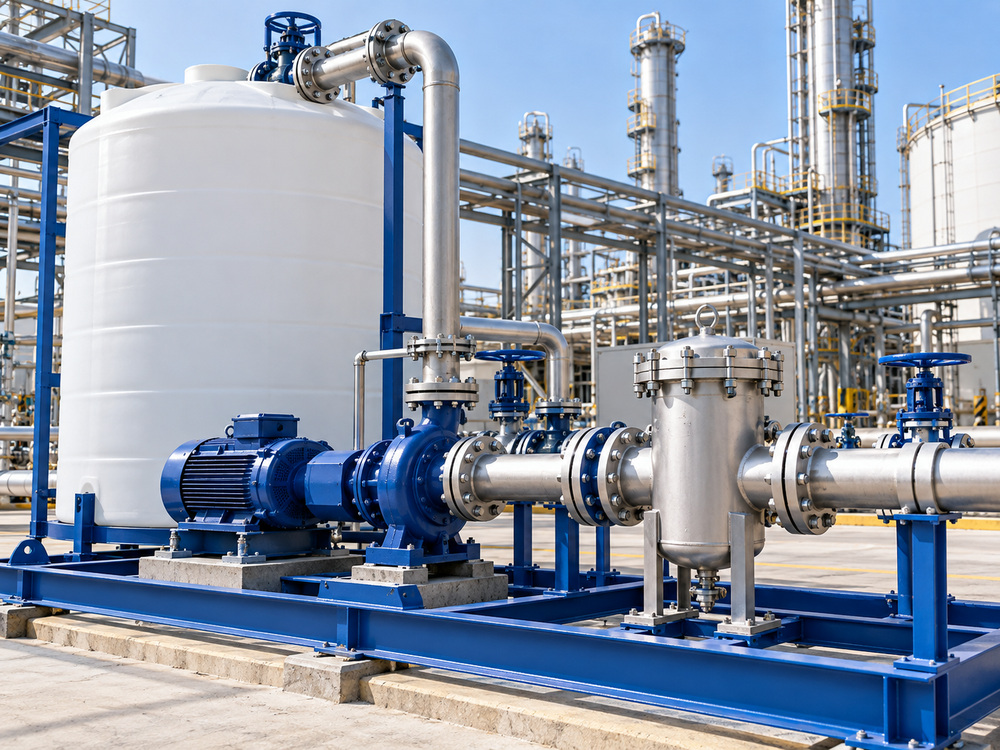
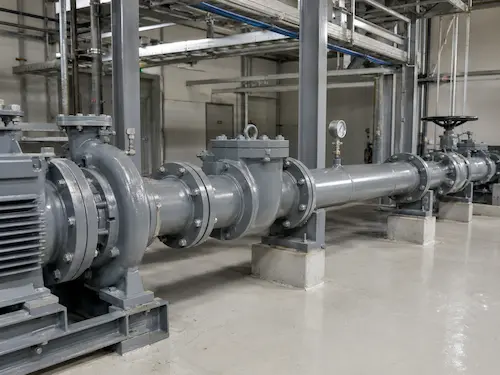
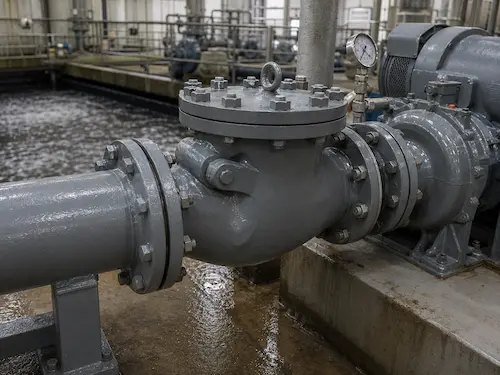
Pump discharge lines are one of the most common installation positions for swing check valves. When the pump operates, forward flow opens the disc. When the pump stops, the check valve helps prevent reverse flow from returning to the pump. This can help reduce pump reverse rotation, backflow impact and unwanted drainage of the discharge line.
In water treatment and wastewater systems, check valves are often used to protect pumps and maintain flow direction. You can also review our water treatment valve solutions page for related pipeline applications.
Common Pump Discharge Applications
- Wastewater pump discharge lines
- Water treatment pump stations
- Slurry pump discharge pipelines
- Seawater transfer pumps
- Chemical wastewater discharge lines
- Cooling water circulation pumps
- Industrial utility water systems
- Backwash and filtration discharge lines
Use in Wastewater, Slurry and Corrosive Media
 Use in Wastewater, Slurry and Corrosive Media
A rubber lined check valve can be useful where the pipeline medium contains corrosive liquid, suspended solids or abrasive particles. In slurry and wastewater service, the lining reduces direct metal exposure and helps protect the internal body surface. For slurry-specific selection, you can also review our slurry valve solutions page.
For heavy slurry applications, the valve should not be selected only by valve name. Particle size, solids concentration, flow velocity, pipeline orientation, disc movement and sedimentation risk should all be checked. In some slurry systems, a different valve structure may be more suitable if solids settling or frequent cycling is severe.
Media Compatibility and Selection Guide
| Media / Service | Suitability | Selection Note |
|---|---|---|
| Clean water / treated water | Suitable | EPDM lining is commonly considered for water-based service. |
| Wastewater / sewage | Suitable with review | Check solids content, corrosion risk and pump discharge conditions. |
| Seawater / brackish water | Conditionally suitable | Confirm rubber lining, disc material, hinge material and external coating. |
| Mining slurry / abrasive slurry | Conditionally suitable | Review particle size, velocity, solids concentration and disc movement. |
| Mild chemical wastewater | Conditionally suitable | Rubber compound must match chemical concentration and temperature. |
| Oil or hydrocarbon-containing media | Depends on rubber material | NBR may be considered; EPDM or natural rubber may not be suitable. |
| Strong solvents or high-temperature chemicals | Not generally recommended | PTFE-lined or other corrosion-resistant valve options may be more suitable. |
Swing Check Valve vs Other Check Valve Types
| Check Valve Type | Main Feature | Typical Strength | Selection Note |
|---|---|---|---|
| Rubber Lined Swing Check Valve | Swing disc with internal rubber lining | Good for pump discharge, wastewater and selected corrosive or abrasive service | Check water hammer risk, installation direction and disc clearance. |
| Wafer Swing Check Valve | Compact swing check design | Space-saving installation between flanges | Suitable where compact face-to-face dimension is required. |
| Lift Check Valve | Disc lifts vertically from the seat | Often used in cleaner fluid systems | May have higher pressure drop and stricter installation requirements. |
| Dual Plate Check Valve | Spring-assisted dual plates | Compact and can close faster than many swing designs | Useful where water hammer control and compact installation are important. |
| Ball Check Valve | Ball moves with flow and reverse pressure | Can be useful in wastewater and solids-containing service | Confirm ball movement, solids content and maintenance access. |
If your application involves check valve noise, leakage, backflow or unstable closing, the article How to Diagnose & Fix Check Valve Problems may help identify common causes before replacing the valve.
Installation Notes
 Installation Notes
Correct installation is important for swing check valve performance. Horizontal installation is commonly preferred because disc movement and gravity-assisted closing are more predictable. Vertical installation may be possible when the flow direction is upward and the valve design supports it, but it should be confirmed before ordering.
- Confirm flow direction before installation.
- Install the valve with enough straight pipe where required by the project design.
- Avoid installing the valve too close to severe turbulence if possible.
- Check whether horizontal or vertical installation is allowed for the selected design.
- Review water hammer risk in pump discharge systems.
- Protect rubber-lined flange faces during installation.
- Use suitable gaskets and bolt tightening sequence to avoid lining damage.
For more detailed orientation discussion, you can refer to our guide: Can a Check Valve Be Installed Vertically?
Inspection, Testing and Packing
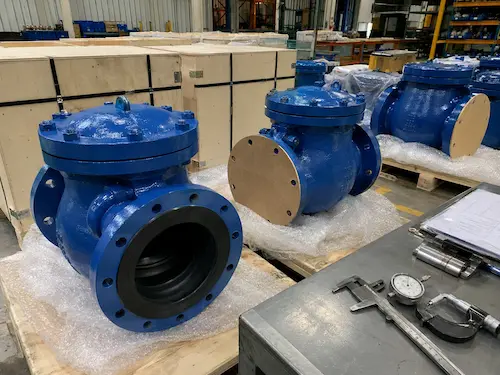
For rubber lined swing check valves, inspection should include the standard valve checks as well as rubber lining condition and disc movement. The lining surface, sealing area, hinge structure and flange faces should be protected before shipment and during installation.
| Inspection Item | Purpose |
|---|---|
| Visual lining inspection | Check lining surface, edge finishing, bonding condition and visible defects. |
| Disc movement check | Confirm smooth opening and closing without jamming or abnormal friction. |
| Dimension inspection | Confirm flange drilling, face-to-face dimension and installation compatibility. |
| Shell test | Verify body pressure integrity according to the agreed test standard. |
| Seat test | Check sealing performance under specified test conditions. |
| Packing inspection | Protect rubber-lined flange faces, disc, hinge area and external coating before shipment. |
Export packing can include protective flange covers, moisture-resistant wrapping, plywood cases, palletized loading and internal support for larger valves. Rubber-lined surfaces should not be scratched or compressed by loose metal parts during transport.
Selection Notes Before Ordering
- Valve size and pressure rating
- Pipeline medium and chemical composition
- Solids content, particle size and slurry velocity if applicable
- Working temperature and pressure
- Flow direction and installation orientation
- Horizontal or vertical installation requirement
- Water hammer risk in pump stop conditions
- Flange standard and face-to-face dimension
- Body, disc, hinge and lining material
- Required inspection standard and documentation
- Packing and shipping protection requirements
FAQ
1. What is a rubber lined swing check valve used for?
A rubber lined swing check valve is used to prevent reverse flow in pump discharge lines, wastewater pipelines, slurry systems and corrosive or abrasive media service. The swing disc opens with forward flow and closes automatically when flow stops or reverses.
2. Why is rubber lining used inside a swing check valve?
Rubber lining is used to protect the internal valve body from direct contact with corrosive or abrasive media. It can help reduce body corrosion, erosion and wear in suitable wastewater, slurry, seawater and chemical drainage applications.
3. Can a rubber lined swing check valve be used for slurry service?
It can be used in selected slurry service, but the application must be reviewed carefully. Particle size, solids concentration, flow velocity, disc movement, sedimentation risk and rubber compatibility all affect whether a swing check design is suitable for the slurry pipeline.
4. Can this valve be installed vertically?
Horizontal installation is commonly preferred for swing check valves. Vertical installation may be possible when the flow direction is upward and the valve design supports vertical service. The installation direction should be confirmed before ordering.
5. What information should be provided before quotation?
Before quotation, it is recommended to provide valve size, pressure rating, medium, temperature, flow direction, installation orientation, flange standard, body material, lining material, solids content if applicable, and required testing documents. For pump discharge lines, pump stop conditions and water hammer risk should also be reviewed.