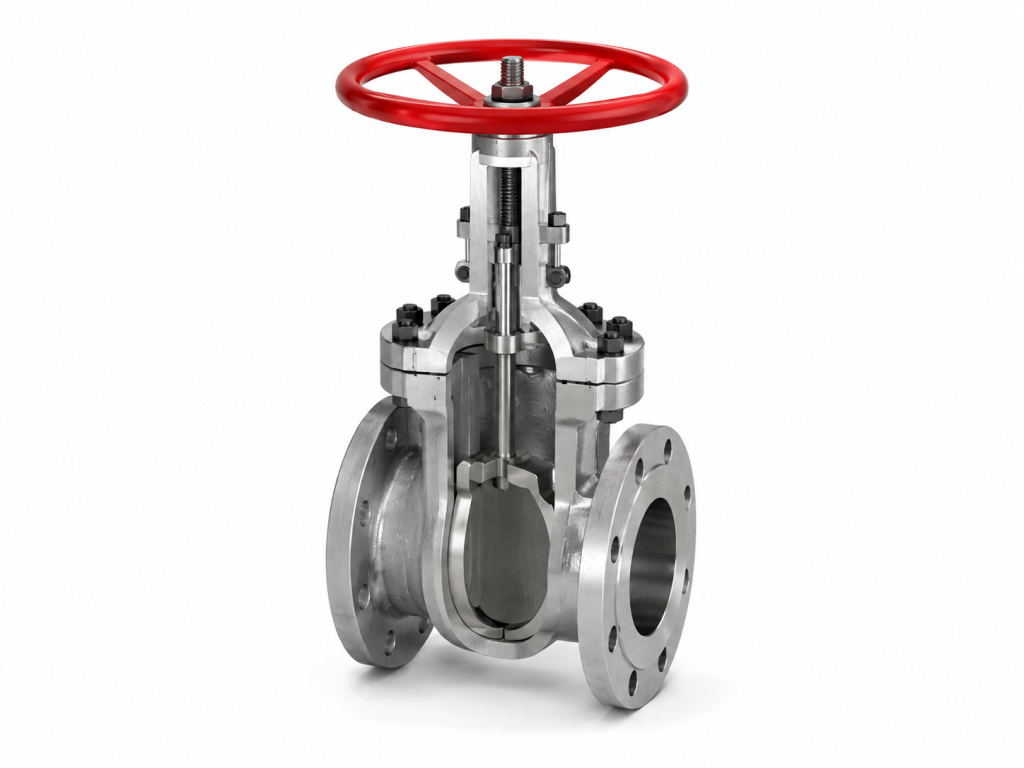
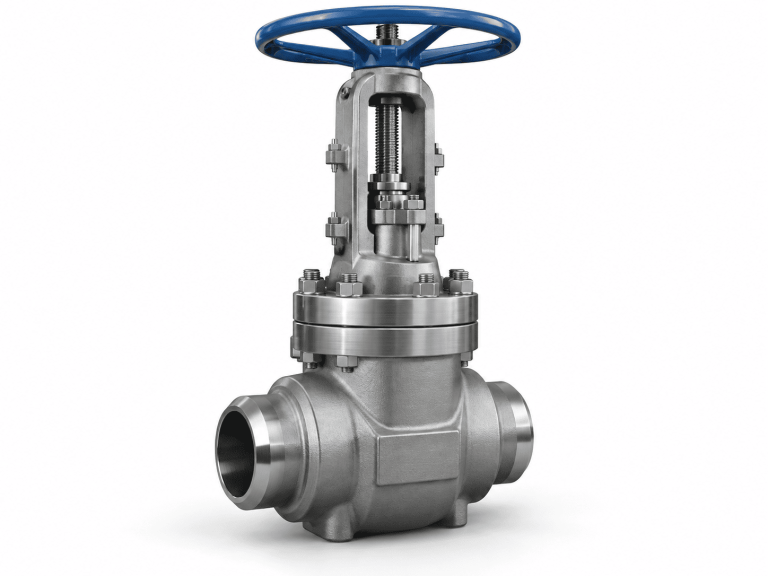
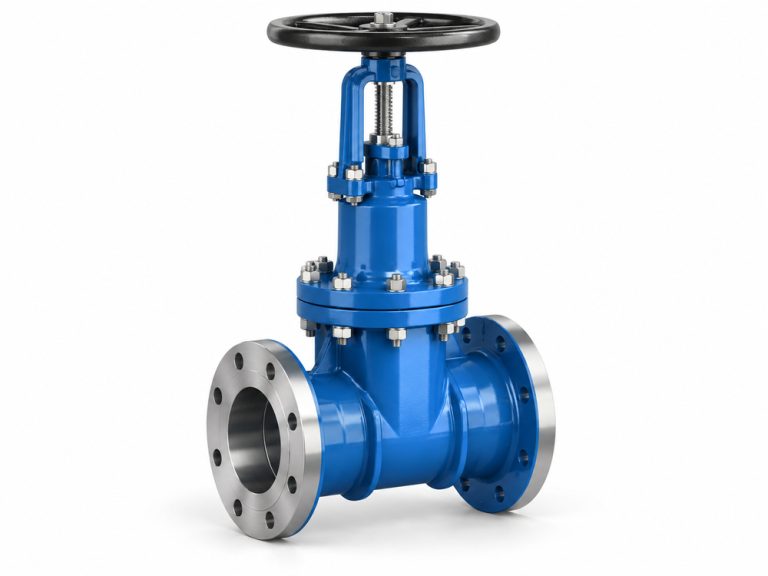
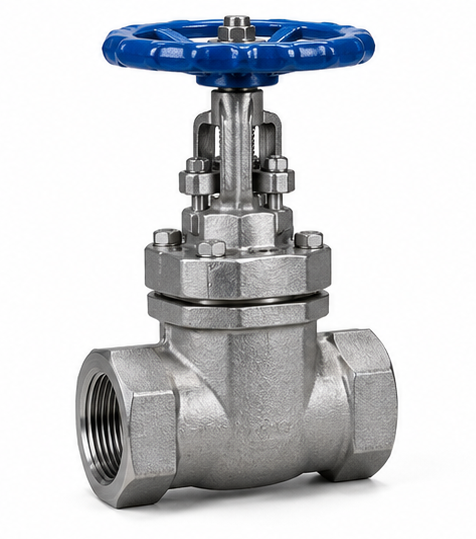
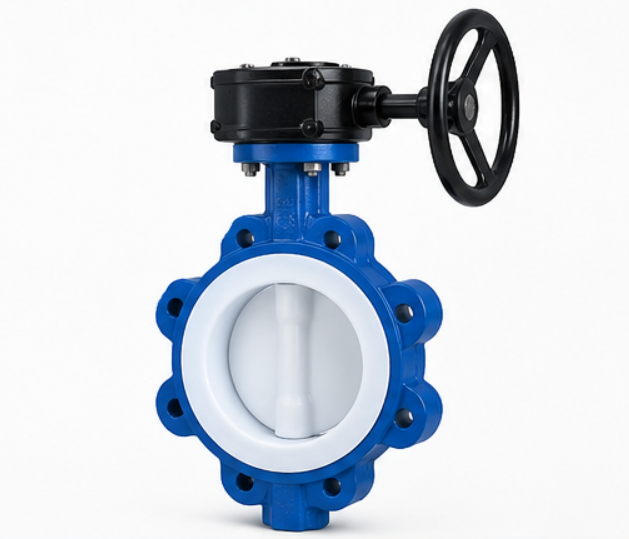
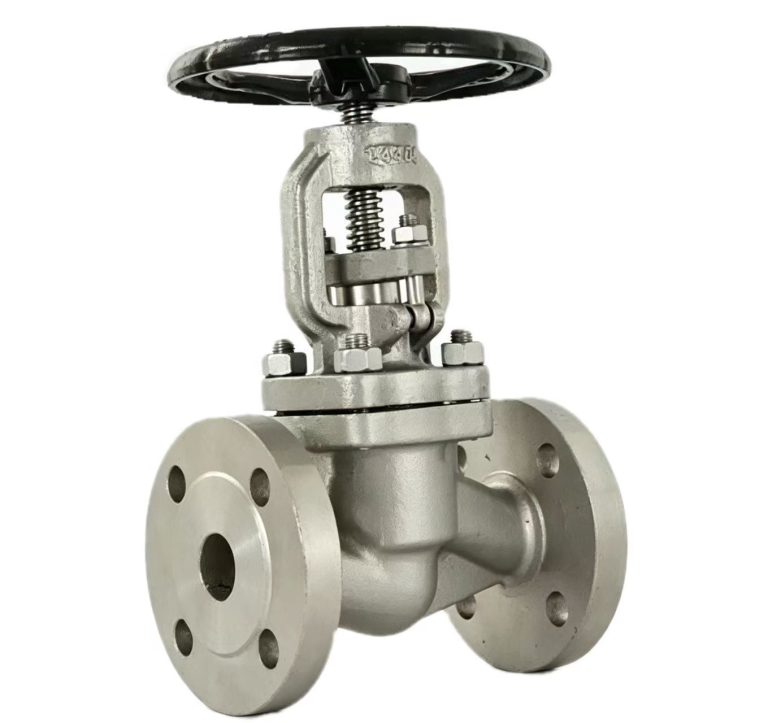
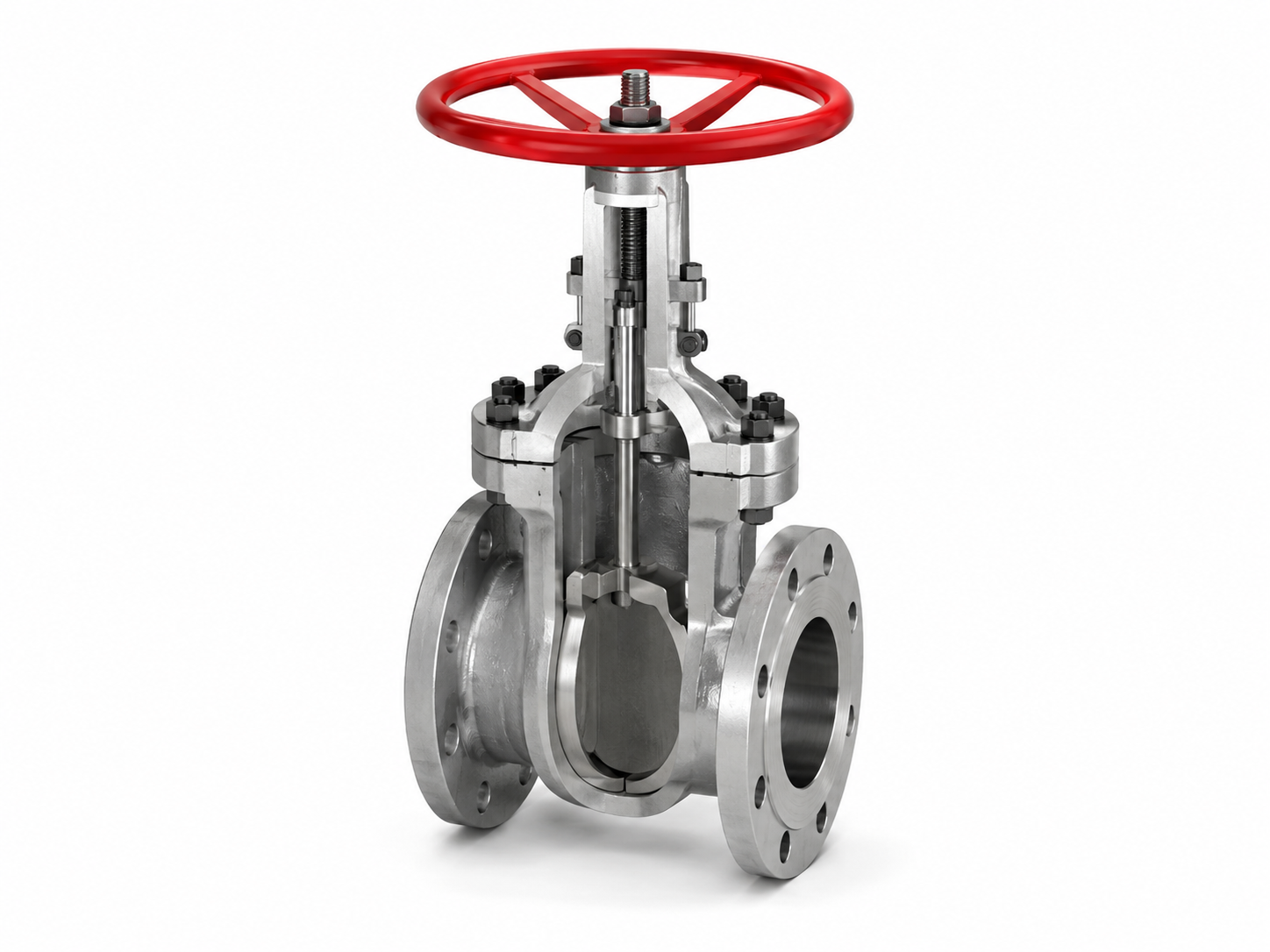
Industrial slide gate valve designed for isolating or controlling dry bulk material discharge from silos, hoppers, bins and conveying equipment.
Slide Gate Valve for Bulk Material Isolation and Discharge Control
A slide gate valve is an industrial isolation device designed primarily for dry bulk materials rather than conventional liquid pipeline service. A flat gate plate moves across the material opening to start or stop the discharge of powders, granules, pellets and other free-flowing or moderately difficult bulk solids.
Typical installation points include the outlets of silos, storage bins, hoppers, screw conveyors, mixers, dust collectors and bulk material handling equipment. When the gate is fully retracted, the opening provides a relatively unobstructed path for material discharge. When the gate moves into the closed position, it isolates the upstream material from downstream equipment.
Vcore Valve provides slide gate solutions according to the actual material, outlet dimensions, operating frequency, temperature, abrasion level, installation orientation and automation requirements of the project. Square, rectangular and round configurations can be engineered to match existing equipment and fabricated connections.
Product Description
The Vcore Slide Gate Valve consists primarily of a fabricated body or frame, sliding gate plate, gate guides, sealing or packing components and an operating mechanism. Depending on the installation, the gate can be operated manually or driven by a pneumatic cylinder, electric actuator or other project-specified drive system.
Unlike conventional wedge gate valves used in pressurized water, steam or oil pipelines, this type of slide gate is mainly intended for bulk solid isolation and gravity discharge service. Its design therefore focuses on material passage, blade support, resistance to dust leakage, prevention of material buildup and reliable movement of the gate under the load created by the bulk material above it.
Clear Material Passage
The gate retracts away from the opening during operation, helping maintain a clear discharge path for powders, pellets and granular materials.
Fabricated Construction
Carbon steel and stainless steel fabricated designs can be adapted to square, rectangular or round equipment outlets.
Multiple Actuation Options
Manual, pneumatic and electric operating systems can be selected according to valve size, cycle frequency and plant automation requirements.
Application-Specific Sealing
Gate guides, packing and sealing arrangements can be selected according to dust characteristics, temperature, particle size and required containment level.
Abrasion-Resistant Options
Wear-resistant gate plates, liners and internal protection can be considered for cement, minerals, ash and other abrasive bulk materials.
Custom Connection Design
Mounting dimensions and flange drilling can be manufactured according to hopper outlets, equipment drawings and project-specific interfaces.
Technical Specifications
| Item | Available Specification |
|---|---|
| Product Type | Slide Gate Valve / Sliding Gate Valve |
| Primary Service | Dry bulk material isolation and discharge control |
| Typical Media | Powders, granules, pellets, cement, lime, fly ash, grain, minerals, plastic pellets and similar bulk solids |
| Port Shape | Square, rectangular or round |
| Port Size | Project-specific according to silo, hopper, chute or conveyor outlet dimensions |
| Body / Frame Material | Carbon steel, stainless steel 304, stainless steel 316 or project-specified material |
| Gate Plate | Carbon steel, stainless steel or wear-resistant construction according to application |
| Sealing | Metal contact, packing or soft sealing arrangement selected according to material and dust-control requirements |
| Operation | Manual handwheel / manual mechanism, pneumatic cylinder or electric actuator |
| Connection | Fabricated flange, drilled flange or customized equipment connection |
| Installation | Silo outlet, hopper outlet, bin discharge, chute, conveyor, mixer or material handling equipment |
| Working Condition | Gravity-flow and low differential pressure bulk solid systems; pressure or vacuum requirements must be specified before design |
| Inspection | Dimensional inspection, material confirmation, gate travel inspection, actuator function test and visual inspection according to project requirements |
Slide gate valves for bulk solids should not automatically be selected by conventional pipeline pressure classes such as PN16 or ASME Class 150. The required design depends on material head load, pressure or vacuum conditions, equipment connection, gate dimensions and operating conditions. Please provide the actual system data before quotation.
How Does a Slide Gate Valve Work?
The operating principle is straightforward. A flat gate plate travels horizontally or vertically through guides in the valve frame. In the open position, the blade retracts from the material passage so that the bulk product can move through the opening.
During closing, the actuator pushes or pulls the blade across the material stream until the outlet is isolated. The gate guides support the blade and help maintain alignment while the sealing system limits the escape of dust or fine material around the blade.
The required operating force can vary considerably because the blade may need to move against the weight and friction of bulk material above the valve. Material density, particle size, moisture content, gate area and installation position should therefore be considered when selecting manual or powered operation.
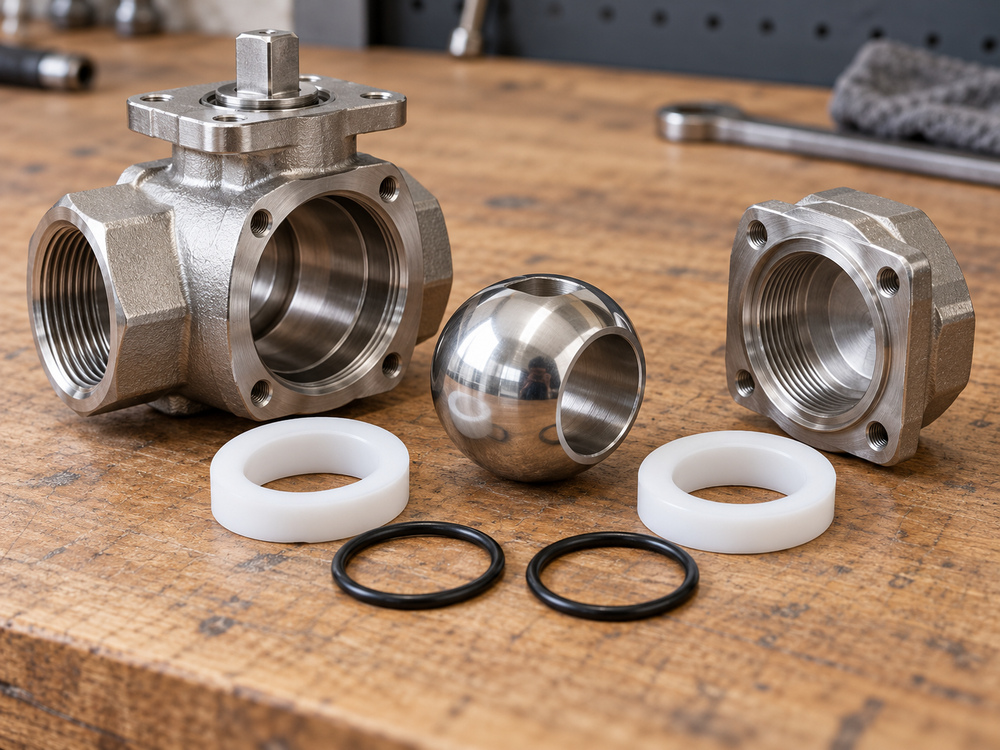
Slide gate blade, guide and sealing components determine smooth travel and material containment during repeated opening and closing.
Manual, Pneumatic and Electric Slide Gate Valves
| Operation Type | Best Used For | Selection Considerations |
|---|---|---|
| Manual Slide Gate Valve | Maintenance isolation, occasional operation and smaller equipment outlets | Confirm gate size, material load and available operating space |
| Pneumatic Slide Gate Valve | Automated batching, frequent cycles and process equipment integration | Confirm air pressure, cylinder stroke, operating speed and fail position requirements |
| Electric Slide Gate Valve | Remote operation where compressed air is unavailable or electrical control is preferred | Confirm power supply, actuator torque or thrust, control signal, IP protection and opening/closing time |
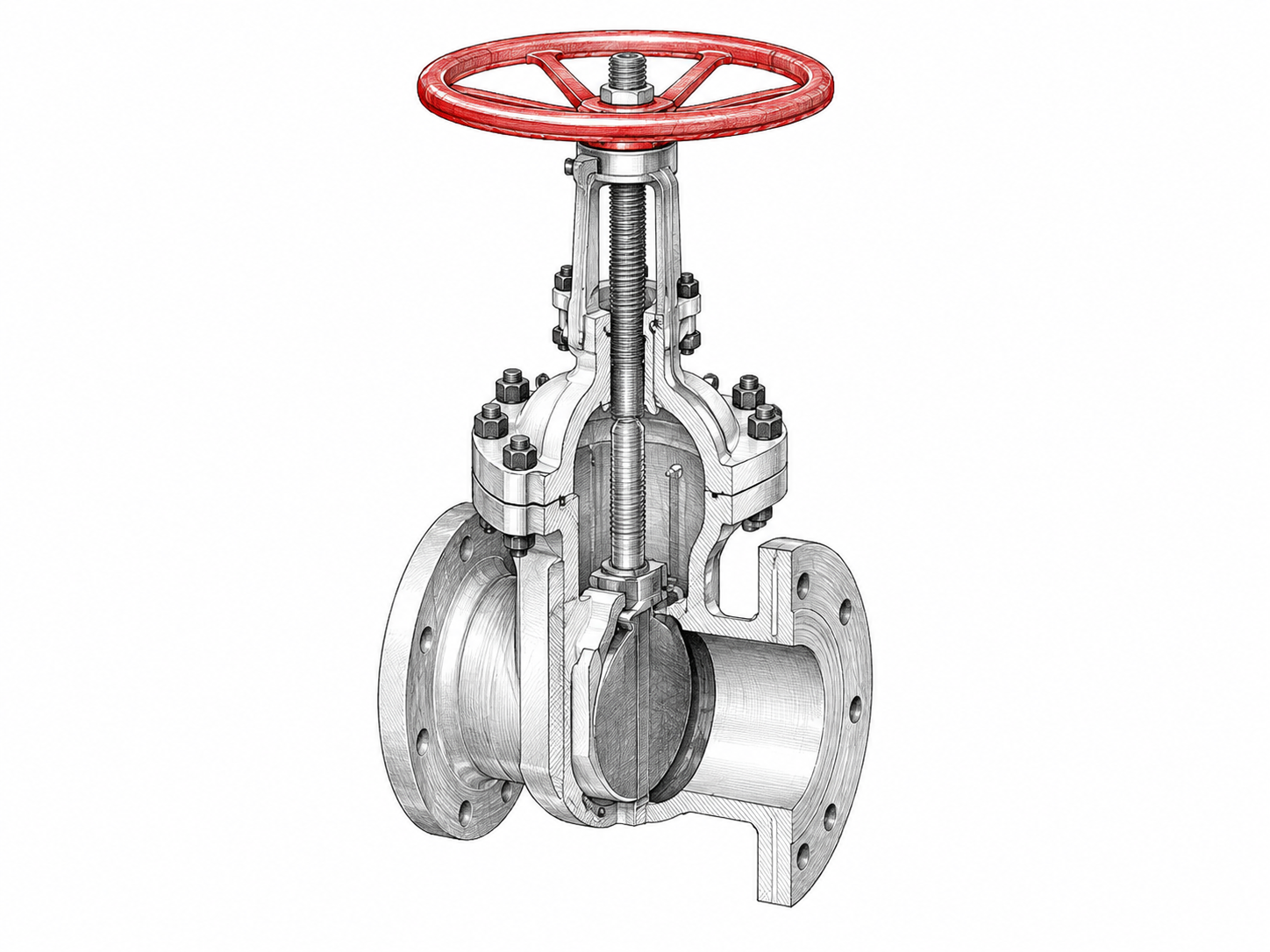
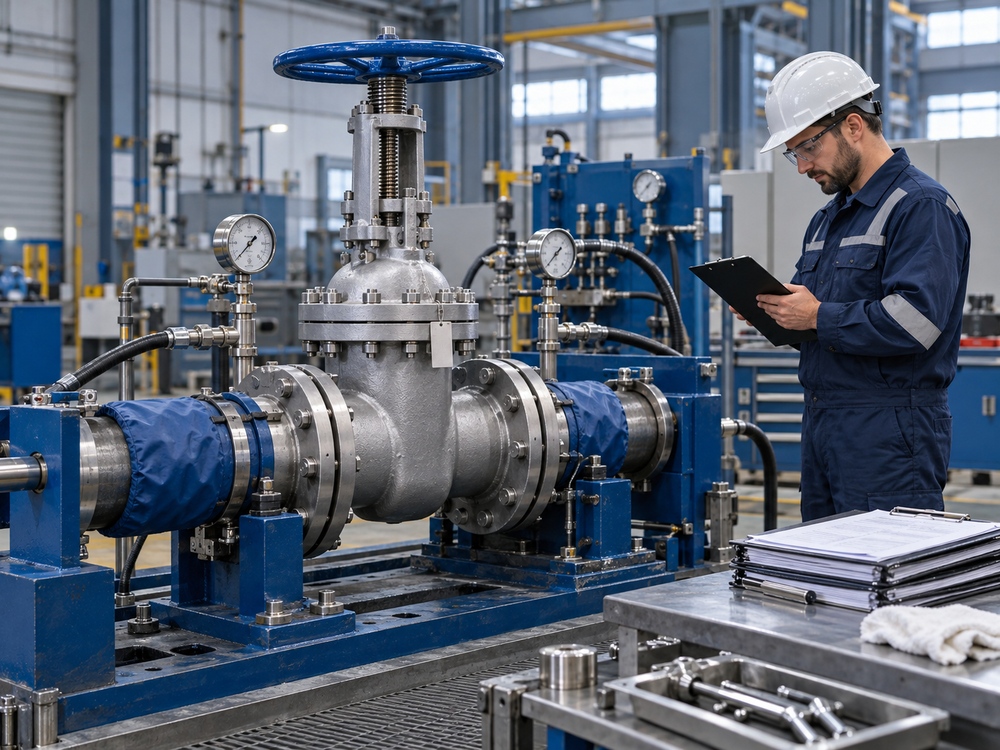
A slide gate valve installed below a silo or hopper provides isolation between stored bulk material and downstream conveying or processing equipment.
Typical Slide Gate Valve Applications
Slide gate valves are mainly used at material transfer and discharge points where operators need to isolate stored bulk material from downstream process equipment.
- Silos and Storage Bins: Isolation of material before maintenance or downstream equipment servicing.
- Hopper Discharge: Opening and closing the material outlet above feeders, mixers or conveyors.
- Cement and Fly Ash Handling: Bulk powder isolation in cement plants, batching systems and ash handling equipment.
- Mining and Minerals: Handling sand, mineral powders and other abrasive dry materials with appropriate wear protection.
- Plastic Pellets and Granules: Isolation of resin pellets, masterbatch and granular raw materials.
- Grain and Food Processing: Stainless steel configurations can be specified for compatible dry food and grain handling systems.
- Chemical Powder Processing: Material-compatible construction can be selected for dry chemical powders and additives.
- Dust Collection Systems: Isolation below dust collectors, cyclones or collection hoppers where the operating conditions permit.
Slide Gate Valve vs. Knife Gate Valve
The names slide gate valve and knife gate valve are sometimes used interchangeably in the market, so the actual service condition should always be confirmed rather than selecting a valve by name alone.
For this Vcore product range, a slide gate valve refers primarily to a fabricated gate used for powders, pellets, granules and other dry bulk materials at silos, hoppers and conveying equipment. A knife gate valve normally refers to a valve used in slurry, wastewater, pulp, mining or other process systems containing suspended solids.
| Comparison | Slide Gate Valve | Knife Gate Valve |
|---|---|---|
| Typical Medium | Dry powders, pellets, grains and bulk solids | Slurry, wastewater, pulp and solids-containing process media |
| Typical Installation | Silo, hopper, bin, chute and conveyor outlet | Process pipeline |
| Port Configuration | Square, rectangular or round | Usually round pipeline bore |
| Body Construction | Frequently fabricated to match equipment dimensions | Valve body designed around pipeline connection requirements |
| Main Selection Factors | Bulk density, particle size, abrasion, material head load and outlet geometry | Pressure, temperature, slurry concentration, solids content and pipeline standard |
For conventional industrial pipeline isolation valves, see our
industrial gate valve range
.
How to Select a Slide Gate Valve
Correct slide gate selection starts with the properties of the bulk material and the mechanical load on the gate rather than only the opening size. Providing complete application information helps avoid blade jamming, excessive actuator load, wear and dust leakage.
Information Required Before Quotation
- Bulk material: cement, fly ash, grain, powder, pellets, minerals or other material.
- Bulk density: required for evaluating the load acting on the gate.
- Particle size: powder, fine granule, pellet or coarse material.
- Moisture and flow behavior: free-flowing, sticky, compacting or bridging tendency.
- Temperature: normal and maximum operating temperature.
- Abrasion: indicate whether the material is highly abrasive.
- Opening dimensions: square, rectangular or round outlet dimensions.
- Installation drawing: hopper, silo, chute or equipment interface dimensions.
- Operating frequency: occasional isolation or frequent automatic cycling.
- Actuation: manual, pneumatic or electric.
- Pressure or vacuum: specify any positive or negative differential pressure.
- Material requirement: carbon steel, SS304, SS316 or other specified material.
- Dust containment: specify the required sealing level.
Material and Wear Protection Options
The correct material combination depends on corrosion, abrasion, temperature and product cleanliness requirements. Carbon steel fabricated bodies are suitable for many general industrial bulk handling applications, while stainless steel can be selected where corrosion resistance or cleaner material contact surfaces are required.
For abrasive materials such as cement, ash, sand and mineral products, the condition of the blade, guides and material-contact areas is especially important. Wear-resistant plate, replaceable wear components or other protective arrangements can be evaluated according to the project.
Manufacturing, Inspection and Export Preparation
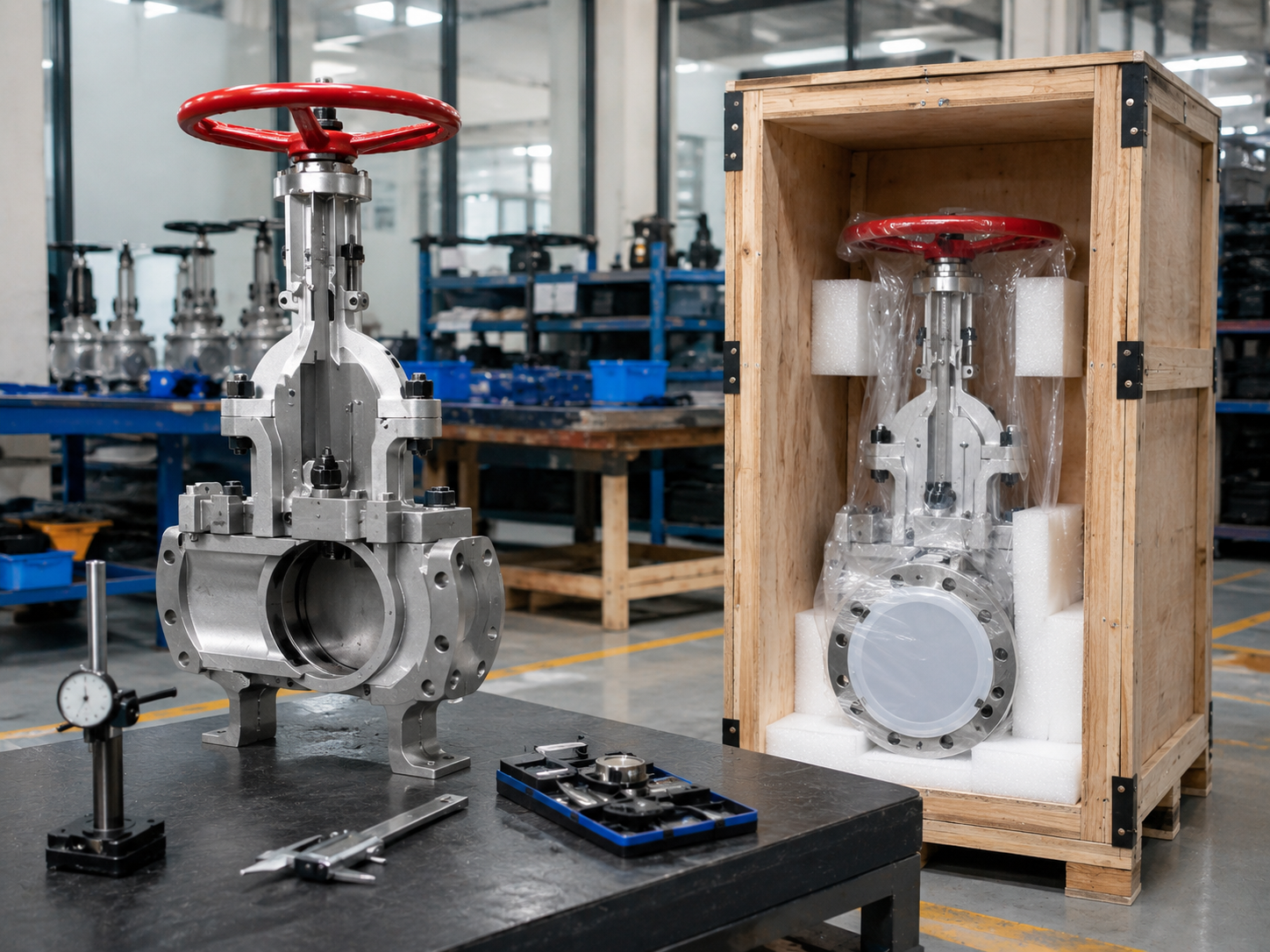
Each project should be checked against the approved dimensions and operating configuration before shipment. Inspection can include body and frame dimensions, gate plate alignment, opening and closing travel, actuator connection, fabrication quality and final visual condition.
For pneumatic and electric configurations, functional operation should be verified before packing. Material identification, drawings, inspection records and other documentation can be prepared according to the purchase order and project requirements.
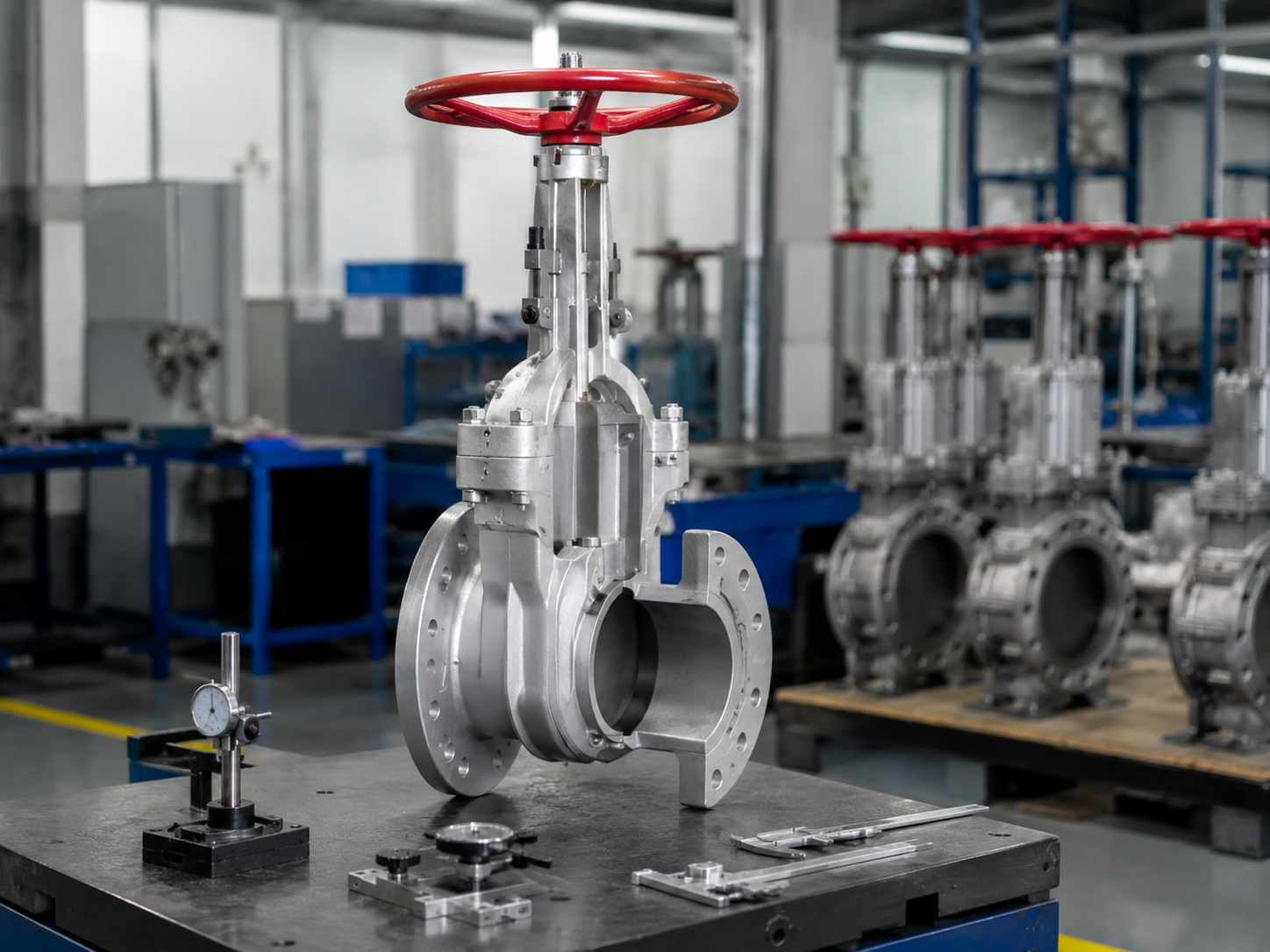
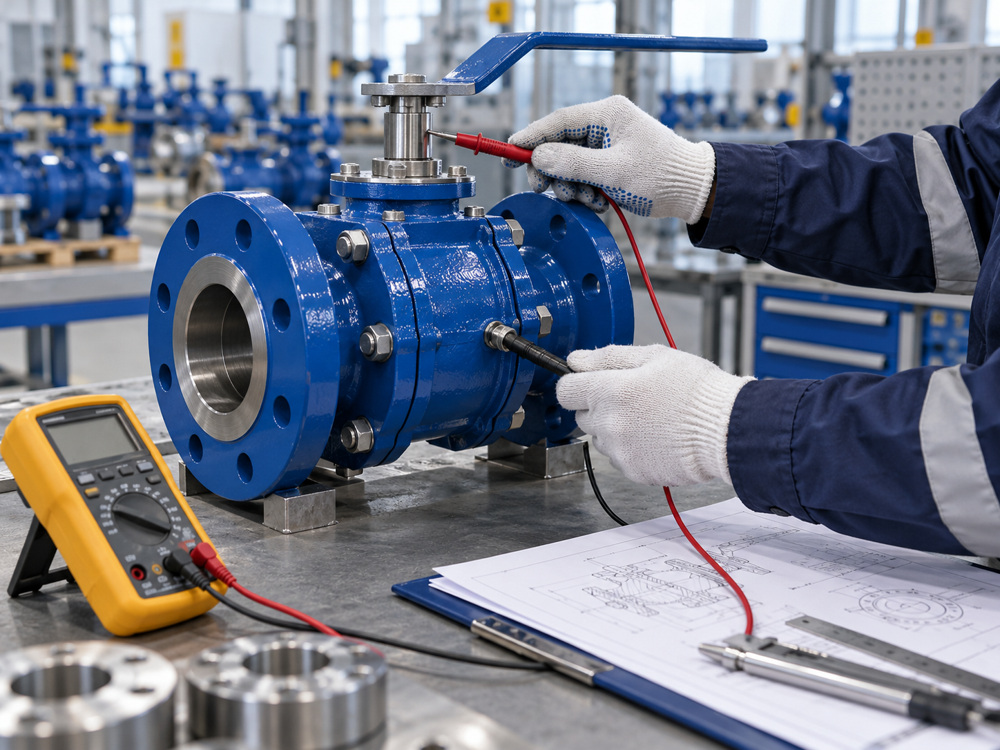
Dimensional inspection, gate travel verification, actuator checking and protected export packing before shipment.
Why Choose Vcore Valve for Slide Gate Valve Projects?
- Project-specific engineering based on actual bulk material characteristics and equipment dimensions.
- Carbon steel, stainless steel and application-specific material options.
- Square, rectangular and round opening configurations.
- Manual, pneumatic and electric operation options.
- Support for customized mounting dimensions and flange drilling.
- Inspection and documentation support according to project requirements.
- Export protection and packing for international industrial projects.
Slide Gate Valve FAQ
What is a slide gate valve used for?
A slide gate valve is mainly used to isolate or control the discharge of dry bulk materials such as powders, granules, pellets, cement, fly ash and grain. It is commonly installed below silos, hoppers, storage bins, chutes and conveyors.
Is a slide gate valve the same as a knife gate valve?
Not always. The terms are sometimes used interchangeably, but slide gates are commonly associated with dry bulk handling equipment, while knife gate valves are widely used in slurry, wastewater and solids-containing pipeline applications. The actual medium and operating conditions should determine valve selection.
Can a slide gate valve handle powder?
Yes. Slide gate valves are commonly used for powders and fine bulk solids. For very fine or dusty products, the sealing configuration and required dust containment level should be specified before manufacture.
Can slide gate valves be pneumatically operated?
Yes. Pneumatic cylinders are commonly used where rapid or frequent automated opening and closing is required. Cylinder size and operating force should be selected according to gate dimensions, material load and available air pressure.
Can the valve be manufactured to a custom hopper outlet?
Yes. Fabricated slide gates can be designed with square, rectangular or round openings and customized connection dimensions according to silo, hopper, chute or conveyor drawings.
What information is needed to quote a slide gate valve?
Please provide the bulk material, density, particle size, temperature, opening dimensions, installation drawing, operating frequency, pressure or vacuum condition, body material, actuation method and quantity.
Need a Slide Gate Valve for Your Bulk Material System?
Send Vcore Valve your bulk material, density, particle size, temperature, silo or hopper outlet dimensions, installation drawing, required body material, operating method and quantity. We can review the application and recommend a suitable slide gate configuration before quotation.