Monel vs Inconel valve material is an important comparison for industrial buyers dealing with seawater, offshore service, chemical processing, high-temperature gas, corrosive fluids, and severe process conditions. Both materials are nickel-based alloys, but their alloy systems and application strengths are different.
Monel is mainly known as a nickel-copper alloy family. It is often reviewed for seawater, marine, brine, hydrofluoric acid-related applications, and selected reducing chemical services. Inconel is mainly known as a nickel-chromium alloy family. It is often reviewed for high-temperature oxidation resistance, corrosive gas, chemical processing, power, oil and gas, and severe-service applications.
This guide explains the difference between Monel and Inconel valve materials, when each one may be selected, how they are used in valve body and trim parts, and what buyers should confirm before ordering.
For broader valve body, trim, seat, seal, gasket, and bolting material selection, read our valve material selection guide. For internal valve parts, read our valve trim materials guide.
What Is Monel Valve Material?
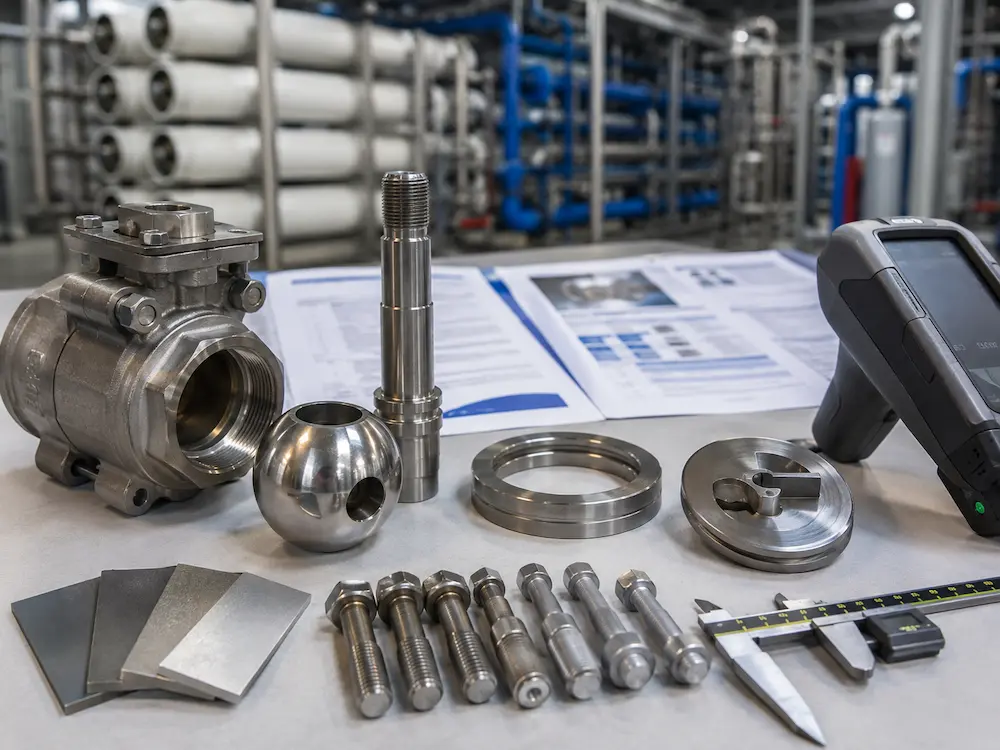
Monel is a nickel-copper alloy family used in selected corrosion-resistant valve applications. In valve engineering, Monel may be used for body material, trim material, stem, ball, disc, seat ring, plug, fasteners, or other wetted components depending on the project requirement.
Monel is commonly reviewed when standard stainless steel or carbon steel is not suitable for the medium. It is often considered for marine service, seawater-related systems, brine, selected acids, and corrosive process conditions.
Typical Monel valve applications include:
- Seawater and marine systems
- Offshore utility pipelines
- Brine service
- Selected chemical processing applications
- Hydrofluoric acid-related service after engineering review
- Corrosive service where stainless steel may not be enough
- Special trim or wetted part requirements
Monel should not be selected only because it is a “special alloy.” Buyers should confirm the exact alloy grade, medium composition, temperature, pressure, corrosion mechanism, and project specification.
What Is Inconel Valve Material?
Inconel is a nickel-chromium alloy family used in high-temperature, oxidation-resistant, corrosive, and severe-service applications. Inconel may be selected for valve body materials, trim parts, stems, plugs, seat rings, springs, bolting, or other critical components depending on service conditions.
Inconel is often reviewed where high temperature, corrosive gas, oxidation resistance, chloride stress corrosion concerns, or severe process conditions make standard stainless steel, carbon steel, or lower alloy materials unsuitable.
Typical Inconel valve applications include:
- High-temperature process service
- Oxidizing chemical environments
- Oil and gas severe service
- Refinery and petrochemical applications
- Power plant and thermal process service
- Corrosive gas or hot gas service
- Severe-service control valve trim
- Applications requiring nickel-chromium alloy performance
Inconel is usually more expensive than standard stainless steel and many other alloy options. It should be specified when the application requires its high-temperature or corrosion-resistant performance.
Monel vs Inconel: Main Difference
| Item | Monel | Inconel |
|---|---|---|
| Alloy Family | Nickel-copper alloy | Nickel-chromium alloy |
| Main Strength | Seawater, marine, brine, selected reducing chemical service | High-temperature, oxidation-resistant, corrosive and severe service |
| Common Valve Use | Marine valves, seawater trim, chemical wetted parts | High-temperature valves, severe-service trim, corrosive process valves |
| Temperature Capability | Good in selected services, but not usually chosen mainly for extreme high temperature | Often selected for high-temperature and oxidation-resistant service |
| Corrosion Focus | Seawater, brine, selected acids and reducing environments | Oxidizing environments, high-temperature corrosion, severe chemical service |
| Cost Level | High compared with common stainless steel | Usually high, especially for severe-service grades |
| Main Buyer Risk | Wrongly applying Monel to service where another alloy is better | Over-specifying Inconel where a lower-cost material is enough |
Monel vs Inconel by Corrosion Resistance
Corrosion resistance is the main reason buyers compare Monel and Inconel. However, corrosion resistance is not a single universal property. A material that performs well in one chemical environment may not perform well in another.
Monel is often reviewed for:
- Seawater and marine exposure
- Brine and saltwater systems
- Selected reducing chemical environments
- Hydrofluoric acid-related service under controlled conditions
- Applications where stainless steel may suffer chloride-related corrosion
Inconel is often reviewed for:
- High-temperature oxidation
- Corrosive gas service
- Severe chemical processing
- High-temperature chloride-related environments
- Applications requiring stronger high-temperature alloy performance
Buyers should not choose Monel or Inconel only from a generic corrosion chart. Medium concentration, temperature, pressure, oxygen content, chloride content, pH, flow velocity, solids, and operating cycle should all be reviewed.
Monel vs Inconel for Seawater Service
Monel is often considered for seawater and marine service because nickel-copper alloys can perform well in many seawater-related applications. It may be used for valve trim, stems, balls, discs, seat rings, or other wetted parts where standard stainless steel is not enough.
Inconel may also be used in certain seawater or offshore applications, especially when the service also involves high temperature, high stress, or aggressive corrosion conditions. However, if the application is mainly seawater corrosion, Monel, duplex, super duplex, bronze, titanium, or other materials may also need to be compared.
For seawater and chloride service, buyers can also review our duplex stainless steel valves guide.
Monel vs Inconel for High-Temperature Service
Inconel is generally more commonly reviewed than Monel for high-temperature and oxidation-resistant service. Nickel-chromium alloys are often used where the valve component must resist heat, oxidation, scaling, and corrosion at elevated temperature.
Monel may still be used in selected temperature conditions, but it is not usually the first choice when the main problem is extreme high-temperature oxidation or hot corrosive gas.
High-temperature valve buyers should confirm:
- Operating temperature
- Design temperature
- Pressure class
- Thermal cycling
- Oxidizing or reducing environment
- Trim material and hardfacing
- Gasket and packing temperature limits
- Bolting material compatibility
For alloy steel body material in high-temperature service, read our WC6 vs WC9 valve material guide.
Monel vs Inconel for Chemical Processing
Chemical processing is one of the most difficult areas for material selection. Monel, Inconel, Hastelloy, titanium, duplex stainless steel, PTFE lining, rubber lining, and other material options may all be considered depending on the chemical medium.
Monel may be reviewed when:
- The service involves selected reducing chemicals
- Seawater or brine is part of the process
- Stainless steel corrosion risk is too high
- The project specification requires nickel-copper alloy wetted parts
Inconel may be reviewed when:
- The service involves high temperature and corrosion together
- Oxidizing environments are present
- Severe chemical service requires nickel-chromium alloy performance
- Trim parts must resist both corrosion and high mechanical stress
For general chemical valve selection, read our industrial valves for chemical processing guide.
Monel and Inconel in Valve Body vs Valve Trim
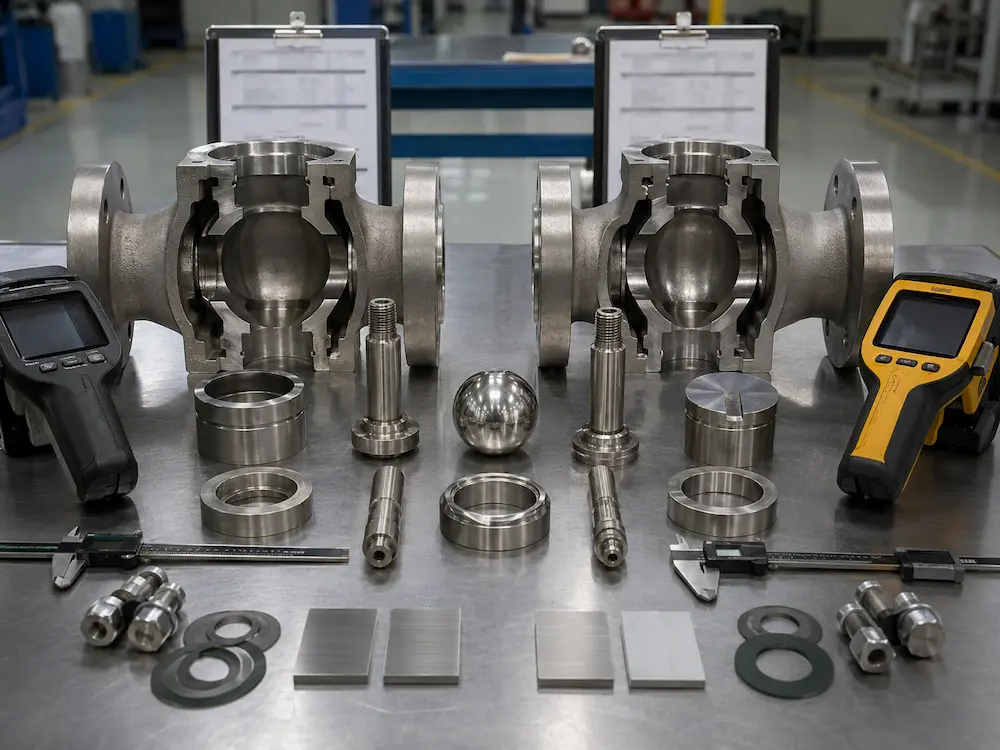
Monel and Inconel can be used as full valve body materials, but they are also commonly used as trim or wetted part materials in selected projects. Using special alloy trim may reduce cost compared with making the full valve body from the same special alloy, but this depends on corrosion exposure and project requirements.
| Valve Part | Monel Use | Inconel Use |
|---|---|---|
| Body / Bonnet | Selected marine or chemical service | Severe high-temperature or corrosive service |
| Stem | Seawater or corrosion-resistant stem applications | High-temperature or severe corrosive service |
| Ball / Disc / Plug | Marine, brine, selected chemical wetted parts | High-temperature, corrosive, severe control service |
| Seat Ring / Trim | Selected corrosion-resistant trim | Severe-service trim, control valve internals |
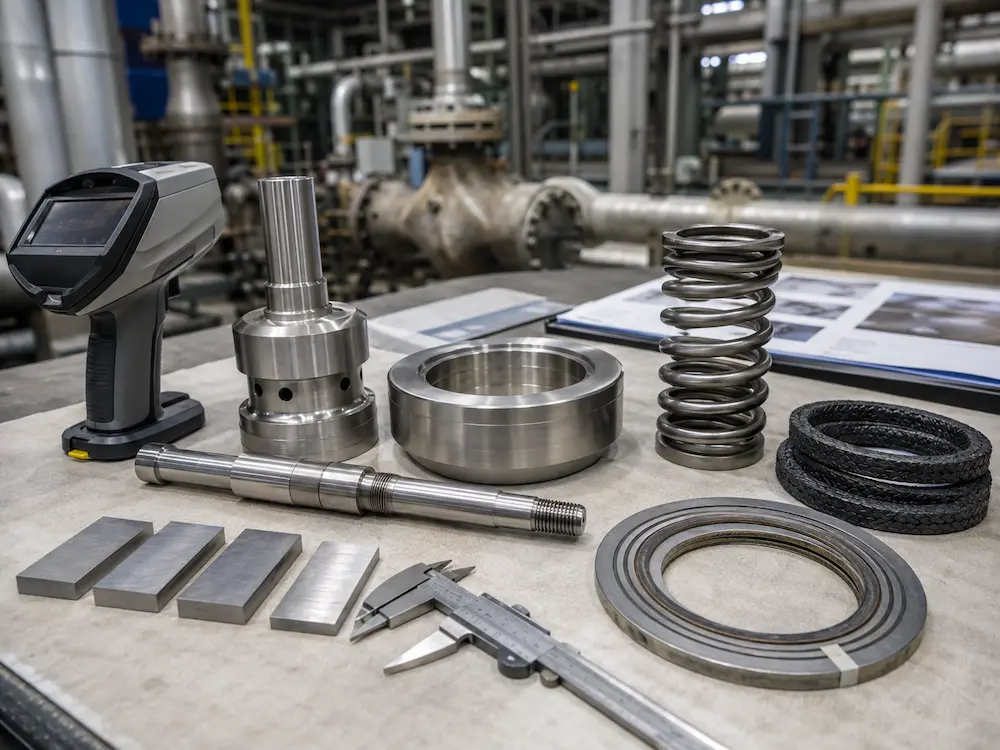
| Spring | Selected corrosive service if specified | High-temperature or severe-service spring applications |
| Bolting | Special corrosive service if required | High-temperature or special alloy bolting if required |
For trim-specific selection details, read our valve trim materials guide.
Monel vs Inconel by Valve Type
Ball Valves
Monel ball valves or Monel trim ball valves may be used in seawater, brine, marine, and selected chemical service. Inconel ball valves or Inconel trim ball valves may be reviewed for high-temperature, corrosive, and severe-service applications.
For ball valves, buyers should check body material, ball material, stem material, seat material, fire-safe requirement, anti-static design, pressure class, and leakage requirement.
Gate Valves
Monel or Inconel may be used for gate valve trim, stem, wedge, seat rings, or full body construction depending on the service condition. For high-temperature or severe corrosion, hardfacing and gasket selection should also be reviewed.
Globe Valves
Globe valves often expose trim parts to throttling, velocity, pressure drop, and erosion. Inconel trim may be reviewed for severe high-temperature or corrosive service. Monel trim may be reviewed for selected marine or chemical applications.
Check Valves
Check valve internals such as disc, plate, hinge pin, spring, and seat ring may require Monel, Inconel, duplex, or other special materials when the medium is corrosive or severe. Spring material is especially important in seawater, chemical, and high-temperature check valves.
Control Valves
Control valve trim is one of the most demanding areas for special alloy selection. Inconel may be selected for severe temperature, corrosion, cavitation, erosion, or high-pressure drop service. Monel may be used in selected chemical or marine-related process conditions.
For process control applications, buyers can review Vcore Valve’s control valve solutions.
Monel vs Inconel vs Stainless Steel
Many buyers first compare stainless steel grades such as 304, 316, CF8, or CF8M. Stainless steel is often enough for many water, chemical, food, utility, and general process applications. However, special alloys may be required when stainless steel is not enough.
| Material Option | Typical Use | Main Limitation |
|---|---|---|
| 304 / CF8 | Clean water, mild chemical, general stainless service | Limited chloride resistance |
| 316 / CF8M | Chemical, wastewater, moderate chloride service | May not be enough for severe seawater or strong chemicals |
| Duplex / Super Duplex | Seawater, offshore, desalination, chloride service | Higher cost and strict grade verification |
| Monel | Marine, seawater, brine, selected chemical service | Not universal for all high-temperature or oxidizing environments |
| Inconel | High-temperature, oxidation-resistant, corrosive severe service | High cost; not always necessary |
For stainless steel comparison, read our 304 vs 316 stainless steel valves guide.
Monel vs Inconel vs Hastelloy and Titanium
Monel and Inconel are not the only special alloy options for corrosive service. Hastelloy and titanium may also be considered depending on the chemical medium and project specification.
Simple selection logic:
- Monel: often reviewed for seawater, brine, marine, and selected reducing chemical conditions.
- Inconel: often reviewed for high-temperature, oxidation-resistant, and severe corrosive service.
- Hastelloy: often reviewed for severe chemical corrosion, acids, and aggressive process media.
- Titanium: often reviewed for seawater, chlorides, and selected oxidizing media where titanium is suitable.
For another high-alloy comparison, read our Hastelloy vs titanium valves guide.
Seat, Seal, Gasket and Packing Materials Still Matter
Selecting Monel or Inconel body or trim material does not complete the valve selection. The seat, gasket, packing, O-rings, bolting, and actuator accessories must also be suitable for the same service condition.
Buyers should check:
- Seat material: PTFE, RPTFE, PEEK, metal seat, or project-specified material
- Gasket material: PTFE, graphite, spiral wound gasket, or special gasket
- Packing material: PTFE, graphite, or special packing
- Spring material in check valves or spring-loaded valves
- Bolting material for temperature and corrosion resistance
- Hardfacing or coating requirement for sealing surfaces
- Leakage class and test standard
For sealing material selection, read our valve seat materials guide.
Material Certificate, PMI and Traceability
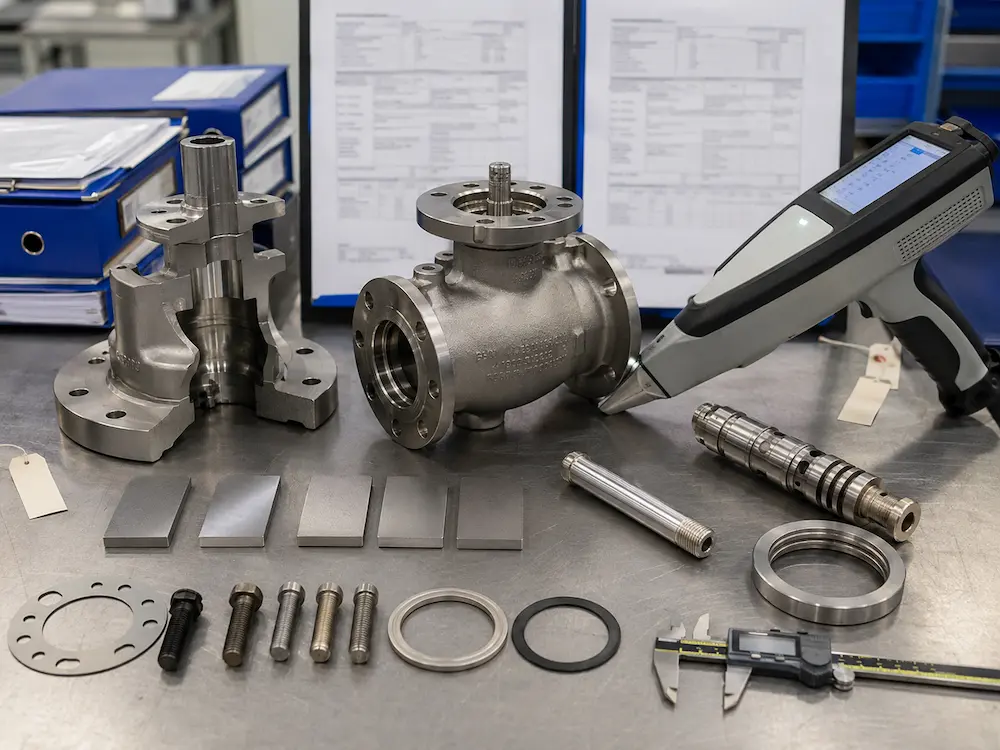
For Monel and Inconel valve orders, material documentation is very important because these are high-value special alloy materials. Buyers should confirm material certificate requirements before production.
Buyers should check:
- Exact alloy grade
- Applicable ASTM, UNS, EN, or project material standard
- Heat number traceability
- Chemical composition
- Mechanical properties if required
- PMI inspection requirement
- Component scope: body, bonnet, trim, stem, ball, disc, seat ring, spring, or bolting
- Whether third-party inspection is required
- Whether documents must be approved before shipment
For document requirements, read our valve certificates and quality documents guide.
Common Mistakes When Selecting Monel or Inconel Valves
Mistake 1: Treating All Nickel Alloys as the Same
Monel and Inconel are both nickel alloy families, but their alloy systems and service strengths are different. They should not be treated as interchangeable materials.
Mistake 2: Choosing Inconel Only Because It Sounds Stronger
Inconel may provide excellent performance in severe service, but it is expensive and not always necessary. If Monel, duplex, 316, PTFE lining, or another material is suitable, Inconel may only increase cost.
Mistake 3: Using Monel Without Checking Chemical Compatibility
Monel performs well in selected environments, but it is not suitable for every corrosive chemical. Exact medium, concentration, temperature, and pressure should be reviewed.
Mistake 4: Ignoring Trim Scope
A valve may have a carbon steel or stainless steel body with Monel or Inconel trim. Buyers should confirm exactly which parts are special alloy and which parts are not.
Mistake 5: Ignoring Seat and Gasket Materials
A special alloy body or trim can still fail if the seat, gasket, packing, or O-ring material is incompatible with the medium or temperature.
Mistake 6: Not Requiring MTC or PMI
For high-value nickel alloy valves, buyers should confirm material certificates, heat number traceability, and PMI requirements before production.
How to Choose Between Monel and Inconel
| Question | Choose Monel If | Choose Inconel If |
|---|---|---|
| Is seawater or brine the main concern? | Monel may be reviewed first | Use only if the specific service justifies it |
| Is high temperature the main concern? | Not usually the first choice for extreme high-temperature oxidation | Inconel is often reviewed for high-temperature service |
| Is the medium chemically severe? | Suitable for selected chemical conditions | Suitable for selected severe corrosive and high-temperature conditions |
| Is the part trim or full body? | Often used for wetted parts or trim in marine and chemical service | Often used for severe-service trim, springs, or high-temperature parts |
| Is cost a major concern? | Still expensive but may be more suitable in selected marine service | High cost; should be justified by service conditions |
Information Buyers Should Provide Before Quotation
- Valve type: ball, gate, globe, check, butterfly, plug, or control valve
- Valve size and pressure class
- Required material: Monel, Inconel, or project-specified alloy grade
- Whether special alloy is required for full body or trim only
- Medium name and chemical composition
- Chemical concentration if applicable
- Chloride content if known
- Operating pressure and design pressure
- Operating temperature and design temperature
- Whether throttling, cavitation, flashing, or erosion is possible
- Required seat, gasket, packing, spring, and bolting materials
- Required leakage class and test standard
- Whether MTC, PMI, or third-party inspection is required
- Project specification or datasheet if available
Related Valve Material Guides
- Valve Material Selection Guide — main guide for valve body, trim, seat, seal, gasket, and bolting material selection.
- Valve Trim Materials Guide — explains 13Cr, stainless steel, Stellite, Monel, Inconel, duplex, and hardfaced trim selection.
- 304 vs 316 Stainless Steel Valves — explains stainless steel valve material selection including CF8 and CF8M.
- Duplex Stainless Steel Valves — explains duplex and super duplex valves for seawater and chloride service.
- Hastelloy vs Titanium Valves — compares two other high-alloy options for corrosive service.
Final Recommendations for Industrial Buyers
Monel and Inconel are both valuable nickel alloy valve materials, but they solve different engineering problems. Monel is often reviewed for seawater, marine, brine, and selected chemical applications. Inconel is often reviewed for high-temperature, oxidation-resistant, corrosive, and severe-service applications.
For seawater and marine service, Monel, duplex, super duplex, bronze, titanium, or other materials may need to be compared. For high-temperature corrosive service, Inconel, Hastelloy, alloy steel, hardfaced trim, or other high-performance materials may be required. The final decision should follow the medium, temperature, pressure, corrosion mechanism, valve type, and project specification.
If you need help selecting Monel, Inconel, Hastelloy, titanium, duplex, stainless steel, alloy steel, PTFE lined, rubber lined, or hardfaced trim valves, Vcore Valve can review your working conditions and recommend a suitable valve material configuration.
For industrial sourcing, the key question is not only “Do we need a nickel alloy valve?” The better question is: “Which nickel alloy, which valve parts, which sealing materials, and which documents are required for the exact medium, pressure, temperature, and corrosion condition?”
FAQ
1. What is the main difference between Monel and Inconel valve materials?
Monel is mainly a nickel-copper alloy family, while Inconel is mainly a nickel-chromium alloy family. Monel is often reviewed for seawater and selected chemical service, while Inconel is often reviewed for high-temperature, oxidation-resistant, and severe corrosive service.
2. Is Monel better than Inconel for seawater valves?
Monel is often reviewed for seawater and marine service, but the final choice depends on chloride level, temperature, flow velocity, pressure, valve type, and project specification. Duplex, super duplex, bronze, titanium, or other materials may also be considered.
3. Is Inconel better than Monel for high-temperature valves?
Inconel is generally more commonly reviewed for high-temperature and oxidation-resistant valve applications. However, exact alloy grade, temperature, medium, and pressure conditions must still be checked.
4. Can Monel and Inconel be used only for valve trim?
Yes. Monel and Inconel may be used for full valve bodies or only for trim and wetted parts, such as stem, ball, disc, plug, seat ring, spring, or control valve trim, depending on the project requirement.
5. Are Monel and Inconel valves expensive?
Yes. Monel and Inconel valves or trim components are generally more expensive than carbon steel and common stainless steel materials. They should be selected when the service condition justifies the cost.
6. Do Monel and Inconel valves need material certificates?
Yes. For Monel and Inconel valve orders, buyers should usually request material certificates, heat number traceability, chemical composition records, and PMI verification when required by the project specification.