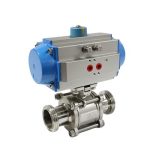
Quick Overview
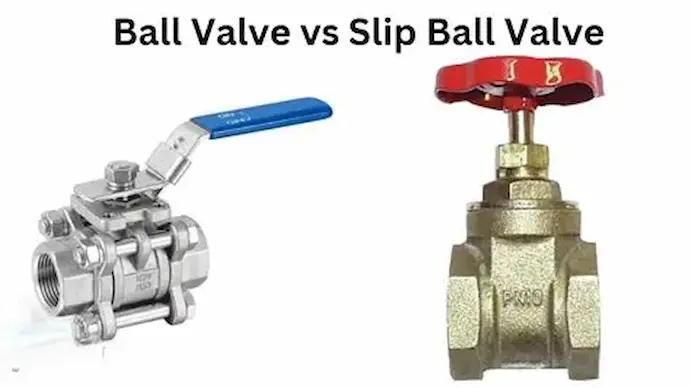
slip ball valve vs ball valve is widely used for flow control in industrial systems, but they serve different purposes and have unique designs. Slip ball valves offer partial flow regulation, while ball valves are typically used for on/off control. This article compares the two valve types, helping you understand their applications and how to choose the best one for your system.
Opening Scenario
Imagine you are managing a pipeline in an industrial setting where precise control of flow is required. If you need to adjust the flow partially, a slip ball valve would be ideal. However, if your application requires full flow shutoff or full-open functionality, a ball valve might be the better choice. Understanding the differences between these valves is essential for ensuring the efficiency and safety of your system.
Pain Points
When selecting the right valve for your system, the following issues often arise:
1. Need for Partial Flow Regulation
In some systems, controlling flow in small increments or regulating flow partially is essential. Ball valves are either fully open or fully closed, making them unsuitable for partial flow control.
2. Flow Control Efficiency
Both slip ball valves and ball valves control flow, but in different ways. The ball valve provides a simple on/off solution, while the slip ball valve offers a more refined control. Choosing the right valve type based on flow needs is critical.
3. System Complexity and Maintenance
The more complex the valve, the more maintenance it may require. Slip ball valves often come with addditional components for partial flow control, which could require more maintenance compared to the simpler design of ball valves.
Solutions
Understanding the design and functionality of each valve type helps in choosing the right solution for your system. Here’s how each valve type addresses these pain points:
1. Slip Ball Valves: Partial Flow Control for Better Regulation
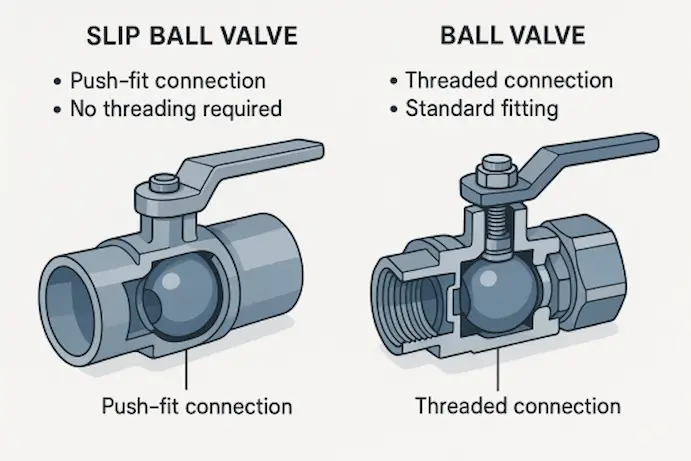
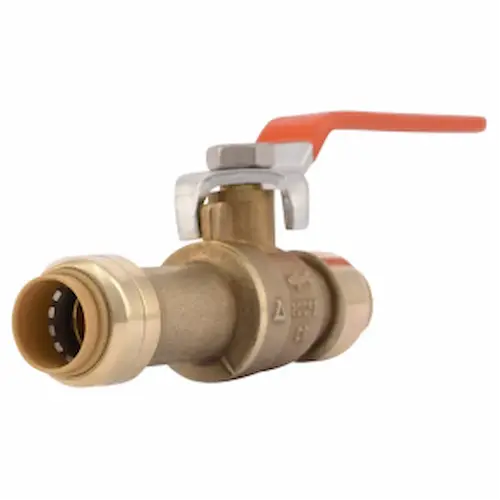
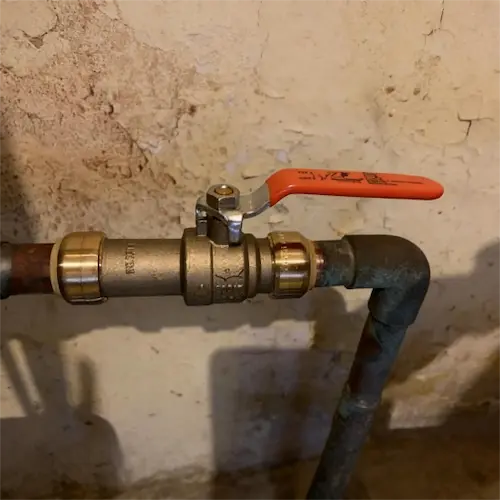
Slip ball valves are designed to allow partial flow regulation. They feature a sliding ball mechanism within the valve body that can control the flow partially. These valves are perfect for applications where fine flow control is needed, such as in wastewater treatment or certain chemical processing systems.
At Vcore Valve, we offer high-quality slip ball valves designed for precise flow control. Our slip ball valves are engineered to maintain performance and efficiency even in systems requiring regulated flow.
2. Ball Valves: Simple, Reliable Flow Control
Ball valves are known for their simplicity and reliability. These valves offer full shutoff or full-open functionality, making them ideal for on/off control in applications such as water, gas, and oil pipelines. Their design ensures minimal flow resistance when fully open.
Vcore Valve provides durable ball valves that are built to withstand high-pressure systems. These valves are easy to operate and maintain, making them a great choice for applications where flow isolation is essential.
3. Choosing the Right Valve for Your Application
- If you need partial flow control for fine-tuning the flow, slip ball valves are the best choice.
- If you require on/off control with no intermediate flow regulation, ball valves are ideal.
At Vcore Valve, we offer both slip ball valves and ball valves, so you can choose the perfect valve for your specific needs.
Case Study
A chemical processing plant was struggling to maintain consistent flow rates with traditional ball valves that only provided on/off control. After switching to slip ball valves, the plant was able to regulate the flow in small increments, improving efficiency and preventing overflows. The slip ball valves offered the precise control the plant needed, reducing waste and improving overall system performance.
Data Analysis-Slip Ball Valve vs Ball Valve
| Valve Type | Core Functionality | Flow Control Type | Sealing Performance | Pressure Range | Precision Control | Durability & Material Options | Best Use Case |
|---|---|---|---|---|---|---|---|
| Slip Ball Valve | Partial flow regulation | Adjustable (variable) | High (minimal leakage) | Low to Medium Pressure (< 40 bar) | High (precise regulation) | Stainless steel, brass, carbon steel | Chemical processing, water treatment, fluid regulation |
| Ball Valve | Full flow control (on/off) | Binary (fully open/closed) | Moderate (works best when fully open or closed) | High Pressure (up to 100 bar) | Low (no partial flow) | Stainless steel, bronze, PVC | Gas, water, and oil pipelines, general isolation |
| Globe Valve | Fine flow control | Adjustable (variable) | High (excellent sealing) | Medium to High Pressure (up to 80 bar) | High (gradual control) | Cast iron, stainless steel | Flow control in steam and thermal systems |
| Gate Valve | Full isolation (on/off) | Binary (fully open/closed) | Moderate (effective when fully open or closed) | High Pressure (up to 100 bar or more) | Low (typically for isolation) | Carbon steel, stainless steel | Water treatment, chemical processing, oil and gas pipelines |
| Check Valve | Unidirectional flow control | One-way flow only | Moderate (prevents backflow efficiently) | Medium Pressure (up to 60 bar) | Moderate (prevents reverse flow) | Stainless steel, brass | Prevent backflow in industrial and water systems |
This table compares the functionality, flow control type, pressure range, and ideal applications of slip ball valves and ball valves, helping you make an informed decision based on your system’s needs.
Trends
1. Increase in Demand for Adjustable Flow Control
As industries require more precise control over fluid systems, the demand for slip ball valves is increasing. These valves provide more refined control, allowing industries such as chemical processing, water treatment, and energy to fine-tune their flow processes.
2. Growth of Smart Valve Technology
Both ball valves and slip ball valves are benefiting from the integration of smart technology. Automated actuators and sensors are now being used to optimize valve performance, improve system diagnostics, and enable remote control, making it easier to manage complex systems.
3. Focus on Durability and Reliability
With increased industrial demand, valve manufacturers are focusing on improving the durability and reliability of both slip ball valves and ball valves. Advanced materials and innovative designs are extending the lifespan of valves, reducing downtime and maintenance costs.
Usage Advice
When selecting a valve for your system, consider the following factors:
1. Flow Regulation Needs
If your system requires precise flow regulation, slip ball valves are the optimal choice. They allow for gradual adjustments in flow, providing flexibility for processes that need fine-tuning.
2. Pressure Range Considerations
For high-pressure systems, ball valves offer robust performance, ensuring safe operation even in extreme conditions. If you’re dealing with lower pressure systems, slip ball valves are designed to operate efficiently without compromising on performance.
3. Maintenance and Longevity
Ball valves are generally easier to maintain due to their simpler design. However, slip ball valves may require more frequent maintenance, particularly if used in applications where they handle abrasive materials or operate in demanding environments.
Conclusion
Choosing between slip ball valves and ball valves depends on your specific application needs. If you need precise flow control and partial regulation, slip ball valves are the best option. For on/off control in high-pressure systems, ball valves provide reliable performance.
At Vcore Valve, we offer both slip ball valves and ball valves, ensuring that your system receives the optimal valve for its requirements. Whether you’re working in chemical processing, water treatment, or pipeline systems, we have the right solution for you.
FAQs
1. What is the difference between a slip ball valve and a regular ball valve?
A slip ball valve allows for partial flow control, while a ball valve is typically used for full flow control, either fully open or fully closed.
2. Can slip ball valves be used in high-pressure systems?
Yes, slip ball valves can be used in high-pressure systems, but they are typically more suited for systems that require gradual adjustments in flow.
3. Are slip ball valves more expensive than ball valves?
Yes, slip ball valves tend to be more expensive due to their complex design, which allows for partial flow regulation.
4. Can a ball valve be used for partial flow regulation?
No, ball valves are designed for binary flow control (fully open or fully closed) and are not suitable for applications that require partial flow control.
5. How often should slip ball valves be maintained?
Slip ball valves require regular maintenance, especially in environments where they handle abrasive materials or operate under variable pressure conditions.
Reference
- Ball Valve Technologies for Fluid Control – Valve World Magazine
- Slip Ball Valve Applications in Industrial Systems – Industrial Process Journal
- Optimizing Flow Control with Slip Ball Valves – Valve Solutions Journal