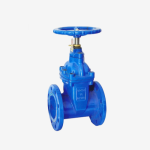
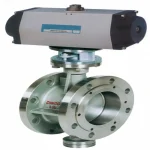
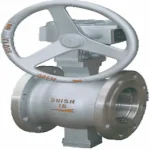
Quick Summary: Industrial valves for chemical processing should be selected by the actual medium, concentration, temperature, pressure, corrosion mechanism, solids content, valve function, sealing system, actuator requirements and documentation needs. Common chemical processing valves include ball valves, butterfly valves, gate valves, globe valves, control valves, diaphragm valves, plug valves, check valves, PTFE lined valves and rubber lined valves. No single valve type or material is suitable for all chemical services. Buyers should compare stainless steel, carbon steel, PTFE, PFA, FEP, rubber lining, EPDM, FKM, duplex stainless steel, titanium, nickel alloys and high nickel alloys against the real working conditions. For reliable quotation, a supplier needs the chemical name, concentration, temperature, pressure, flow condition, solids content, valve size, end connection, operation method and required certificates.
Chemical processing plants use valves for isolation, flow regulation, backflow prevention, dosing, safety isolation and automated process control. The correct valve is not chosen by valve name alone. A ball valve, butterfly valve, gate valve or control valve can be suitable in one chemical line and unsuitable in another line if the medium, concentration, temperature, pressure, solids or cleaning requirement changes.
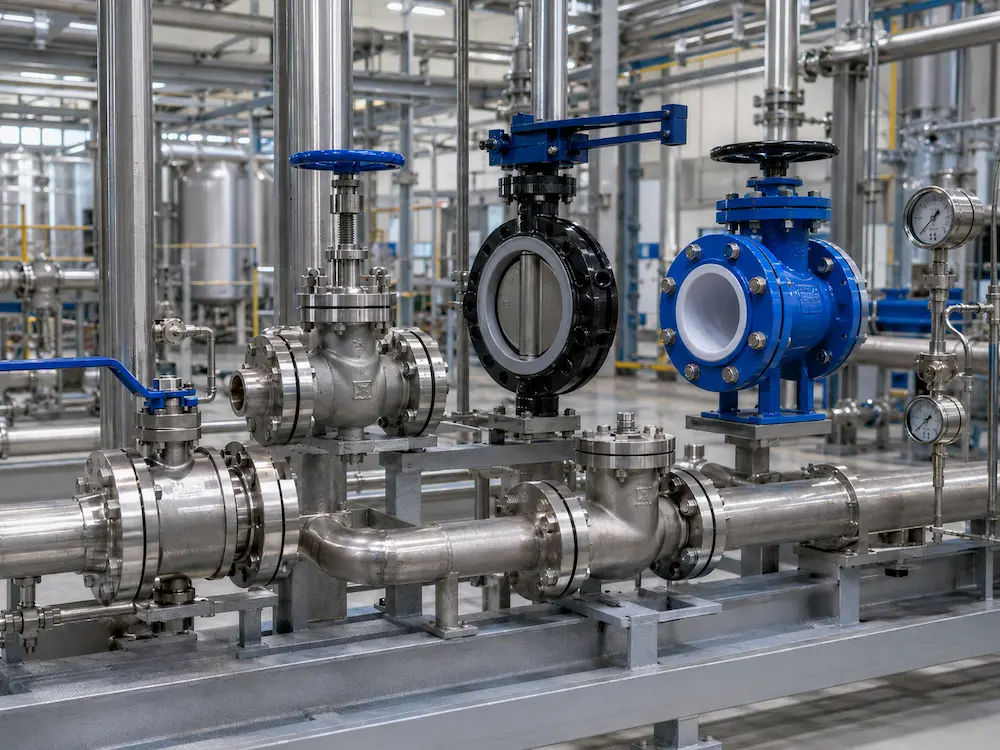
This guide works as the main selection page for chemical processing valves. It explains the most common valve types, material and lining choices, failure risks, automation points, documentation needs and RFQ information buyers should prepare before requesting a quotation from a valve supplier.
Quick Selection Guide for Chemical Processing Valves
The table below is a starting point for early selection. Final valve type, material, lining, seat, gasket, packing and actuator selection should still be confirmed against the actual chemical service conditions.
| Chemical Service Condition | Common Valve Options | Key Selection Concern |
|---|---|---|
| Clean chemical transfer | Ball valve, butterfly valve or plug valve | Seat compatibility, shutoff requirement, pressure drop and operating frequency |
| Strong acid or alkali | PTFE lined valve, PFA lined valve, selected alloy valve or diaphragm valve | Chemical concentration, temperature, lining quality and material compatibility |
| Chemical slurry or abrasive media | Rubber lined valve, diaphragm valve or selected slurry valve | Abrasion, solids content, liner material, clogging risk and maintenance access |
| Flow regulation or dosing | Globe valve, control valve or V-port ball valve depending on duty | Trim material, cavitation, leakage class, actuator sizing and control accuracy |
| Pump discharge or backflow prevention | Check valve | Installation orientation, pressure drop, water hammer and material compatibility |
| Automated shutoff | Electric ball valve, pneumatic ball valve or actuated butterfly valve | Operating torque, actuator protection, fail-safe requirement and control signal |
| Corrosive water treatment chemicals | Rubber lined valve, PTFE lined valve or stainless steel valve | Chemical compatibility, temperature, liner quality, seat material and seal material |
Industrial Valves for Chemical Processing Selection Factors
For industrial valves for chemical processing, the most important selection factors are the chemical medium, concentration, temperature, pressure, solids content, valve function, corrosion risk, lining quality, sealing material and required project documentation. This gives buyers a practical framework before moving into detailed product categories or material-specific articles.
Why Valve Selection Matters in Chemical Processing
Chemical service can combine corrosion, permeation, erosion, crystallization, pressure cycling, temperature change and actuator load in the same pipeline. A valve that looks acceptable by pressure rating may fail early if the trim, lining, seat, packing or gasket is not compatible with the medium.
For example, stainless steel may perform well in many general chemical lines, but it is not universal for chloride-containing media, strong acids or high-temperature corrosive service. PTFE lining can be useful for many corrosive fluids, but temperature, vacuum, permeation, pressure and lining quality must be reviewed. Rubber lining can help in selected slurry or water treatment lines, but the rubber compound must match the chemical and abrasion condition.
For acid and alkali lines, buyers can review our corrosion-resistant valves for acid and alkali pipelines guide for more detailed material and lining considerations.
What Makes Chemical Processing Valves Different?
Chemical processing valves are different from general water or air service valves because the medium can attack several parts of the valve at the same time. A good specification should look beyond the body material and include the ball, disc, wedge, stem, trim, seat, lining, gasket, packing, fasteners, actuator enclosure and coating system.
- Chemical compatibility: Check the actual chemical name, concentration, impurities and operating temperature.
- Corrosion mechanism: Review general corrosion, pitting, crevice corrosion, stress corrosion cracking, permeation or external corrosion.
- Solids and slurry: Consider abrasion, blockage, settling, crystallization and torque increase.
- Valve function: Isolation, throttling, control, diversion and backflow prevention require different valve designs.
- Documentation: Project specifications may require material certificates, pressure tests, seat leakage tests, drawings or actuator datasheets.
Main Types of Industrial Valves Used in Chemical Plants
The main valve types used in chemical plants include ball valves, butterfly valves, gate valves, globe valves, control valves, diaphragm valves, plug valves, check valves and lined valves. Each valve type has a different strength. The correct choice depends on the working condition and the function of the valve in the process line.
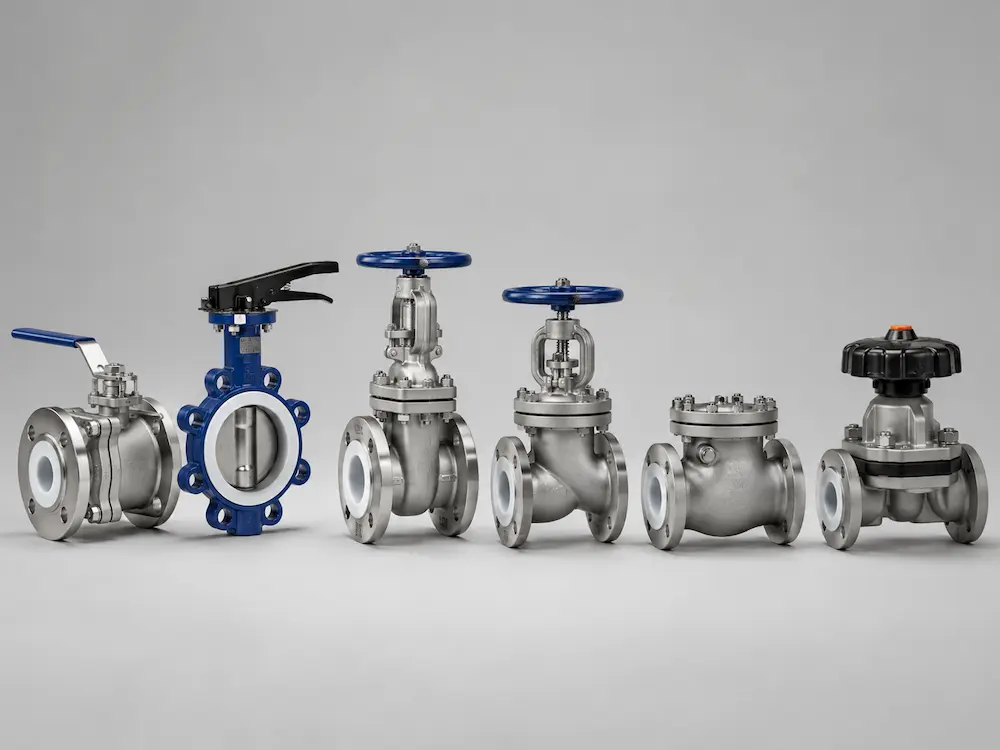
Valve Type Comparison for Chemical Applications
| Valve Type | Main Function | Strengths | Limitations | Typical Applications |
|---|---|---|---|---|
| Ball Valve | On-off isolation | Fast shutoff, low pressure drop, easy automation | Not suitable for every slurry service or precise throttling duty | Clean chemical transfer, automated isolation, tank inlet and outlet lines |
| Butterfly Valve | Isolation or moderate flow control | Compact, economical for larger pipelines, available with lined or resilient seats | Seat and disc material must be checked for chemical compatibility | Water treatment chemicals, utility chemical lines and large low-to-medium pressure pipelines |
| Gate Valve | Full-open or full-close isolation | Low flow resistance when fully open | Not for continuous throttling; slow operation and seat damage risk if partially open | Isolation lines where the valve is normally fully open or fully closed |
| Globe Valve | Manual regulation | Better throttling ability than gate or standard ball valves | Higher pressure drop; trim material must match the chemical and erosion condition | Dosing, bypass, sampling and manual flow adjustment |
| Control Valve | Process control | Designed for flow, pressure or temperature regulation with actuator and positioner | Needs proper sizing, trim selection, actuator sizing and cavitation review | Chemical dosing, reactor feed, pressure control and automated process loops |
| Diaphragm Valve | Isolation or throttling in selected corrosive or contaminated service | Stem is isolated from the media; suitable for many lined and clean process applications | Pressure, temperature and diaphragm material limits must be checked | Corrosive chemicals, water treatment, clean chemical handling and selected slurry lines |
| Plug Valve | Isolation, diversion or routing | Simple flow path; lined plug valves can be useful in corrosive routing service | Torque, lining wear and operating frequency must be reviewed | Chemical transfer, manifold service and selected corrosive pipelines |
| Check Valve | Backflow prevention | Protects pumps and prevents reverse flow | Orientation, pressure drop, closing speed and water hammer must be considered | Pump discharge, chemical feed systems and process protection lines |
| Lined Valves | Corrosion-resistant isolation or control depending on design | Body protected by PTFE, PFA, FEP or rubber lining | Lining quality, permeation, vacuum, temperature and mechanical stress must be checked | Strong acids, corrosive chemicals, slurry or water treatment chemicals |
For product-level selection, review our industrial ball valve, industrial butterfly valve, control valve and rubber-lined valve categories.
Key Valve Materials for Chemical Processing
Valve material selection should cover both the pressure-containing body and the wetted parts inside the valve. In many chemical lines, body material alone does not determine suitability. The trim, seat, lining, packing, gasket and bolting can become the weak point if they are not reviewed together.
For a deeper material discussion, see our anti-corrosion valve materials for chemical processing guide.
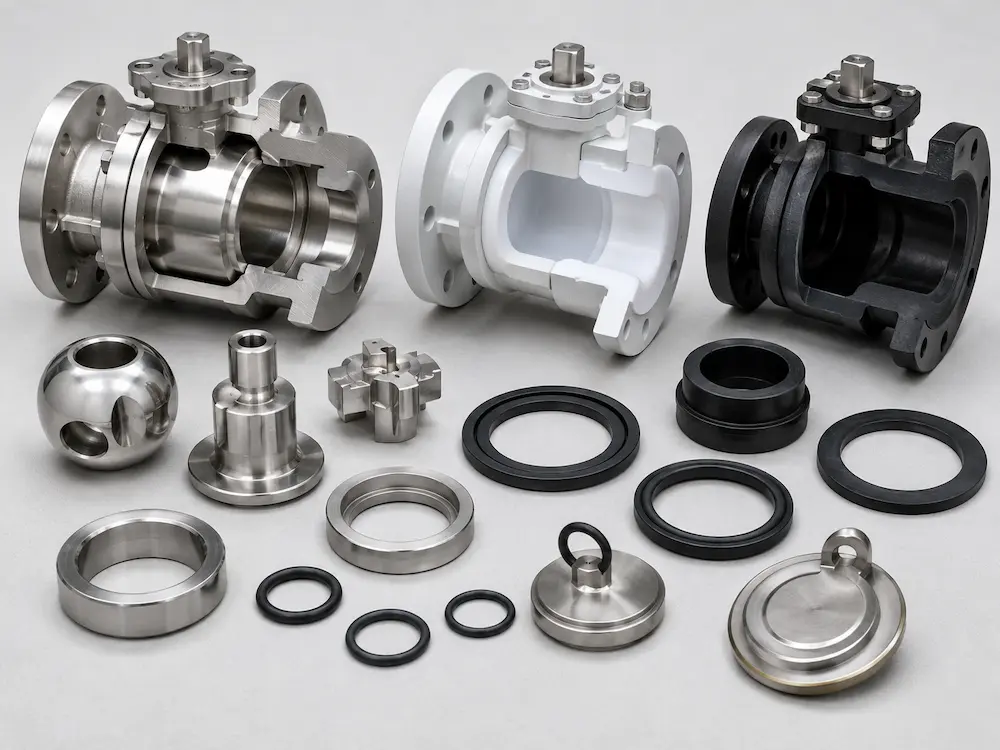
Material and Lining Comparison Table
| Material or Lining | Typical Strength | Key Limitation | Common Chemical Processing Use |
|---|---|---|---|
| 304 Stainless Steel | Good general corrosion resistance in many non-chloride services | May be unsuitable for chlorides, strong acids or high-temperature corrosive media | General chemical handling, utility service and selected clean process lines |
| 316 / 316L Stainless Steel | Better pitting resistance than 304 in some chloride-containing environments | Still not universal; chloride level, temperature and acid condition must be reviewed | Chemical transfer, wastewater chemicals and selected corrosive services |
| Carbon Steel | Strong, economical and widely available for pressure equipment | Usually needs lining, coating or corrosion allowance in corrosive chemical service | Non-corrosive chemical lines, externally coated service or lined valve bodies |
| PTFE / PFA / FEP Lining | Broad chemical resistance for many corrosive media | Permeation, vacuum, pressure, temperature and lining quality must be checked | Strong acid, alkali, solvent and corrosive chemical isolation where lined construction is specified |
| Rubber Lining | Useful for selected slurry, abrasive and water treatment chemical service | Compatibility depends on the rubber compound and operating temperature | Chemical slurry, abrasive media and selected mild corrosive service |
| EPDM | Often considered for water treatment chemicals and selected alkaline service | Not suitable for all oils, solvents or high-temperature chemical service | Seats, liners, diaphragms and seals where compatibility is confirmed |
| FKM | Good resistance to many oils and selected chemicals | Not universal for all acids, amines, steam or high-temperature chemical combinations | O-rings, seals and seats in selected chemical valve designs |
| Duplex / Super Duplex Stainless Steel | Higher strength and improved chloride resistance compared with common austenitic stainless steels | Requires review of temperature limits, welding, corrosion environment and project specification | Chloride-containing chemical service, seawater-related chemical processes and higher corrosion demand lines |
| Titanium / Nickel Alloys | Useful in selected severe corrosive media where stainless steel is not adequate | High cost and media-specific compatibility; not selected by grade name alone | Specialty chemical service after engineering review |
| Hastelloy-type / High Nickel Alloys | Can offer strong corrosion resistance in selected acids and aggressive chemical environments | Grade selection must follow the actual media, temperature and project standard | Severe chemical processing service where standard stainless steel or lining is not enough |
How Corrosion Affects Chemical Pipeline Valves
Corrosion can appear as general wall loss, pitting, crevice corrosion, stress corrosion cracking, galvanic corrosion or chemical attack on soft parts. It can damage the body, trim, seat, stem, packing, gasket and bolting. External corrosion is also important in outdoor plants, coastal plants and chemical storage areas.
When corrosive service is expected, the specification should define the medium, concentration, temperature, impurities, oxygen content if relevant, cleaning chemicals, external environment and required design life approach. Depending on the project, the solution may involve corrosion-resistant alloys, PTFE lining, rubber lining, coating, corrosion allowance or a combination of these options.
How to Choose Valves for Acid and Alkali Pipelines
Acid and alkali lines require careful review of the chemical name, concentration, temperature, pressure, flow velocity and possible impurities. A valve material that works in diluted service may not work in concentrated or hot service. For strong acid or alkali pipelines, PTFE lined valves, PFA lined valves, diaphragm valves and selected alloy valves are often considered, but the final decision should be confirmed by compatibility data and project specification.
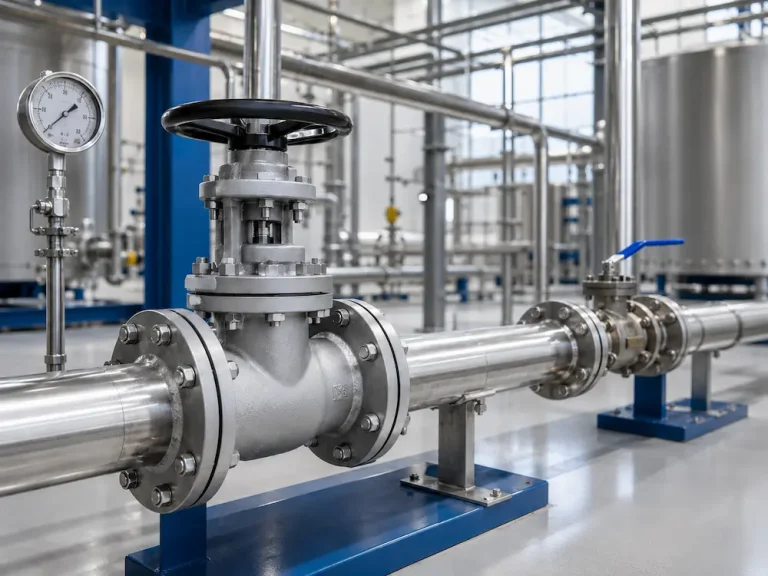
For a dedicated acid and alkali guide, read How to Choose Corrosion-Resistant Valves for Acid and Alkali Pipelines.
PTFE Lined Valves, Rubber Lined Valves, and Metal Valves
PTFE lined valves and rubber lined valves are common choices when a metal body alone is not suitable for the process medium. PTFE, PFA and FEP linings can protect the metal body from many corrosive chemicals, while rubber linings can be useful in selected slurry, abrasive and water treatment applications. Metal valves may still be preferred when pressure, temperature, mechanical strength, permeation, vacuum or fire-safe requirements make lined construction unsuitable.
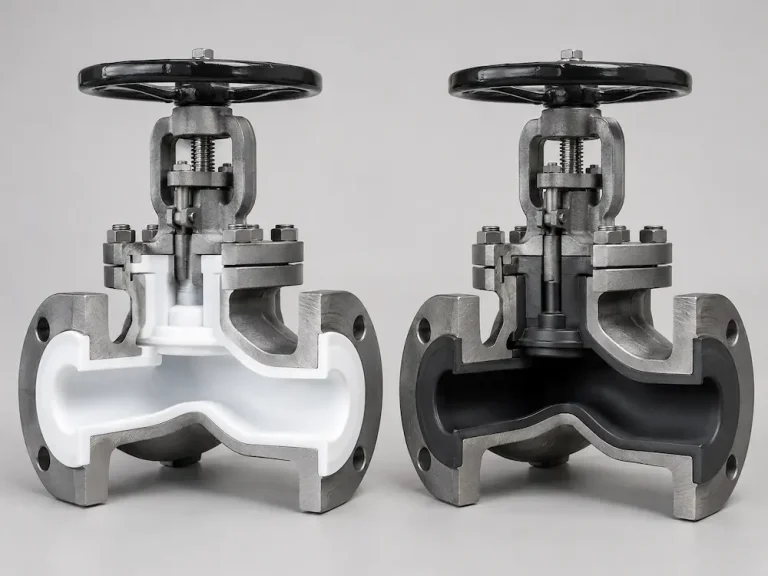
For lining comparison, see PTFE Lined Valve vs Rubber Lined Valve. For abrasive and slurry service, review Rubber Lined Valves for Chemical and Slurry Applications.
Chemical Valve Selection Workflow
A structured workflow helps buyers avoid choosing a valve only by habit or price. The following steps are practical for most chemical valve RFQs.
- Define the medium: List the chemical name, concentration, impurities, solids, crystallization risk and cleaning chemicals.
- Confirm process conditions: Confirm operating pressure, design pressure, normal temperature, maximum temperature and flow rate.
- Select valve function: Decide whether the valve is for isolation, throttling, control, backflow prevention, diversion or safety isolation.
- Select valve type: Compare ball, butterfly, gate, globe, control, diaphragm, plug, check and lined valve options against the function.
- Select material and sealing system: Review body, trim, ball, disc, wedge, lining, seat, seal, packing and fasteners together.
- Confirm testing and documentation: Define drawing, pressure test, seat leakage test, material certificate, actuator datasheet and lining inspection requirements when specified.
Electric Ball Valves and Automation in Chemical Plants
Automation is common in chemical plants for batch control, remote isolation, dosing systems and safety-related process operation. Actuated valves should be selected by actual operating torque, chemical deposits, crystallization risk, cycle frequency, valve size, pressure differential, actuator enclosure, voltage and control signal.
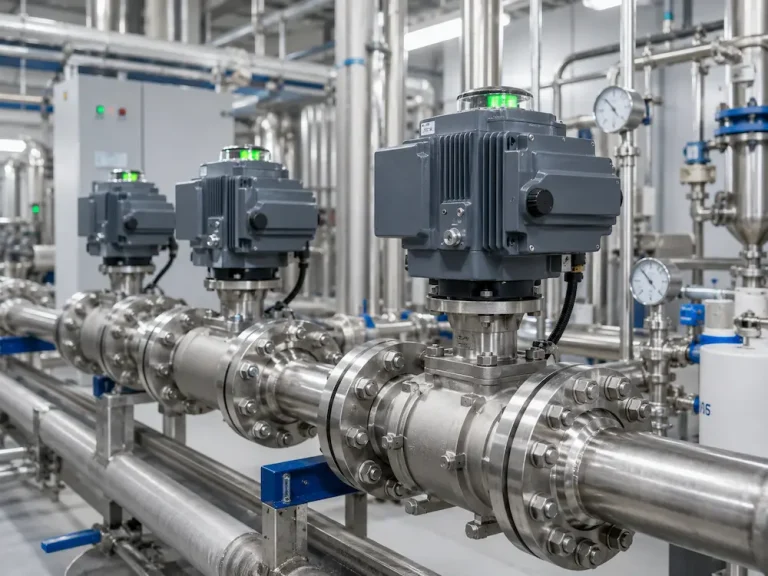
For automated shutoff applications, our Electric Ball Valves in Chemical Plants guide explains actuator sizing, enclosure selection and control signal review in more detail.
Common Valve Failures in Chemical Pipelines
Many chemical valve failures are caused by incomplete service information at the quotation stage. Wrong material, wrong lining, wrong seat material, undersized actuator or poor documentation can create leakage, torque increase, coating damage or maintenance problems.
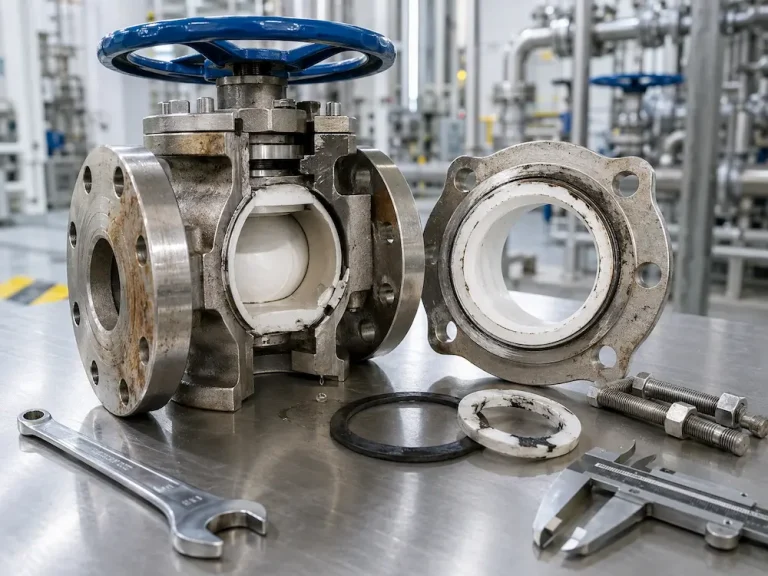
For a dedicated troubleshooting article, read Common Valve Failures in Chemical Pipelines.
Common Chemical Valve Failure Risks
| Failure Risk | Possible Cause | Prevention Check |
|---|---|---|
| Corrosion | Wrong body or trim material, chloride, acid, alkali or oxidizing media | Confirm media, concentration, temperature and material compatibility |
| Internal leakage | Seat damage, particles, chemical attack or wrong shutoff class | Confirm seat material, leakage requirement and fluid condition |
| External leakage | Packing failure, gasket attack or stem corrosion | Confirm packing and gasket compatibility and emission requirement if specified |
| Lining failure | Poor lining quality, permeation, vacuum or mechanical stress | Confirm lining type, lining inspection and actual service conditions |
| High operating torque | Deposits, crystallization, corrosion, swelling or wrong actuator sizing | Confirm torque, actuator safety margin and maintenance access |
| Actuator failure | Undersized actuator, wrong voltage, corrosive environment or water ingress | Confirm actuator torque, enclosure, voltage and control signal |
Information Buyers Should Provide Before Quotation
A complete RFQ helps the supplier select the correct valve type, material, lining, seat, seal, actuator and documentation package. For chemical processing valve quotations, incomplete media and temperature information often causes wrong material, lining, seat or actuator selection.
- Valve type, if already specified
- Size, DN or NPS
- Pressure rating, PN or Class
- Chemical name and concentration
- Impurities, mixed media or cleaning chemicals
- Operating temperature and maximum temperature
- Operating pressure and design pressure
- Flow rate and pressure drop requirement if relevant
- Clean fluid, slurry, gas, vapor or mixed phase
- Solids content and particle size
- Crystallization or scaling risk
- Valve function: isolation, throttling, control or backflow prevention
- Required shutoff or leakage class
- Body material, lining, seat, seal and packing requirements
- Actuator requirement: manual, gearbox, electric or pneumatic
- Voltage and control signal if actuated
- End connection and standard
- Installation environment
- Required standards, certificates, drawings and test reports
Specification Notes for Industrial Valves for Chemical Processing
For industrial valves for chemical processing, buyers should separate valve function from valve construction. The same chemical line may require an isolation valve, a control valve, a check valve or a lined valve depending on whether the duty is shutoff, regulation, backflow prevention or corrosion protection. This is why industrial valves for chemical processing should be specified with medium, concentration, temperature, pressure, flow condition and documentation needs, not by valve name alone.
When project standards are required, buyers may also review the official ASME B16.34 valve standard reference for pressure-temperature rating, material, testing and marking context. The applicable standard should still be confirmed from the project specification before ordering industrial valves for chemical processing.
Compliance, Testing, and Documentation
Documentation requirements depend on the project specification. Not every chemical valve order requires every certificate, but the requirement should be stated before quotation when documents are needed for project approval.
Required for Most Project Quotations
- Technical datasheet
- Dimensional drawing
- Pressure test report
- Material certificate if required
- Packing list and marking information
Required When Specified
- Seat leakage test report
- Lining inspection report
- Coating report
- Actuator datasheet
- Wiring diagram
- Material traceability or EN 10204 3.1 certificate
- Fugitive emission requirement
- Fire-safe requirement
- NACE or sour service review if applicable
Related Deep-Dive Guides in This Chemical Valve Series
This page is the main framework. The related guides below help buyers investigate specific material, lining, automation and failure topics before sending an RFQ.
- Corrosion-Resistant Valves for Acid and Alkali Pipelines
- Anti-Corrosion Valve Materials for Chemical Processing
- PTFE Lined Valve vs Rubber Lined Valve
- Rubber Lined Valves for Chemical and Slurry Applications
- Common Valve Failures in Chemical Pipelines
- Electric Ball Valves in Chemical Plants
Common Buyer Mistakes
- Selecting a valve only by valve type without confirming the chemical medium.
- Assuming stainless steel is suitable for every corrosive chemical.
- Using a gate valve for continuous throttling service.
- Ignoring seat, seal, gasket and packing compatibility.
- Choosing a lined valve without checking vacuum, permeation, pressure and temperature.
- Choosing an actuator without confirming actual torque under chemical service conditions.
- Sending an RFQ without concentration, temperature or solids information.
Need Help Selecting Chemical Processing Valves?
For chemical processing valve quotations, please provide medium, concentration, temperature, pressure, valve size, flow condition, solids content, valve function, material or lining preference, operation method and documentation requirements. Vcore Valve can help review ball valves, butterfly valves, gate valves, globe valves, check valves, control valves, PTFE lined valves and rubber lined valves for chemical processing projects.
FAQ: Industrial Valves for Chemical Processing
What types of valves are used in chemical processing?
Chemical processing commonly uses ball valves, butterfly valves, gate valves, globe valves, control valves, diaphragm valves, plug valves, check valves, PTFE lined valves and rubber lined valves. The correct type depends on the medium, pressure, temperature, solids and valve function.
How do I choose the right valve for chemical service?
Start with the chemical name, concentration, temperature, pressure, flow condition and solids content. Then select the valve function, valve type, body material, trim, lining, seat, seal, packing and actuator based on the actual service.
Which valve material is best for corrosive chemicals?
There is no single best material for all corrosive chemicals. Stainless steel, PTFE lining, rubber lining, duplex stainless steel, titanium, nickel alloys and high nickel alloys can all be suitable in different services, but compatibility must be confirmed.
When should I choose a PTFE lined valve?
A PTFE lined valve may be considered for many corrosive chemical services when the metal body needs lining protection. Temperature, pressure, vacuum, permeation, mechanical stress and lining quality should be checked before selection.
Are rubber lined valves suitable for chemical slurry?
Rubber lined valves may be suitable for selected chemical slurry or abrasive service, especially where the rubber compound matches the chemical and solids condition. Compatibility, temperature, abrasion and maintenance access must be reviewed.
Which valve is suitable for chemical flow control?
Globe valves and control valves are commonly used when accurate flow regulation is required. V-port ball valves or actuated butterfly valves may be considered in selected duties, but sizing, trim, leakage class and actuator performance must be confirmed.
What causes valve failure in chemical pipelines?
Common causes include wrong material selection, chemical attack on seats or seals, corrosion, lining damage, particles, crystallization, external leakage, water hammer and undersized actuators.
What information should I provide when requesting chemical valves?
Provide valve size, pressure rating, chemical name, concentration, temperature, pressure, flow rate, solids content, valve function, material or lining requirement, seat and seal preference, actuator requirement, connection standard and required documents.