Valve pressure-temperature rating is one of the most important but often misunderstood factors in industrial valve selection. Many buyers focus on pressure class, such as Class 150, Class 300, Class 600, PN16 or PN40, but pressure class alone does not define whether the valve is suitable for the actual working condition.
A valve’s allowable pressure changes with temperature. A valve that is acceptable at room temperature may not be suitable at high temperature, even if the nominal pressure class looks correct. Body material, valve standard, flange standard, end connection, seat material, gasket, packing, bolting and fluid condition all affect the final selection.
This guide explains how valve pressure-temperature ratings work, why pressure class changes with temperature, how Class and PN ratings should be understood, and what buyers should provide before requesting a quotation.
For basic DN, NPS, PN and Class terminology, read our DN and PN Meaning in Valves Explained. For severe temperature and pressure applications, read our High Temperature High Pressure Valves Guide.
What Is Valve Pressure-Temperature Rating?
Valve pressure-temperature rating defines the allowable pressure of a valve at a given temperature. It is usually based on the valve design standard, body material group, pressure class, flange standard and temperature condition.
In simple terms, the rating answers this question:
At this temperature, how much pressure can this valve safely handle according to its material and standard?
This is why a valve datasheet should not only show pressure class. It should also confirm the design pressure, design temperature, material, standard and applicable pressure-temperature rating.
Pressure-temperature rating is affected by:
- Valve pressure class or PN rating
- Body material
- Valve design standard
- Flange standard
- End connection type
- Design temperature
- Design pressure
- Seat and sealing material
- Gasket and packing material
- Bolting material
- Fluid type and service severity
Why Pressure Class Is Not the Same as Working Pressure
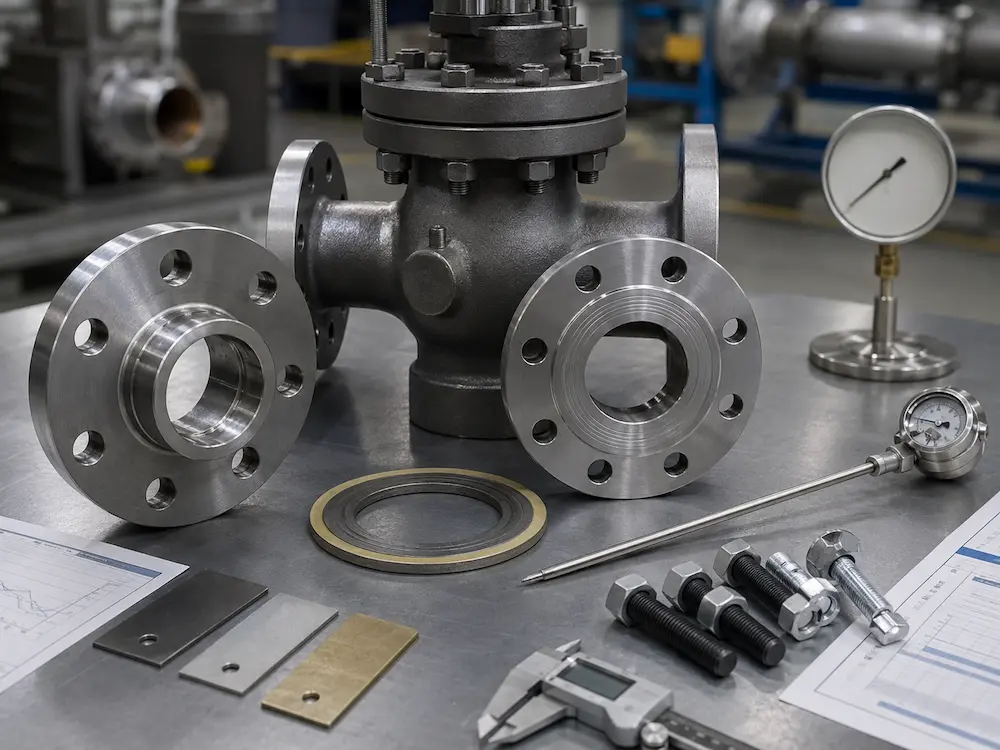
Pressure class is a rating system. It is not the same as the actual working pressure of the pipeline.
For example, a Class 150 valve does not simply mean the valve is only for 150 psi working pressure. A PN16 valve does not automatically mean it can safely operate at 16 bar under every temperature and material condition. These markings are part of a pressure rating system and must be interpreted using the correct standard and temperature condition.
Buyers should distinguish:
| Term | Meaning | Buyer Note |
|---|---|---|
| Pressure Class | Nominal rating system such as Class 150, 300, 600, 900, 1500, 2500 | Must be checked against temperature and material |
| PN Rating | Nominal pressure rating such as PN10, PN16, PN25, PN40 | Not a universal working pressure at all temperatures |
| Working Pressure | Normal operating pressure in the system | Used for practical operating condition review |
| Design Pressure | Pressure used for engineering design | Usually more important for valve selection than normal working pressure |
| Test Pressure | Pressure used during shell or seat testing | Not the same as continuous working pressure |
Why Allowable Pressure Changes with Temperature
As temperature increases, the strength and allowable stress of many valve materials change. This means the same valve body material may carry less allowable pressure at higher temperature than at room temperature.
This is especially important in steam, thermal oil, boiler, refinery, petrochemical and high-temperature gas service. A valve may have a high pressure class, but if the temperature is high enough, the allowable pressure must be checked carefully.
Temperature can affect:
- Body material strength
- Bonnet and cover stress
- Bolting performance
- Gasket sealing capacity
- Packing leakage risk
- Seat material stability
- Stem sealing and operating torque
- Valve leakage performance
This is why high-temperature valve selection must include body material, pressure-temperature rating, seat material, gasket, packing and bolting together.
Class Rating vs PN Rating
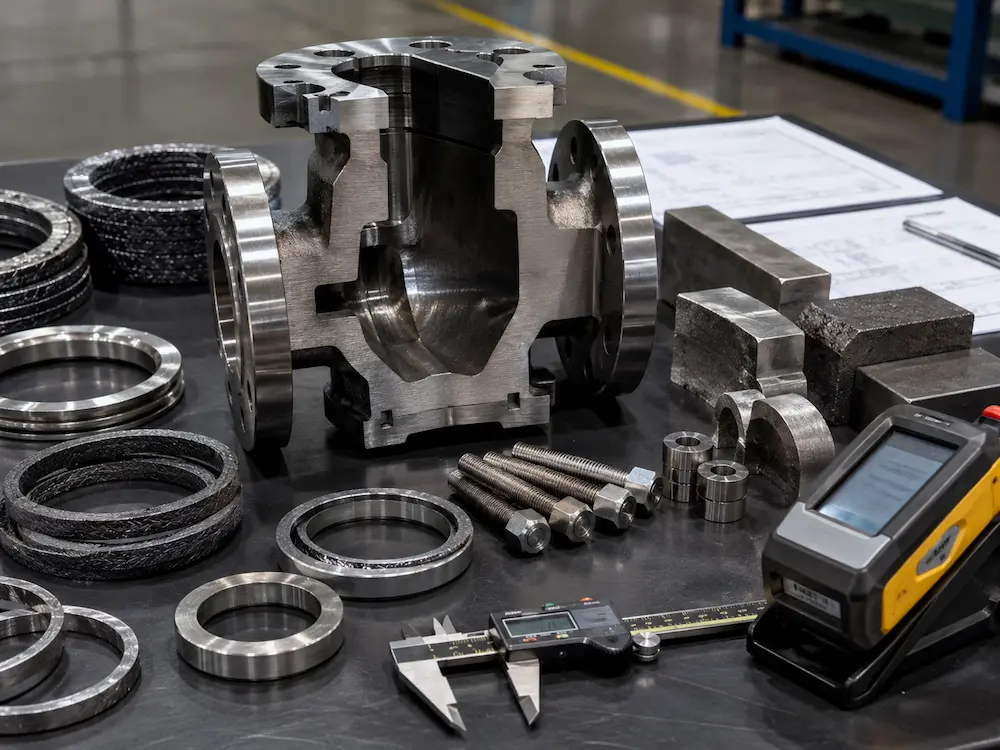
Class and PN are two different pressure rating systems. Class ratings are commonly used in ASME / ANSI valve and flange systems, while PN ratings are commonly used in EN / DIN-related systems.
| System | Common Ratings | Common Use | Important Note |
|---|---|---|---|
| Class | Class 150, 300, 600, 900, 1500, 2500 | ASME / ANSI valve and flange systems | Pressure capability depends on material and temperature |
| PN | PN10, PN16, PN25, PN40, PN63, PN100 | EN / DIN-related valve and flange systems | Must be checked with standard, temperature and material |
PN and Class should not be converted only by one fixed number. Some rough comparisons are used in daily communication, but final selection must follow the required valve standard, flange standard, material and project specification.
Is Class 150 Equal to PN16?
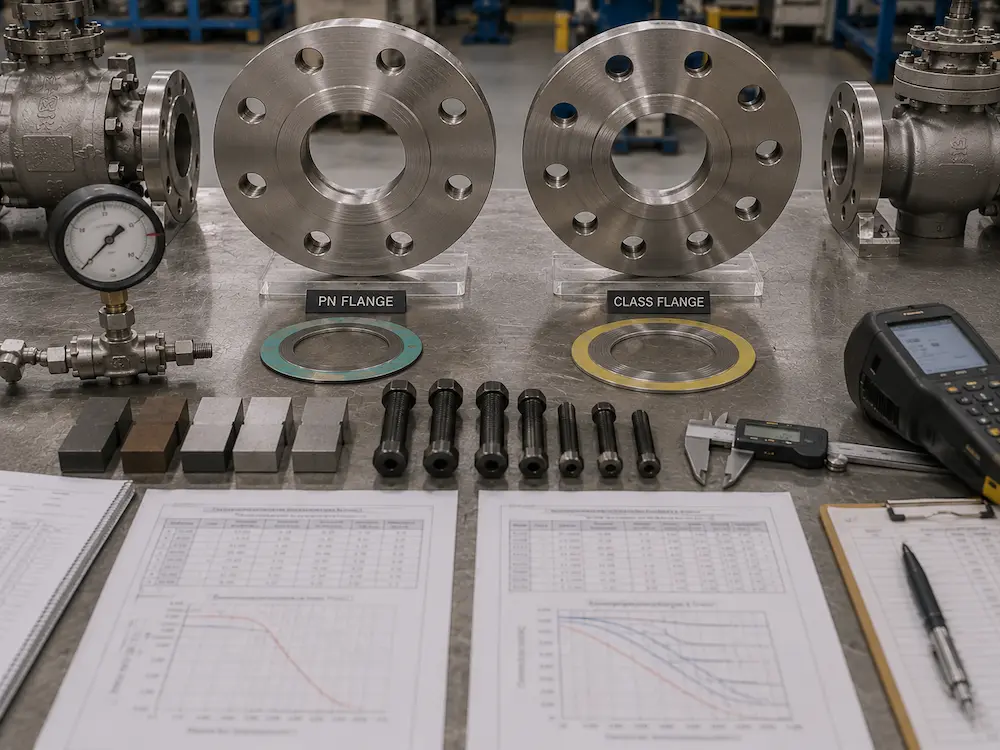
Class 150 and PN16 are sometimes treated as similar in basic purchasing discussions, but they are not automatically identical in every standard, material, temperature and flange condition.
This is a common purchasing mistake. A buyer may say “Class 150 is the same as PN16,” but engineering selection should be more careful. The correct valve and flange rating must be confirmed according to the project standard.
Before treating Class 150 and PN16 as interchangeable, check:
- Required valve standard
- Required flange standard
- Body material
- Design temperature
- Design pressure
- Face-to-face dimension
- Flange drilling
- Gasket type
- Project datasheet
Common Valve Pressure Classes
| Pressure Rating | Typical Application Direction | Buyer Reminder |
|---|---|---|
| Class 150 / PN10 / PN16 | Low-to-medium pressure water, HVAC, utility, general process service | Check material, flange standard and actual working pressure |
| Class 300 / PN25 / PN40 | Medium pressure industrial service, steam, oil, gas and process lines | Confirm pressure-temperature rating and gasket selection |
| Class 600 | Higher pressure oil, gas, steam, chemical and process service | Review body material, seat material and test standard |
| Class 900 | High-pressure process, power, refinery and pipeline service | Engineering datasheet is strongly recommended |
| Class 1500 / Class 2500 | Severe high-pressure service | Requires strict material, testing and documentation control |
These are general application directions only. Final valve selection must follow the project standard, actual medium, temperature, material and datasheet.
How Body Material Affects Pressure-Temperature Rating
The same pressure class can have different allowable pressure values depending on body material. Carbon steel, stainless steel, alloy steel, low-temperature steel, duplex stainless steel and nickel alloys do not behave the same under temperature.
Common valve body materials include:
- WCB cast carbon steel
- A105 forged carbon steel
- LCB / LF2 low-temperature carbon steel
- WC6 / WC9 high-temperature alloy steel
- F11 / F22 forged alloy steel
- CF8 / F304 stainless steel
- CF8M / F316 stainless steel
- F51 / F53 duplex and super duplex stainless steel
- Monel, Inconel, Hastelloy and other special alloys
For high-temperature service, alloy steel materials such as WC6, WC9, F11 and F22 may be reviewed. For corrosion service, stainless steel, duplex or special alloys may be needed. For low-temperature service, LCB or LF2 may be required.
For broader body material selection, read our Valve Material Selection Guide. For high-temperature alloy steel comparison, read our WC6 vs WC9 Valve Material Guide.
How Seat Material Affects Actual Valve Selection
Pressure-temperature rating is not only about the metal body. Seat material can also limit the real usable temperature and pressure of the complete valve.
For example, a metal valve body may be suitable for high temperature, but a standard soft seat may not be suitable for the same temperature. This is common in ball valves, butterfly valves, plug valves and some control valves.
| Seat Material | Typical Use | Selection Warning |
|---|---|---|
| PTFE | Clean, moderate-temperature chemical and utility service | Not suitable for many high-temperature services |
| RPTFE | Higher strength than standard PTFE in suitable service | Temperature limit still must be checked |
| PEEK | Higher-pressure or higher-temperature ball valve service | Cost and chemical compatibility must be reviewed |
| PPL | Selected high-temperature ball valve applications | Confirm medium, leakage requirement and operating torque |
| Metal Seat | High-temperature, abrasive or severe service | Leakage class and torque must be confirmed |
For seat selection details, read our Valve Seat Materials Guide. For ball valve seat comparison, read Soft Seat vs Metal Seat Ball Valve and PTFE vs PEEK Ball Valve Seal.
How Gasket, Packing and Bolting Affect Rating
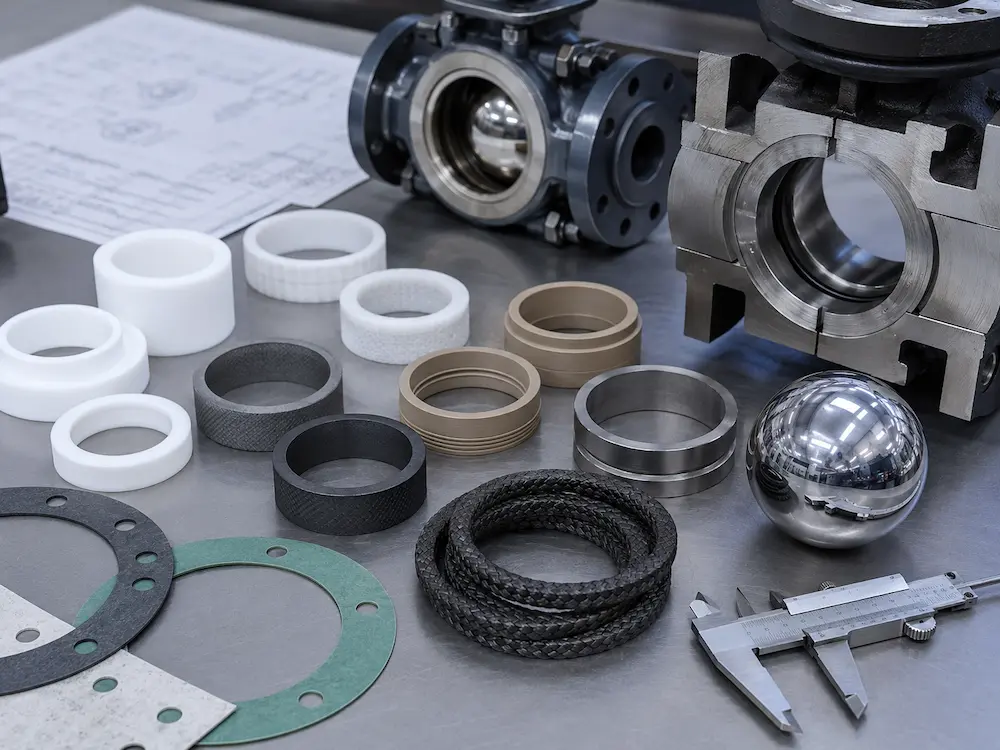
In high-pressure and high-temperature service, gasket, packing and bolting are critical. Even if the valve body is correctly rated, the valve can still leak if the sealing system is not suitable.
Buyers should check:
- Is the bonnet gasket suitable for the design temperature?
- Is the flange gasket suitable for the pressure class?
- Is spiral wound gasket or RTJ gasket required?
- Is graphite packing required for high-temperature service?
- Is low-emission packing required?
- Is bolting material suitable for temperature and pressure?
- Will thermal cycling affect gasket compression?
For steam and high-temperature applications, graphite packing and suitable high-temperature gaskets are often reviewed together with alloy steel body materials.
Pressure-Temperature Rating for High Temperature Valves
High-temperature valves require special review because allowable pressure usually decreases as temperature increases. This is important for steam, boiler systems, thermal oil, refinery units, petrochemical lines and power plant applications.
A valve selected only by pressure class may be wrong if the design temperature is high. Buyers should provide both design pressure and design temperature, not only working pressure.
For high-temperature valve rating review, confirm:
- Design pressure
- Design temperature
- Maximum operating temperature
- Normal operating pressure
- Body material
- Valve standard
- Flange standard
- Gasket and bolting material
- Seat and packing material
- Pressure-temperature rating table
For severe temperature and pressure applications, read our High Temperature High Pressure Valves Guide.
Pressure-Temperature Rating for High Pressure Ball Valves
High pressure ball valves are commonly used in oil, gas, hydraulic, steam, thermal oil, chemical and industrial pipeline service. For ball valves, pressure-temperature rating must be reviewed together with seat load, operating torque, stem sealing and cavity pressure relief.
For high pressure ball valves, check:
- Floating or trunnion-mounted design
- Body material
- Pressure class
- Design temperature
- Soft seat or metal seat
- Cavity pressure relief requirement
- Fire-safe requirement
- Anti-static requirement
- Operating torque at temperature
- Actuator sizing margin
For high-pressure isolation applications, review our High Pressure Ball Valve and API 6D Ball Valve.
Pressure-Temperature Rating for Steam Valves
Steam service is one of the most common areas where pressure-temperature rating mistakes occur. Steam systems may include saturated steam, superheated steam, main steam, auxiliary steam, boiler feedwater and condensate.
Steam valve selection should consider:
- Saturated steam or superheated steam
- Steam pressure
- Steam temperature
- Main steam or auxiliary steam
- Whether throttling is required
- Thermal cycling
- Condensate and water hammer risk
- Trim erosion
- Graphite packing requirement
- Metal seat or hardfaced seat requirement
For steam and power plant applications, review our Power & Steam Valve Solutions and Steam Globe Valve.
Working Pressure vs Design Pressure vs Test Pressure
Many quotation errors happen because buyers provide only one pressure value without explaining whether it is working pressure, design pressure or test pressure.
| Pressure Term | Meaning | How It Affects Valve Selection |
|---|---|---|
| Working Pressure | Normal operating pressure during service | Helps understand actual daily operation |
| Design Pressure | Engineering pressure used for design and safety margin | Usually more important for pressure rating selection |
| Maximum Differential Pressure | Pressure difference across the valve | Important for torque, actuator sizing, trim and seat design |
| Shell Test Pressure | Hydrostatic test pressure for valve body strength | Test condition, not continuous service pressure |
| Seat Test Pressure | Pressure used to verify sealing performance | Used to confirm leakage performance |
For accurate quotation, buyers should provide design pressure, design temperature and working condition together.
How to Choose the Correct Valve Rating
The correct valve pressure-temperature rating should be selected through engineering review, not rough conversion.
Step-by-step selection process:
- Confirm the valve type: ball, gate, globe, check, butterfly, plug or control valve.
- Confirm size: DN or NPS.
- Confirm required pressure system: Class, PN, JIS or project standard.
- Confirm design pressure and design temperature.
- Confirm body material.
- Check the applicable pressure-temperature rating table.
- Confirm flange standard and end connection.
- Check seat, gasket, packing and bolting materials.
- Review leakage class and test standard.
- Confirm MTC, PMI, test report and inspection document requirements.
Common Buyer Mistakes
Mistake 1: Thinking Class 150 Means 150 psi Only
Class 150 is a pressure rating class, not a simple working pressure value. The allowable pressure depends on material, temperature and standard.
Mistake 2: Treating PN16 as Always 16 Bar
PN16 is a nominal rating. Actual allowable pressure must be checked with material, temperature, flange standard and project condition.
Mistake 3: Ignoring Temperature
Higher temperature can reduce allowable pressure. This is one of the most common mistakes in steam and thermal oil valve selection.
Mistake 4: Ignoring Seat Material
A valve body may be rated for high temperature, but the soft seat may not be suitable for the same temperature.
Mistake 5: Mixing Flange Standards
ASME, EN, DIN, JIS and other flange standards may have different dimensions, drilling and rating systems. Flange standard must be confirmed before order.
Mistake 6: Using Working Pressure Instead of Design Pressure
Working pressure is useful, but design pressure and design temperature are usually required for correct rating selection.
Mistake 7: Ignoring Gasket and Bolting
High pressure and high temperature service requires suitable gasket and bolting materials. These parts can limit the complete assembly.
RFQ Checklist for Valve Pressure-Temperature Rating
To avoid wrong selection, buyers should provide the following information before quotation:
| Required Information | Example / Notes |
|---|---|
| Valve type | Ball, gate, globe, check, butterfly, plug, control valve |
| Valve size | DN / NPS |
| Pressure rating | Class 150, 300, 600, 900, 1500, 2500 or PN10, PN16, PN25, PN40 |
| Design pressure | Required for rating review |
| Design temperature | Required for material and sealing review |
| Working pressure and temperature | Normal operating condition |
| Medium | Water, steam, oil, gas, chemical, slurry, thermal oil, etc. |
| Body material | WCB, A105, CF8M, F316, WC6, WC9, F51 or project material |
| Seat material | PTFE, RPTFE, PEEK, PPL, metal seat, hardfaced seat |
| Gasket and packing | PTFE, graphite, spiral wound gasket, RTJ gasket or project requirement |
| End connection | Flanged, butt weld, socket weld, threaded, wafer, lug |
| Flange standard | ASME, EN, DIN, JIS or project standard |
| Testing requirements | Shell test, seat test, leakage class, fire-safe, low-emission, third-party inspection |
| Documents | MTC, PMI, test report, drawing, datasheet, certificate requirements |
Related Technical Resources
- DN and PN Meaning in Valves Explained — basic guide for valve size and pressure rating terminology.
- Valve Pressure Units Explained — explains bar, psi, MPa and common valve pressure unit conversion.
- High Temperature High Pressure Valves — selection guide for steam, thermal oil, refinery, petrochemical and power plant valves.
- High Pressure Ball Valve — product page for high-pressure oil, gas, hydraulic, steam, thermal oil and industrial pipeline service.
- API 6D Ball Valve — pipeline ball valve product page for oil, gas and high-pressure isolation service.
- Valve Material Selection Guide — main guide for valve body, trim, seat, seal, gasket and bolting materials.
- Valve Certificates and Quality Documents — explains MTC, PMI, pressure test reports and project documentation.
Final Recommendations for Industrial Buyers
Valve pressure-temperature rating should be checked before final valve selection, especially for steam, high-temperature, high-pressure, oil and gas, refinery, petrochemical, chemical and power plant applications.
Do not select a valve only by Class or PN marking. Class 150, Class 300, PN16 or PN40 must be reviewed together with design pressure, design temperature, body material, valve standard, flange standard, seat material, gasket, packing and bolting.
If you need help selecting the correct valve pressure class, PN rating, material, seat, gasket, packing or testing requirements, Vcore Valve can review your working conditions and recommend a suitable valve configuration.
FAQ
1. What is valve pressure-temperature rating?
Valve pressure-temperature rating defines the maximum allowable pressure of a valve at a specific temperature according to its material, pressure class, valve standard and design condition.
2. Does Class 150 mean 150 psi?
No. Class 150 is a pressure class rating, not a simple 150 psi working pressure value. Allowable pressure depends on material, temperature and applicable standard.
3. Is PN16 always equal to 16 bar?
PN16 is a nominal pressure rating. Actual allowable pressure should be checked with material, temperature, standard and project condition.
4. Why does valve pressure rating decrease at high temperature?
At higher temperature, material strength and allowable stress can decrease. Gasket, packing, bolting and seat materials may also limit the complete valve assembly.
5. What information is needed to choose valve pressure rating?
Buyers should provide valve type, size, design pressure, design temperature, working pressure, working temperature, medium, body material, seat material, end connection, flange standard and testing requirements.
6. Does seat material affect pressure-temperature rating?
Yes. Even if the metal valve body is suitable for high temperature, the soft seat, gasket or packing may not be suitable. The complete valve configuration must be reviewed.
7. Can PN and Class be directly converted?
PN and Class can be roughly compared in some purchasing discussions, but final conversion must follow the required standard, material, flange design, temperature and project specification.