Quick Summary: WCB and LCB are both cast carbon steel valve materials, but they are selected for different temperature and project requirements. WCB is commonly associated with ASTM A216 WCB and is widely used for general industrial pressure service when low-temperature impact toughness is not a special requirement. LCB is commonly associated with ASTM A352 LCB and is selected when low-temperature toughness, impact testing or project specifications require a low-temperature carbon steel casting. LCB is not simply a better version of WCB, and WCB should not be used as a direct substitute when LCB is specified. Buyers should confirm minimum design temperature, operating temperature, pressure class, medium, impact test requirement, material certificate, trim, bolting, gasket, packing and project datasheet before choosing WCB or LCB valves.
WCB vs LCB valve material selection is a common question in carbon steel valve orders. This WCB vs LCB valve material guide focuses on ASTM standards, low-temperature service, impact testing and buyer documentation. Both materials are used for pressure-containing cast valve parts, but they are not selected by appearance or valve type alone. The real decision depends on the project specification, temperature condition, impact test requirement, material certificate and complete valve material package.
For a broader body material comparison, see our WC6 vs WC9 Valve Material guide for alloy steel high-temperature service.
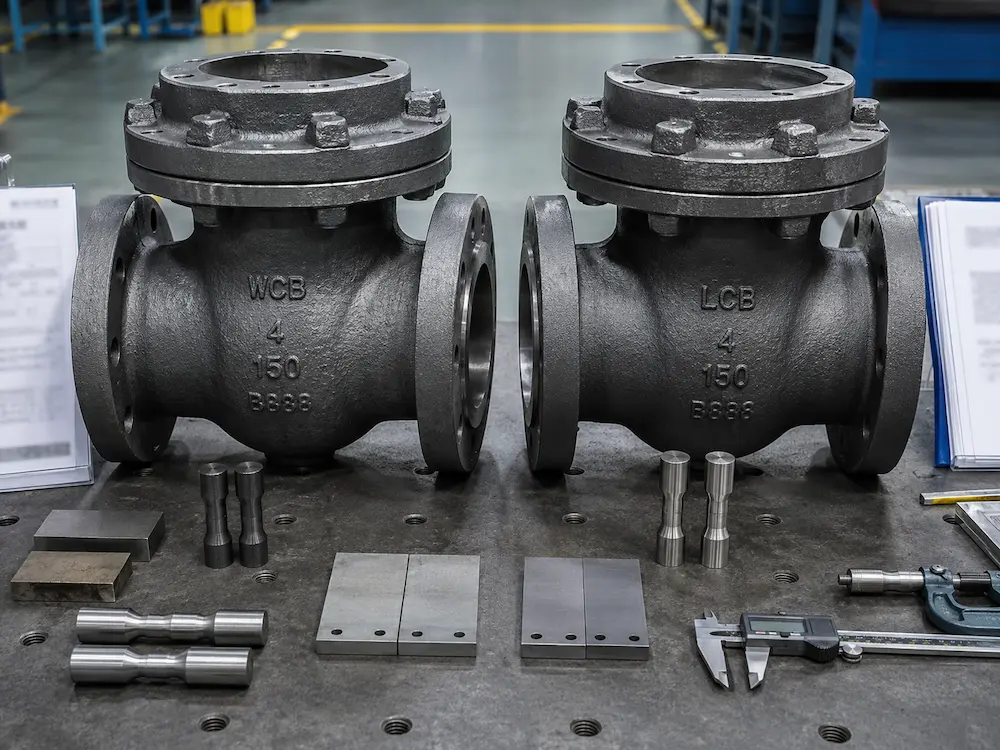
Quick Answer: WCB or LCB?
Use this WCB vs LCB valve material table as a first screening tool, then confirm the final selection against the project datasheet and material certificate.
| Selection Question | Choose WCB If | Choose LCB If |
|---|---|---|
| Minimum design temperature | The valve is for general industrial temperature service. | Low-temperature toughness is required by design condition or project document. |
| Project specification | ASTM A216 WCB or an approved equivalent is allowed. | ASTM A352 LCB or low-temperature carbon steel is specified. |
| Impact test requirement | Impact testing is not required by datasheet, code or purchase order. | Impact testing is required by datasheet, code or project specification. |
| Application | General water, steam, oil, gas or utility service where carbon steel is suitable. | Low-temperature gas, LPG, cold process or cold outdoor service requiring impact toughness. |
| Cost consideration | A cost-effective carbon steel casting is acceptable. | Higher material and document cost is justified by low-temperature requirements. |
| Substitution | Acceptable only if the project allows WCB. | Do not substitute with WCB without written approval when LCB is specified. |
What Is WCB Valve Material?
WCB valve material generally refers to cast carbon steel supplied under ASTM A216 WCB or an approved project equivalent. It is widely used for valve bodies, bonnets and other pressure-containing cast parts in general industrial pressure service.
WCB valves are common in water, steam, oil, gas, utility and many process systems when carbon steel is compatible with the medium and the project does not require special low-temperature impact toughness. WCB should still be checked against pressure class, temperature, corrosion condition and project datasheet.
Typical WCB valve applications include:
- General industrial pipelines
- Water and utility systems where carbon steel is suitable
- Steam and condensate service within the approved pressure-temperature range
- Oil and gas general service when low-temperature toughness is not specially required
- Carbon steel gate valves, globe valves, check valves and ball valves for normal project conditions
What Is LCB Valve Material?
LCB valve material generally refers to low-temperature carbon steel casting supplied under ASTM A352 LCB or an approved project equivalent. It is selected when the project requires low-temperature toughness, impact testing or a low-temperature carbon steel casting for pressure-containing valve parts.
LCB is not selected simply because it sounds more advanced than WCB. It is selected because the design condition, minimum design temperature, datasheet, purchase order, code or project standard requires a low-temperature casting and related documentation.
Typical LCB valve applications include:
- Low-temperature gas systems
- LPG or cold process service when specified
- Outdoor cold service where the project requires low-temperature toughness review
- Oil and gas project valves with low-temperature material requirements
- Project orders requiring impact test evidence on the material certificate
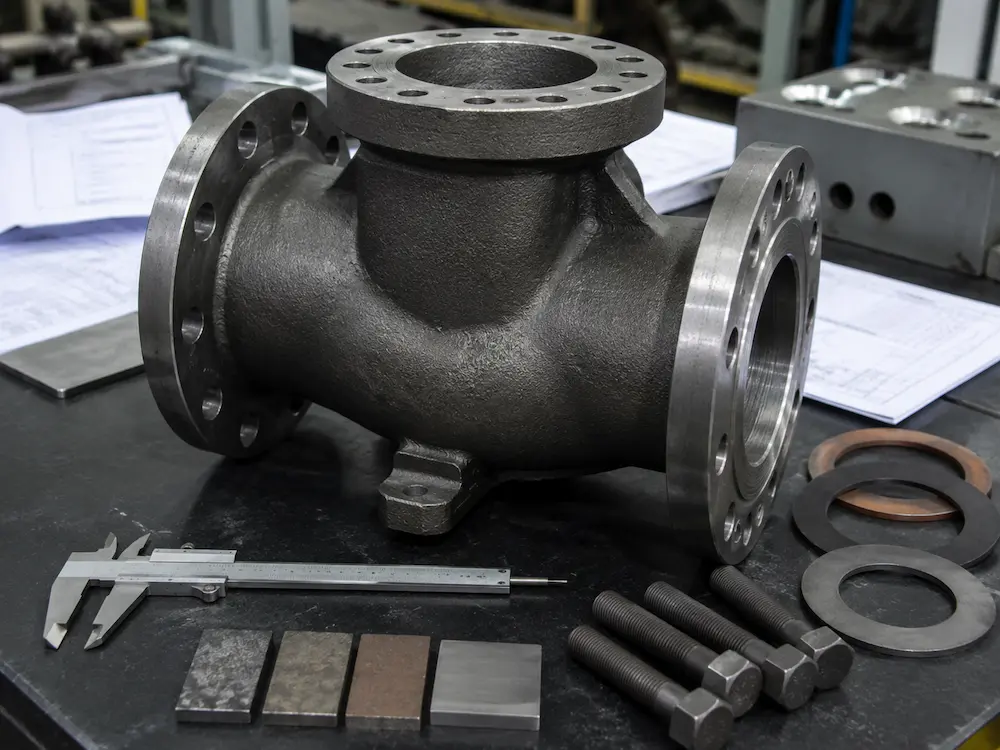
WCB vs LCB Valve Material: Main Differences
| Comparison Item | WCB Valve Material | LCB Valve Material |
|---|---|---|
| Common ASTM association | ASTM A216 WCB | ASTM A352 LCB |
| Material family | Cast carbon steel | Low-temperature cast carbon steel |
| Main selection reason | General pressure service where low-temperature impact toughness is not a special requirement | Low-temperature toughness, impact test or project-specified low-temperature carbon steel requirement |
| Impact test focus | Confirmed only when required by project document or applicable standard | Usually reviewed more closely for low-temperature service and certificate requirements |
| Cost tendency | Usually more economical for general carbon steel valve service | May cost more because of material and documentation requirements |
| Buyer risk | Using WCB where LCB is specified or impact toughness is required | Choosing LCB without a real low-temperature or project requirement |
ASTM A216 WCB vs ASTM A352 LCB
WCB is commonly specified under ASTM A216 WCB for carbon steel castings used in pressure-containing valve parts. LCB is commonly specified under ASTM A352 LCB for low-temperature carbon steel castings. The important difference for buyers is not the valve appearance, nominal pressure class or valve type alone.
The key difference is the low-temperature service requirement, including impact toughness and impact test documentation when specified. Final acceptance depends on the project standard, datasheet, purchase order, material certificate and inspection requirement.
Do not treat the ASTM name as a complete valve selection answer. A project may also specify trim material, bolting material, gasket, packing, pressure test, inspection document and certification requirements. For document review, see our Valve Certificates and Quality Documents guide.
Temperature Considerations
Temperature is the main reason buyers compare WCB and LCB. WCB is commonly used for general industrial service where low-temperature impact toughness is not a special requirement. LCB is selected when the minimum design temperature, low-temperature service condition or project specification requires a low-temperature carbon steel casting.
Do not select by ambient temperature alone. Buyers should confirm the minimum design temperature, normal operating temperature, maximum design temperature, startup and shutdown conditions, pressure class and whether the valve is exposed to cold process fluid or outdoor service.
Buyers should confirm:
- Minimum design temperature
- Normal and maximum operating temperature
- Whether impact testing is required
- Whether ASTM A216 WCB, ASTM A352 LCB or another project material is specified
- Whether the material certificate must show heat number traceability and impact test results
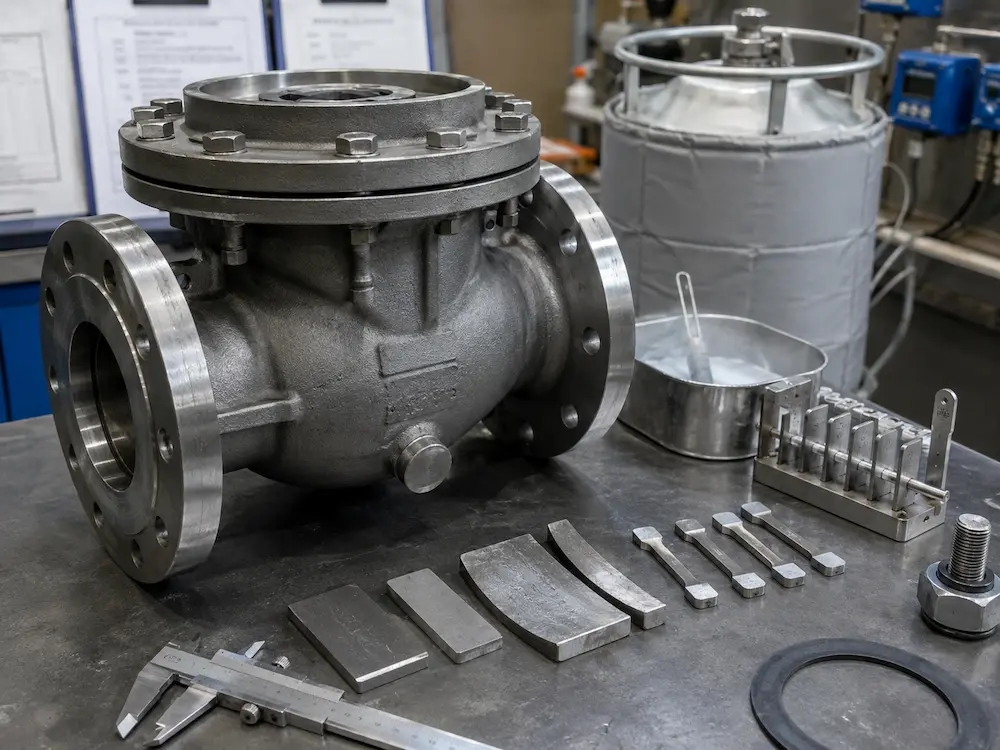
Can WCB and LCB Be Substituted?
Can WCB Replace LCB?
Usually no, if LCB is specified by the datasheet, purchase order, project standard or low-temperature design requirement. WCB does not automatically meet low-temperature impact toughness requirements. A supplier should not replace LCB with WCB without written approval from the buyer or project engineer.
Can LCB Replace WCB?
Sometimes LCB may be technically acceptable where WCB is used, but it is not always necessary. The project must approve the substitution, and the buyer should consider cost, document requirements and material availability. If no low-temperature requirement exists, WCB is often the more economical carbon steel casting.
Body Material Alone Is Not Enough
For low-temperature valve service, selecting an LCB body material alone may not be enough. Buyers should also review bonnet, cover, trim, stem, bolting, gasket, packing, seat material, actuator accessories and lubricant suitability if applicable. A valve body may be LCB, but unsuitable trim, bolting or sealing materials can still create compliance or performance risks.
| Valve Part | What to Check | Why It Matters |
|---|---|---|
| Body / bonnet | WCB or LCB grade, heat number and pressure-containing part traceability | Confirms material compliance for the valve shell |
| Trim / stem | Material compatibility and low-temperature suitability | Affects sealing, operation and internal corrosion resistance |
| Bolting | Project material requirement and low-temperature review if applicable | Bolting may also be controlled by project specification |
| Gasket / packing | Temperature and medium compatibility | Supports sealing reliability across operating conditions |
| Seat / seal | Material and temperature limit | Affects shutoff performance and leakage risk |
| Actuator accessories | Low-temperature operation if applicable | Supports reliable operation in cold service |
For internal parts, the Valve Trim Materials Selection Guide is useful because body material and trim material are not the same decision.
WCB vs LCB by Service Condition
| Service Condition | Usually Suitable Material | Selection Note |
|---|---|---|
| General water or industrial utility | WCB | Use when carbon steel is compatible and no low-temperature requirement exists. |
| Steam and condensate | WCB | Confirm pressure-temperature rating, gasket, packing and corrosion condition. |
| Oil and gas general service | WCB or LCB depending on temperature | Check design temperature, project specification and certificate requirement. |
| LPG or low-temperature gas | LCB may be required | Confirm minimum design temperature and impact test requirement. |
| Cold outdoor service | Project-dependent | Ambient temperature alone does not decide material. Check design condition and specification. |
| Chemical service | Project-dependent | Corrosion may require stainless steel, alloy or lined valves instead of WCB or LCB. |
| Seawater or strong corrosive service | Not normally WCB or LCB without review | Corrosion resistance, lining, coating or alternative materials must be evaluated. |
For corrosive seawater service, carbon steel material selection should be reviewed carefully. Our seawater valve selection guide explains why corrosion, coating and lining details matter.
WCB vs LCB for Different Valve Types
WCB and LCB may be used across several valve types when the project allows cast carbon steel construction. The body material decision should be combined with valve function, pressure class, trim, seat, sealing material and operation method.
- Gate valves: often used for isolation. Confirm body, bonnet, wedge, stem, seat and bolting material.
- Globe valves: used for throttling or shutoff. Trim and packing material are important because flow velocity and pressure drop can be high.
- Check valves: confirm disc, hinge pin, spring, seat and installation condition.
- Ball valves: confirm ball, stem, seat, seal and cavity pressure conditions, not only body material.
WCB vs LCB Material Certificate: What Buyers Should Check
For WCB vs LCB valve material orders, the certificate should support the exact grade, heat number and project requirement stated in the purchase order.
The material certificate is important because it connects the valve material marking with the purchase order, heat number and project requirement. For project orders, buyers should not check only the casting name. They should confirm whether the certificate matches the datasheet and whether impact testing is required.
| Certificate Item | WCB Valve | LCB Valve |
|---|---|---|
| Material grade | Confirm ASTM A216 WCB or approved equivalent if specified. | Confirm ASTM A352 LCB or approved low-temperature carbon steel grade if specified. |
| Heat number | Check heat number traceability for pressure-containing parts. | Check heat number traceability, especially when impact test evidence is required. |
| Chemical composition | Confirm the certificate shows the required chemical analysis. | Confirm the certificate shows the required chemical analysis for the specified grade. |
| Mechanical properties | Review according to purchase order and project requirement. | Review together with low-temperature toughness requirement if applicable. |
| Impact test requirement | Confirm whether impact testing is required by the project. | Confirm impact test requirement, test temperature and acceptance criteria according to project documents. |
| Minimum design temperature | Confirm WCB is allowed for the specified design condition. | Confirm LCB matches the specified low-temperature design condition. |
| Project datasheet consistency | Material certificate should match datasheet and purchase order. | Material certificate should match datasheet, purchase order and low-temperature requirement. |
| EN 10204 3.1 or other certificate | Provide if specified by the project. | Provide if specified by the project, especially for traceability and impact test review. |
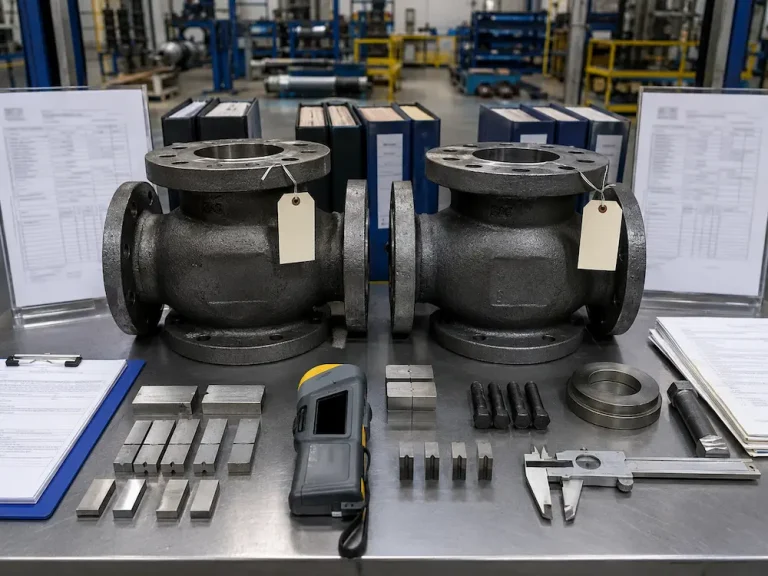
Common Mistakes When Selecting WCB or LCB Valves
Mistake 1: Treating WCB and LCB as the Same Material
WCB and LCB are both cast carbon steel materials, but they are not interchangeable by default. The low-temperature and certificate requirements must be checked before substitution.
Mistake 2: Selecting WCB When LCB Is Specified
If the datasheet or purchase order specifies LCB, WCB should not be supplied without written approval. This can create document mismatch and low-temperature compliance risk.
Mistake 3: Choosing LCB Only Because It Sounds Better
LCB is not simply a better version of WCB. If there is no low-temperature or project requirement, WCB may be the more economical and appropriate carbon steel casting.
Mistake 4: Ignoring Minimum Design Temperature
Normal operating temperature alone is not enough. Minimum design temperature, startup condition, shutdown condition and project specification should be checked together.
Mistake 5: Ignoring Impact Test and Material Certificate Requirements
Low-temperature service often depends on documented impact toughness requirements. Buyers should confirm whether impact test results and heat number traceability must appear on the MTC.
Mistake 6: Checking Only Body Material
Body material is only one part of valve selection. Trim, bolting, gasket, packing, seat material and actuator accessories may also need low-temperature or service compatibility review.
Information Buyers Should Provide Before Quotation
For WCB and LCB valve quotations, missing temperature and certificate requirements often cause wrong material selection or document mismatch. Buyers should provide:
- Valve type: gate, globe, check, ball, plug or control valve
- Size, DN/NPS, pressure class, PN or Class rating
- Required body material: WCB, LCB or project-specified material
- Required ASTM standard: ASTM A216 WCB, ASTM A352 LCB or approved equivalent
- Medium, operating pressure and design pressure
- Normal operating temperature, minimum design temperature and maximum design temperature
- Whether impact testing is required
- Trim, seat, seal, gasket, packing and bolting material requirements
- End connection and flange standard
- Operation method, actuator requirement or gearbox requirement
- Material certificate requirement, including EN 10204 3.1 if applicable
- Pressure test requirement, inspection requirement and project specification or datasheet
Final Recommendations for Industrial Buyers
Choose WCB when the valve is for general carbon steel pressure service and the project allows ASTM A216 WCB or an approved equivalent. Choose LCB when low-temperature carbon steel, low-temperature toughness, impact testing or ASTM A352 LCB is required by the project.
The safest approach is to compare the valve datasheet, material certificate and service conditions before ordering. If the valve is for high-temperature alloy service, review alternatives such as WC6 or WC9. If the service is corrosive, seawater or chemical, WCB and LCB may not be enough without lining, coating or another material selection.
For a final WCB vs LCB valve material decision, do not rely on grade names alone. If you need help reviewing WCB or LCB valves for a project order, send the datasheet, minimum design temperature, pressure class, medium and certificate requirement through our contact page.
FAQ
What is the difference between WCB and LCB valve material?
WCB and LCB are both cast carbon steel valve materials. WCB is commonly used for general pressure service, while LCB is selected when low-temperature toughness, impact testing or a project specification requires low-temperature carbon steel casting.
What is ASTM A216 WCB?
ASTM A216 WCB is commonly associated with carbon steel castings for pressure-containing valve parts. Buyers should confirm the exact project requirement, pressure class, service condition and material certificate before ordering.
What is ASTM A352 LCB?
ASTM A352 LCB is commonly associated with low-temperature carbon steel castings. It is used when the project requires low-temperature material performance, impact testing or low-temperature carbon steel documentation.
Is LCB better than WCB?
LCB is not simply better than WCB. LCB is selected for low-temperature or project-specified requirements. If no low-temperature requirement exists, WCB may be the more practical and economical choice.
Can WCB replace LCB?
Usually no, if LCB is specified by the datasheet, purchase order, project standard or low-temperature design requirement. WCB should not replace LCB without written approval from the buyer or project engineer.
When should I choose LCB instead of WCB?
Choose LCB when minimum design temperature, low-temperature toughness, impact testing or the project specification requires low-temperature carbon steel casting. The material certificate should support the required grade and test requirements.
What information is needed to quote WCB or LCB valves?
Provide valve type, size, pressure class, medium, operating and design pressure, normal and minimum design temperature, required ASTM grade, impact test requirement, trim, bolting, gasket, packing, certificate and pressure test requirements.