A105 vs LF2 valve material is a common comparison in forged steel valve selection. Both materials are widely used for forged ball valves, gate valves, globe valves, check valves, needle valves, socket weld valves, threaded valves, API 6D pipeline valves, and high-pressure small-bore valves.
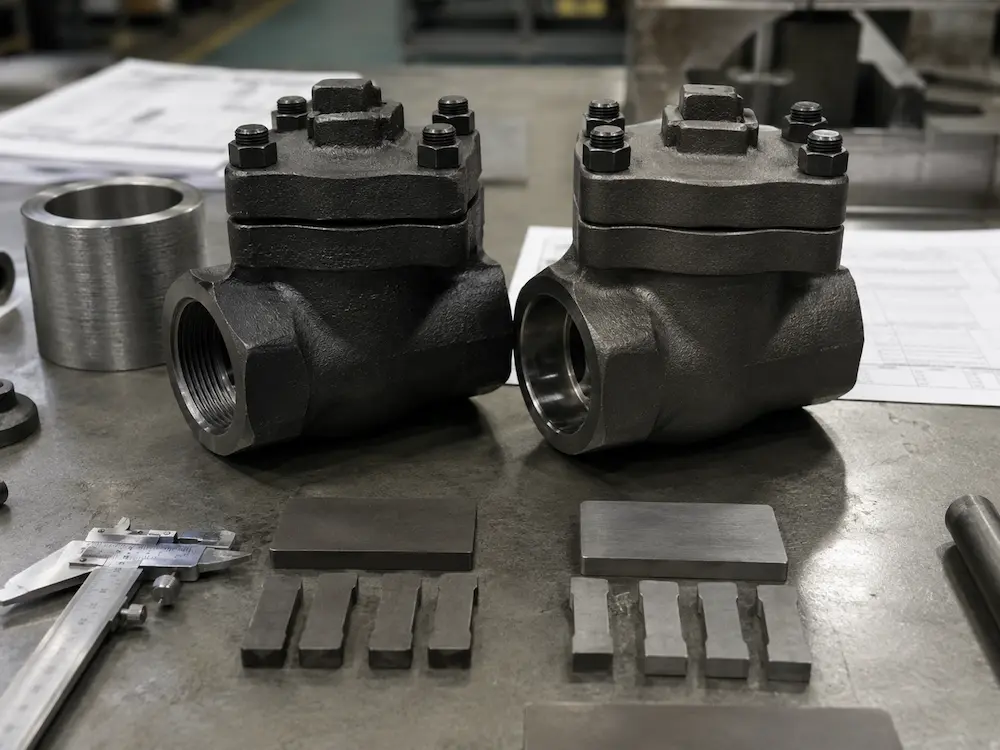
From the outside, an A105 forged valve and an LF2 forged valve may look very similar. Both can be machined into compact, high-strength valve bodies. However, the key difference is low-temperature toughness. A105 is commonly used for general carbon steel forged valve service, while LF2 is selected when low-temperature impact performance is required.
This guide explains the difference between ASTM A105 and ASTM A350 LF2 valve materials, when to choose each one, how they relate to WCB and LCB cast materials, and what buyers should check before ordering.
For broader material selection, read our valve material selection guide. For cast carbon steel comparison, read WCB vs LCB valve material.
What Is ASTM A105 Valve Material?
ASTM A105 is a forged carbon steel material commonly used for pressure-containing valve components. It is widely used in forged steel ball valves, forged gate valves, forged globe valves, forged check valves, socket weld valves, threaded valves, and small-bore high-pressure valves.
A105 is often selected for general oil, gas, steam, water, industrial utility, refinery, petrochemical, and power plant service where standard forged carbon steel is suitable and low-temperature impact toughness is not a special requirement.
Typical A105 valve applications include:
- General forged carbon steel valves
- Oil and gas utility service
- Steam and condensate systems
- Industrial water and utility pipelines
- Refinery and petrochemical process lines
- Socket weld and threaded small-bore valves
- High-pressure forged ball valves and gate valves
A105 is practical and widely available, but it should not automatically be selected for low-temperature service unless the project requirement confirms it is acceptable.
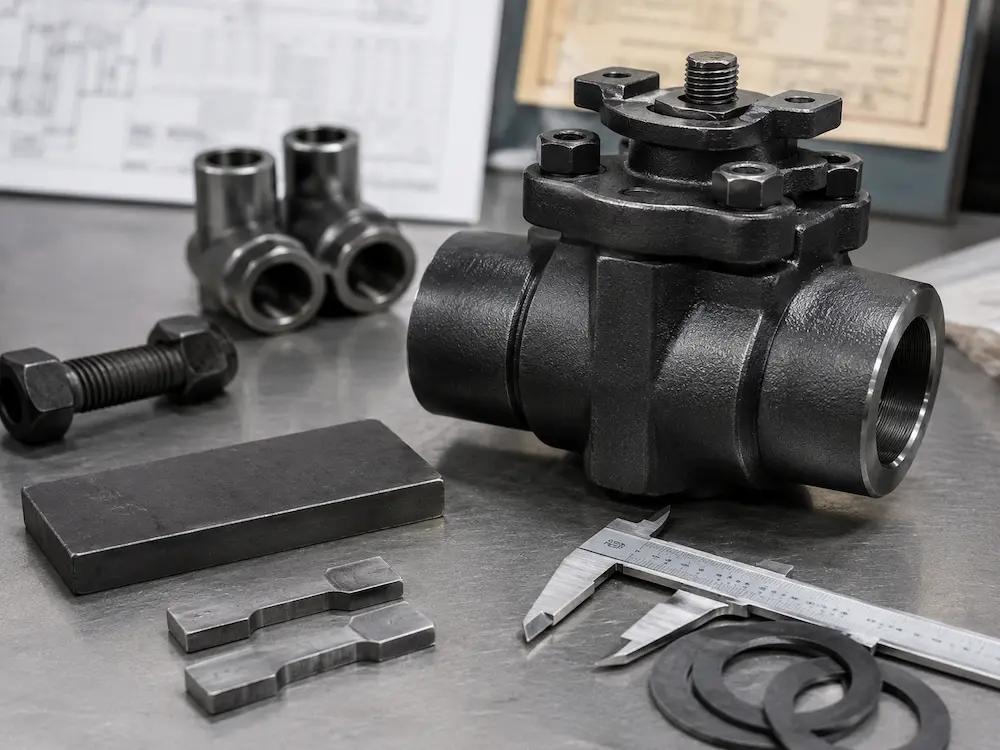
What Is ASTM A350 LF2 Valve Material?
ASTM A350 LF2 is a forged carbon steel material used for low-temperature pressure service. In valve applications, LF2 is selected when the valve must maintain suitable toughness at lower temperatures and when the project specification requires low-temperature forged steel material.
LF2 is commonly used in oil and gas, natural gas, LPG, cryogenic-adjacent low-temperature systems, outdoor cold-climate pipelines, and project applications where low-temperature impact testing or low-temperature material certification is required.
Typical LF2 valve applications include:
- Low-temperature oil and gas service
- Natural gas pipeline systems
- LPG and low-temperature hydrocarbon systems
- Cold-climate outdoor pipelines
- API 6D pipeline valves requiring low-temperature material
- Low-temperature forged ball valves
- Projects requiring impact-tested forged steel valves
LF2 should be selected when the design temperature, project datasheet, or purchase specification requires low-temperature forged carbon steel material.
A105 vs LF2 Valve Material: Main Difference
| Item | ASTM A105 | ASTM A350 LF2 |
|---|---|---|
| Material Type | Forged carbon steel | Low-temperature forged carbon steel |
| Main Purpose | General pressure service | Low-temperature pressure service |
| Typical Valve Construction | Forged body valves, socket weld valves, threaded valves, forged ball valves | Low-temperature forged valves, API 6D valves, oil and gas pipeline valves |
| Low-Temperature Toughness | Not normally selected when low-temperature impact performance is required | Selected when low-temperature toughness is required |
| Common Applications | Steam, oil, gas, water, utility, refinery, general industrial service | Natural gas, LPG, low-temperature hydrocarbon, cold-climate pipeline service |
| Cost | Usually more economical | Usually higher than A105 |
| Main Buyer Risk | May be unsuitable for specified low-temperature service | May be unnecessary if A105 already meets the service condition |
A105 and LF2 Are Forged Materials, Not Cast Materials
A105 and LF2 are forged steel material grades. This is different from WCB and LCB, which are cast steel materials commonly used for cast valve bodies.
| Common Material | Manufacturing Type | Typical Use |
|---|---|---|
| A105 | Forged carbon steel | General forged steel valves |
| LF2 | Low-temperature forged carbon steel | Low-temperature forged steel valves |
| WCB | Cast carbon steel | General cast steel valves |
| LCB | Low-temperature cast carbon steel | Low-temperature cast steel valves |
In simple terms, A105 is often compared with WCB as a forged-versus-cast carbon steel option. LF2 is often compared with LCB as a forged-versus-cast low-temperature carbon steel option. But for exact valve selection, buyers should confirm valve construction, pressure class, size, end connection, material standard, and project datasheet.
When Should You Choose A105 Valves?
A105 forged steel valves are suitable for many general pressure service applications where forged carbon steel is required and low-temperature toughness is not the main concern.
Choose A105 when:
- The project requires forged carbon steel valve construction
- The service is general temperature service
- Low-temperature impact testing is not required
- The medium is suitable for carbon steel
- The valve is used for steam, oil, gas, water, or industrial utility service
- The project specification allows ASTM A105
- Cost control is important and LF2 is not required
A105 is commonly used for socket weld ball valves, threaded valves, forged steel gate valves, forged globe valves, forged check valves, and compact high-pressure valve designs.
When Should You Choose LF2 Valves?
LF2 forged steel valves should be selected when the service condition or project specification requires low-temperature forged carbon steel material.
Choose LF2 when:
- The minimum design temperature requires low-temperature toughness
- The project datasheet specifies ASTM A350 LF2
- Impact testing is required
- The valve is used in natural gas, LPG, or low-temperature hydrocarbon service
- The installation is in cold-climate outdoor service with low-temperature requirements
- The buyer requires low-temperature material certificate documentation
- The valve is used in pipeline service where low-temperature performance is critical
LF2 may be selected for API 6D ball valves, high-pressure pipeline valves, forged gate valves, forged globe valves, and forged check valves used in low-temperature service.
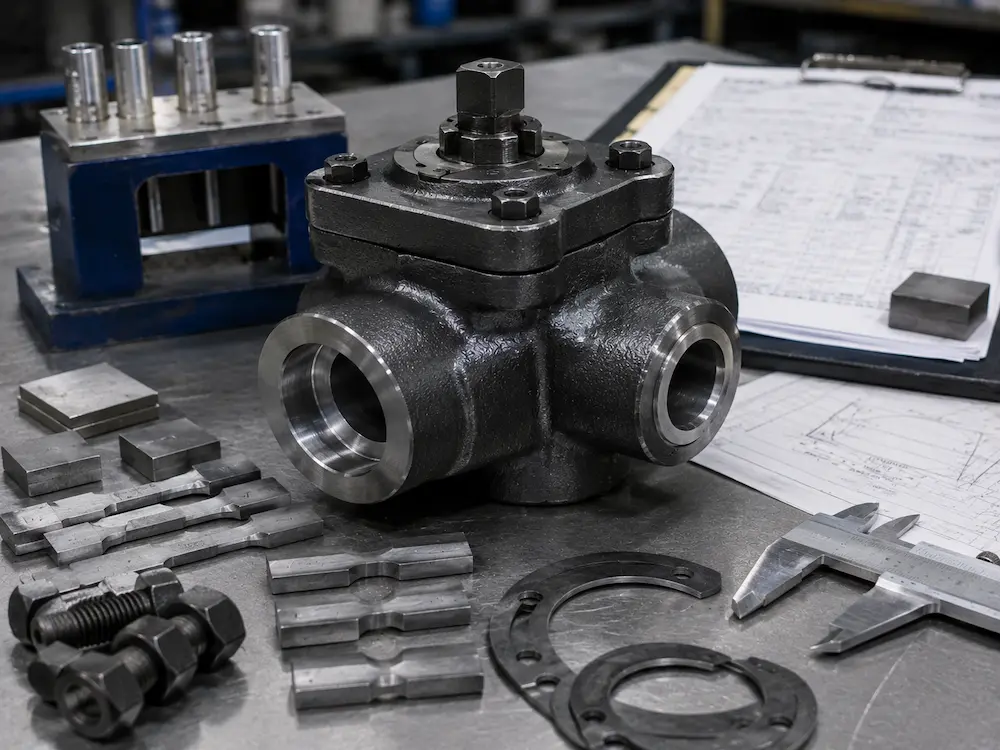
Can A105 Replace LF2?
A105 should not replace LF2 when the project specification requires ASTM A350 LF2, low-temperature impact testing, or confirmed low-temperature toughness. Even if the valve size, pressure class, and appearance are similar, the material requirement is different.
If the service is normal temperature and there is no low-temperature impact requirement, A105 may be acceptable. But if the datasheet, purchase order, or project standard specifies LF2, the supplier should follow that requirement unless the buyer or project engineer approves a formal material deviation.
Can LF2 Replace A105?
LF2 may sometimes be technically acceptable where A105 is used, but it usually costs more and may not be necessary. Buyers should not choose LF2 only because it sounds more advanced.
The correct material should match the actual working condition and project specification. If A105 meets the service condition and documentation requirement, LF2 may only increase cost without practical benefit.
A105 vs LF2 by Valve Type
Forged Ball Valves
A105 is common for standard forged ball valves in general pressure service. LF2 is selected when the same forged ball valve structure must be suitable for low-temperature oil, gas, or pipeline service.
For high-pressure isolation service, buyers can review Vcore Valve’s high pressure ball valve options.
Socket Weld Valves
Socket weld valves are often supplied in forged steel construction. A105 is common for general socket weld service, while LF2 is reviewed when low-temperature toughness is required. Buyers should also confirm welding compatibility, seat material, gasket material, and installation procedure.
Threaded Valves
Threaded forged valves may use A105 for general industrial service. LF2 may be specified for low-temperature service, but threaded connections should be reviewed carefully for project suitability, leakage risk, vibration, and maintenance requirements.
Forged Gate Valves
Forged gate valves may use A105 for steam, utility, oil, gas, and general process service. LF2 forged gate valves are selected when low-temperature material performance is required by the project.
Forged Globe Valves
Forged globe valves may use A105 for general shutoff or moderate regulation service. LF2 is selected when the application involves low-temperature process conditions. Trim and seat material should also be checked because globe valves may experience throttling and higher local velocity.
Forged Check Valves
Forged check valves may use A105 for general backflow prevention. LF2 should be reviewed for low-temperature gas, LPG, cold process, or project-specified low-temperature service. Disc, spring, hinge pin, and seat materials must also match the application.
A105 vs LF2 by Application
Oil and Gas Service
A105 is widely used in many general oil and gas utility services. LF2 is selected when low-temperature gas, LPG, or pipeline service requires low-temperature toughness and impact testing.
Natural Gas Pipeline Service
Natural gas systems may require low-temperature material depending on design temperature, expansion conditions, climate, pressure letdown, and project standard. LF2 is often reviewed when low-temperature toughness is required.
Steam and Utility Service
A105 is commonly selected for general steam and utility service where forged carbon steel is acceptable. LF2 is usually not necessary unless the project has a specific low-temperature requirement.
Refinery and Petrochemical Service
Both A105 and LF2 may be used in refinery and petrochemical systems depending on temperature and project specification. A105 is practical for general service, while LF2 is selected for low-temperature hydrocarbon or cold process conditions.
Cold-Climate Outdoor Installation
Outdoor installation in cold climates does not automatically require LF2, but it should trigger a review of minimum design temperature and impact test requirements. If the project specification requires low-temperature material, LF2 may be required.
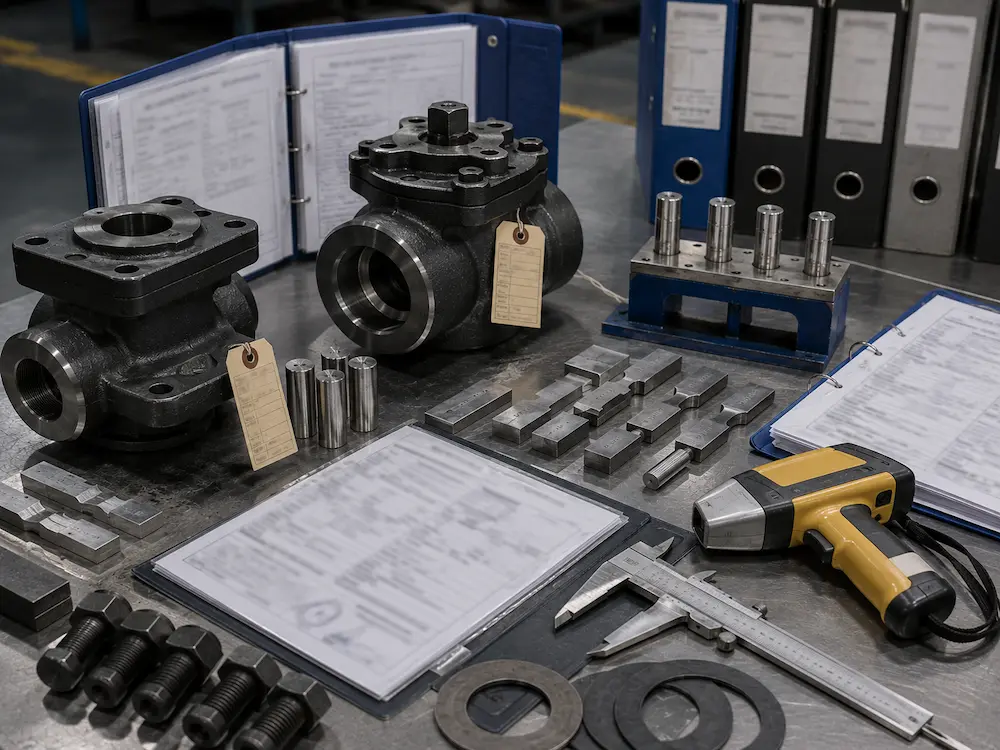
Material Certificate and Impact Test Requirements
For forged steel valve orders, buyers should review the material certificate carefully. The certificate should match the required material grade, heat number, chemical composition, mechanical properties, and project documentation requirement.
For A105 material certificates, check:
- Material grade: ASTM A105 or approved equivalent
- Heat number traceability
- Chemical composition
- Mechanical properties
- Component scope: body, bonnet, end cap, or other pressure-containing parts
- Consistency with purchase order and valve datasheet
For LF2 material certificates, check:
- Material grade: ASTM A350 LF2 or approved equivalent
- Heat number traceability
- Chemical composition
- Mechanical properties
- Impact test requirement and result if specified
- Minimum design temperature requirement
- Consistency with purchase order, datasheet, and project specification
For broader documentation requirements, read our valve certificates and quality documents guide.
Seat, Gasket, Packing and Bolting Materials Still Matter
Choosing A105 or LF2 body material does not complete valve selection. The seat, gasket, packing, bolting, stem, ball, disc, trim, and body seal materials must also match the service condition.
Buyers should check:
- Seat material: PTFE, RPTFE, PEEK, PCTFE, PPL, or metal seat
- Packing material: PTFE, graphite, or low-emission graphite packing
- Body seal: PTFE, graphite, spiral wound gasket, or project-specific seal
- Bolting material for pressure, temperature, and external corrosion
- Stem material and corrosion resistance
- Trim material and low-temperature compatibility
- Fire-safe or anti-static requirements where applicable
For seat material selection, read our valve seat materials guide. For internal parts, read our valve trim materials guide.
Common Mistakes When Selecting A105 or LF2 Valves
Mistake 1: Treating A105 and LF2 as the Same Forged Steel
A105 and LF2 are both forged carbon steel materials, but LF2 is selected for low-temperature service where toughness and impact performance are required.
Mistake 2: Using A105 for Low-Temperature Service Without Review
A105 should not be used for low-temperature project requirements unless the specification confirms it is acceptable. Minimum design temperature and impact test requirements must be checked.
Mistake 3: Choosing LF2 Only Because It Sounds Better
LF2 is useful when low-temperature toughness is required, but it is not always necessary. If A105 meets the service condition, LF2 may only increase cost.
Mistake 4: Ignoring End Connection and Welding Requirements
Socket weld and butt weld valves require welding compatibility, correct end preparation, welding procedure, and heat control. Material selection should be reviewed together with pipe material and project welding requirements.
Mistake 5: Ignoring Seat and Seal Temperature Limits
A low-temperature body material does not guarantee the whole valve is suitable. Seat, gasket, packing, and O-ring materials must also be compatible with the temperature and medium.
Mistake 6: Not Checking the MTC
For project valves, buyers should confirm the material certificate, heat number, component scope, impact test requirement, and datasheet consistency before shipment.
How to Choose Between A105 and LF2
| Question | Choose A105 If | Choose LF2 If |
|---|---|---|
| Is low-temperature toughness required? | No special low-temperature requirement | Low-temperature toughness is required |
| What does the project specification say? | ASTM A105 is allowed | ASTM A350 LF2 is specified |
| Is impact testing required? | Usually not the main requirement | Impact test may be required by project specification |
| What is the application? | Steam, oil, gas, water, utility, general industrial service | Natural gas, LPG, low-temperature hydrocarbon, cold-climate service |
| Is cost a major concern? | Usually more economical | Higher cost but necessary for low-temperature requirements |
Information Buyers Should Provide Before Quotation
- Valve type: ball, gate, globe, check, needle, plug, or control valve
- Valve size and pressure class
- Required body material: A105, LF2, or project-specified material
- End connection: socket weld, threaded, butt weld, flanged, or project-specific
- Medium name and composition
- Operating pressure and design pressure
- Operating temperature and minimum design temperature
- Whether low-temperature impact testing is required
- Required seat, gasket, packing, bolting, and trim materials
- Required design standard and test standard
- Whether fire-safe, anti-static, NACE, or low-emission requirement applies
- Required material certificate, PMI, or third-party inspection
- Project specification or valve datasheet if available
Related Valve Material Guides
- Valve Material Selection Guide — main guide for valve body, trim, seat, seal, gasket, and bolting material selection.
- WCB vs LCB Valve Material — compares cast carbon steel and low-temperature cast carbon steel valve materials.
- Forged vs Cast Valves — explains manufacturing method differences between forged and cast valve construction.
- Valve Seat Materials Guide — explains EPDM, NBR, FKM, PTFE, PEEK, graphite, and metal seat selection.
- Valve Certificates and Quality Documents — explains material certificates, test reports, inspection documents, and project documentation.
Final Recommendations for Industrial Buyers
A105 and LF2 are both important forged carbon steel valve materials, but they should not be selected in the same way. A105 is a practical and economical forged carbon steel material for many general pressure service applications. LF2 is selected when low-temperature toughness, impact testing, or project specification requires low-temperature forged steel material.
For normal-temperature forged steel valve service, A105 is often suitable. For natural gas, LPG, low-temperature hydrocarbon, cold-climate pipeline, or low-temperature project service, LF2 should be reviewed. The final decision should follow the project specification, minimum design temperature, pressure class, medium, valve type, seat material, and documentation requirement.
If you need help selecting A105, LF2, WCB, LCB, stainless steel, alloy steel, trim, seat, gasket, packing, or bolting materials for forged industrial valves, Vcore Valve can review your working conditions and recommend a suitable valve material configuration.
For industrial sourcing, the key question is not only “Is this a forged steel valve?” The better question is: “Does the forged steel grade match the minimum design temperature, pressure class, medium, end connection, impact test requirement, and project documentation?”
FAQ
1. What is ASTM A105 valve material?
ASTM A105 is a forged carbon steel material commonly used for pressure-containing components in forged steel valves such as ball valves, gate valves, globe valves, check valves, socket weld valves, and threaded valves.
2. What is ASTM A350 LF2 valve material?
ASTM A350 LF2 is a low-temperature forged carbon steel material used when forged steel valves require low-temperature toughness and impact performance.
3. What is the main difference between A105 and LF2?
The main difference is low-temperature performance. A105 is commonly used for general forged carbon steel pressure service, while LF2 is selected when low-temperature toughness or impact testing is required.
4. Can A105 replace LF2?
A105 should not replace LF2 when the project specification requires LF2, low-temperature toughness, or impact-tested forged steel material. Any substitution should be approved by the buyer or project engineer.
5. Is LF2 better than A105?
LF2 is better for low-temperature service, but it is not always necessary. A105 may be more economical and practical for general pressure service when low-temperature requirements do not apply.
6. Is A105 the same as WCB?
No. A105 is a forged carbon steel material, while WCB is a cast carbon steel material. They may both be used for carbon steel valves, but they refer to different manufacturing forms and material standards.