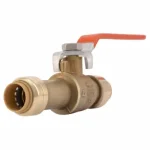
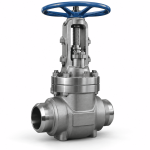
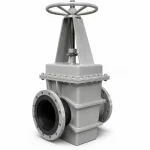
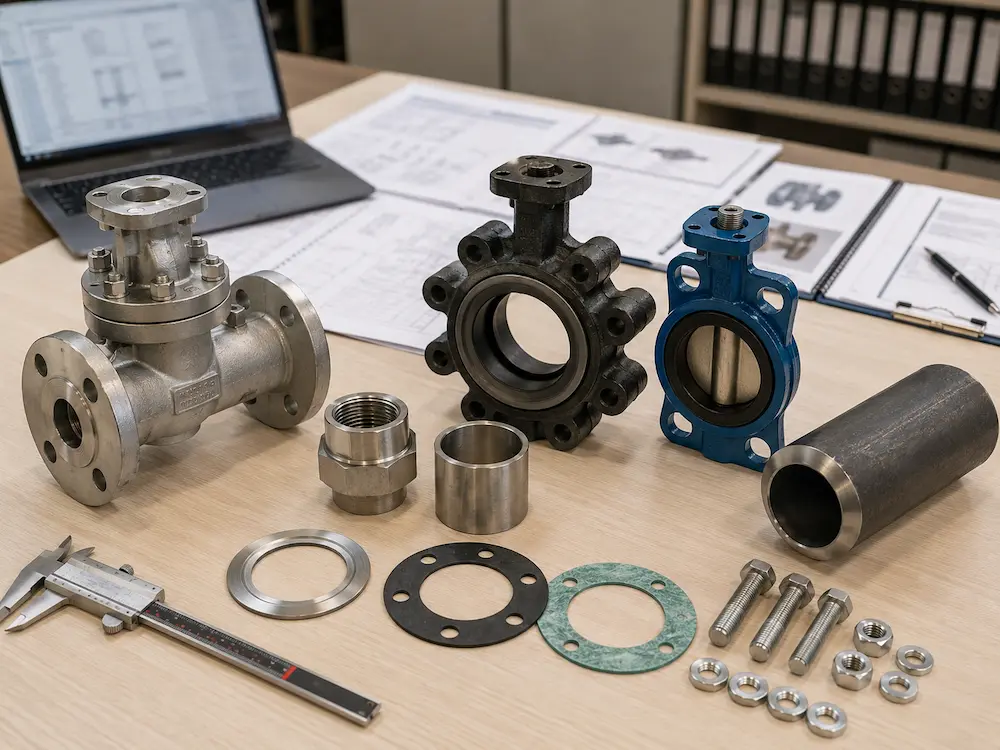
Valve end connection types are one of the most important details in industrial valve selection. A valve may have the correct size, material and pressure rating, but if the end connection does not match the pipeline standard, installation method or maintenance requirement, the valve cannot be used correctly.
Industrial valves can be supplied with flanged ends, threaded ends, socket weld ends, butt weld ends, wafer bodies, lug bodies, clamp ends, grooved ends and special customized connections. The correct choice depends on valve type, pipeline size, pressure class, temperature, leakage risk, welding requirement, disassembly requirement and project specification.
This guide explains the most common valve connection types, where each connection is used, what buyers should check before ordering and how to avoid common valve connection mistakes.
For basic valve size and pressure terminology, read our DN and PN Meaning in Valves Explained. For pressure rating review, read our Valve Pressure-Temperature Rating Guide.
What Are Valve End Connections?
Valve end connections refer to the interface between the valve and the pipeline. They define how the valve body connects to pipes, flanges, fittings, gaskets, bolts or welded joints.
End connection selection affects installation cost, leakage risk, maintenance access, pressure capability, welding procedure, pipeline stress and future replacement. It should be confirmed before production, especially for project valves, high-pressure valves, chemical valves, steam valves and customized industrial valves.
Common valve end connection types include:
- Flanged connection
- Threaded connection
- Socket weld connection
- Butt weld connection
- Wafer connection
- Lug connection
- Double flanged connection
- Clamp connection
- Grooved connection
- Special project-specific connection
Valve End Connection Types Comparison Table
| Connection Type | Common Valve Types | Main Advantage | Main Caution |
|---|---|---|---|
| Flanged | Ball, gate, globe, check, butterfly, plug valves | Easy installation, removal and maintenance | Requires matching flange standard, gasket and bolting |
| Threaded | Small ball valves, needle valves, check valves, utility valves | Compact and economical for small sizes | Not ideal for large size, high vibration or frequent disassembly |
| Socket Weld | Small-bore forged valves, high-pressure ball valves, gate valves | Strong welded connection for small-bore high-pressure service | Removal usually requires cutting or welding work |
| Butt Weld | High-pressure, high-temperature, pipeline and severe service valves | Strong permanent welded pipeline connection | Requires welding procedure and less convenient maintenance |
| Wafer | Butterfly valves, wafer check valves | Compact and lightweight between flanges | Depends on pipeline flanges for installation |
| Lug | Butterfly valves | Allows bolting from both sides and some end-of-line service designs | End-of-line use depends on valve design and pressure rating |
| Double Flanged | Butterfly valves, gate valves, check valves | Stable installation for larger pipelines | Heavier and needs correct face-to-face dimension |
| Clamp | Sanitary valves, food, beverage, pharmaceutical systems | Quick disassembly and cleaning | Not the same as grooved pipe coupling |
| Grooved | HVAC, fire protection, water and utility systems | Fast installation with grooved couplings | Must match groove profile, coupling and gasket |
Flanged Valve Connection
A flanged valve connection uses flanges, bolts and gaskets to connect the valve to the pipeline. It is one of the most common industrial valve connection types because it allows relatively easy installation, removal, inspection and replacement.
Flanged valves are widely used in oil and gas, chemical processing, water treatment, power plants, HVAC, wastewater, fire protection and general industrial pipelines.
Common flanged valve types include:
- Flanged ball valves
- Flanged gate valves
- Flanged globe valves
- Flanged check valves
- Flanged butterfly valves
- Flanged plug valves
- Flanged control valves
Flanged connection advantages:
- Easy to remove for maintenance
- Suitable for many valve types and sizes
- Available in many pressure classes
- Works with standard gaskets and bolting
- Suitable for inspection, replacement and project-based installation
Flanged connection buyer checks:
- Flange standard: ASME, EN, DIN, JIS, GB or project standard
- Pressure class: Class 150, 300, 600, PN16, PN40 or project rating
- Face type: RF, FF, RTJ or project requirement
- Gasket material and gasket type
- Bolting material
- Face-to-face dimension
- Installation space and maintenance clearance
For a common flanged isolation valve, review our Flanged Ball Valve.
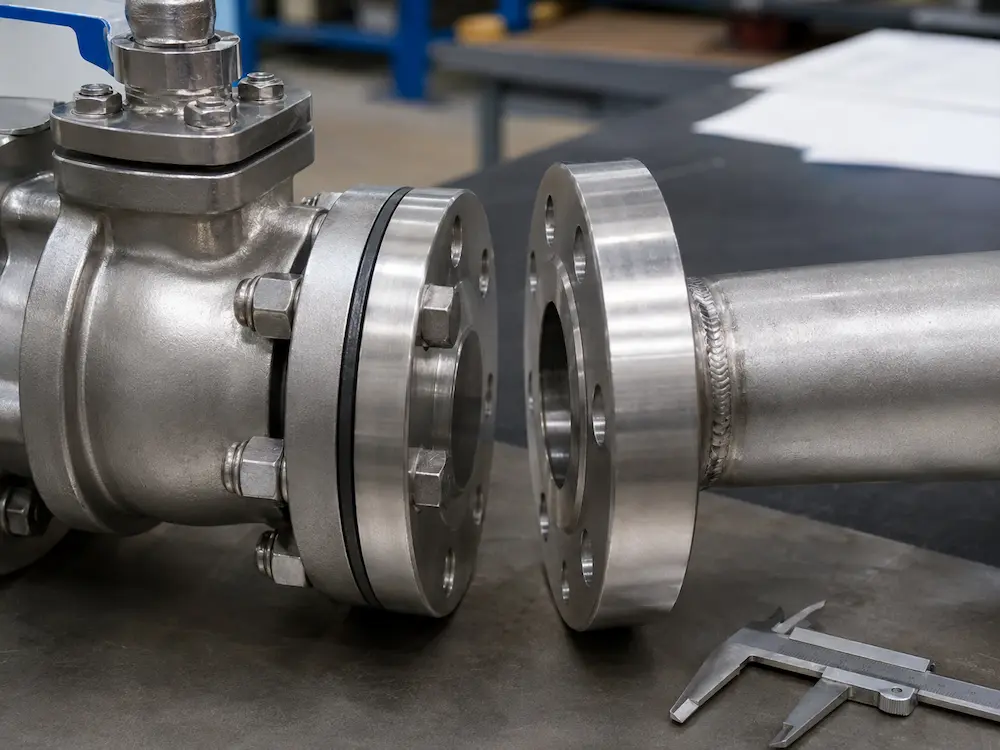
Threaded Valve Connection
A threaded valve connection uses internal or external pipe threads to connect the valve to the pipeline. Threaded valves are usually used for small sizes, low-to-medium pressure service, utility lines, compressed air, water, oil, gas and instrumentation-related systems.
Threaded valves are compact, economical and easy to install in small piping systems. However, they are not ideal for large-size pipelines, severe vibration, high-temperature thermal cycling or applications where frequent removal is expected.
Common threaded valve types include:
- Threaded ball valves
- Threaded check valves
- Threaded gate valves
- Threaded globe valves
- Threaded needle valves
- Threaded drain and vent valves
Threaded connection advantages:
- Compact design
- Low installation cost
- No flange or welding required
- Suitable for small-bore utility pipelines
- Easy for standard small-size valve installation
Threaded connection buyer checks:
- Thread standard: NPT, BSP, BSPT, G thread or project standard
- Male or female thread type
- Valve size and pressure rating
- Thread sealant compatibility
- Medium and leakage risk
- Vibration and pipe stress
- Maintenance and replacement access
For small-size threaded isolation service, review our Threaded Ball Valve.
Socket Weld Valve Connection
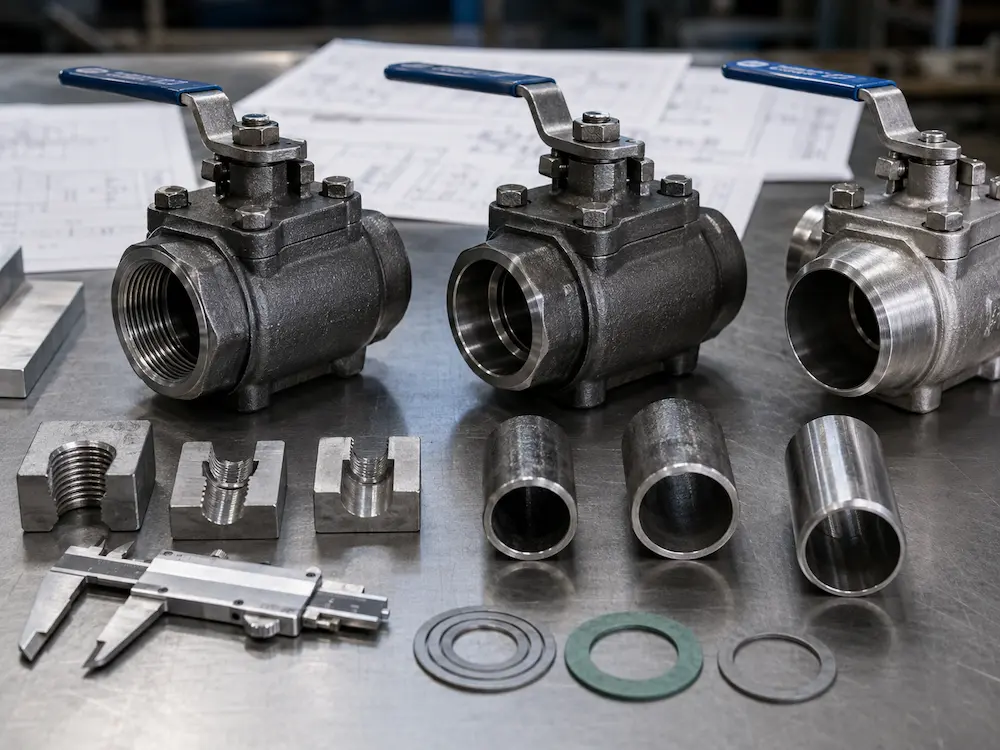
A socket weld valve connection is a welded connection where the pipe is inserted into the socket end of the valve and then welded around the joint. Socket weld valves are commonly used for small-bore high-pressure piping systems.
This connection is stronger and more permanent than threaded connection, but it is less convenient for maintenance because removal normally requires cutting or welding work.
Socket weld valves are commonly used for:
- Small-bore high-pressure pipelines
- Forged ball valves
- Forged gate valves
- Forged globe valves
- Forged check valves
- Steam, oil, gas and chemical process lines
- Applications where threaded leakage risk should be reduced
Socket weld connection advantages:
- Strong welded joint
- Suitable for small-bore high-pressure service
- More reliable than threaded connection in many pressure systems
- Compact forged valve construction
- No flange gasket required
Socket weld connection buyer checks:
- Pipe size and wall thickness
- Socket weld end standard
- Valve material and pipe material compatibility
- Welding procedure requirement
- Post-weld heat treatment if applicable
- Inspection requirement after welding
- Maintenance strategy, because removal is not as easy as flanged valves
For welded small-bore ball valve applications, review our Socket Weld Ball Valve.
Butt Weld Valve Connection
A butt weld valve connection uses beveled valve ends that are welded directly to the pipe ends. Butt weld valves are commonly used in high-pressure, high-temperature, severe service and pipeline applications where a strong permanent connection is required.
Butt weld connections reduce flange leakage points and provide strong pipeline integrity. However, they require qualified welding procedures and are less convenient for valve replacement.
Butt weld valves are commonly used for:
- High-pressure pipeline service
- High-temperature steam service
- Power plant pipelines
- Oil and gas transmission lines
- Refinery and petrochemical process lines
- Buried pipeline service
- Severe service where flange leakage should be minimized
Butt weld connection advantages:
- Strong permanent pipe connection
- No flange gasket leakage point
- Suitable for high-pressure and high-temperature service
- Good pipeline integrity
- Suitable for buried or critical pipeline sections
Butt weld connection buyer checks:
- Pipe schedule and wall thickness
- Weld end preparation
- Material compatibility between valve and pipe
- Welding procedure specification
- NDE requirement after welding
- Post-weld heat treatment requirement
- Future maintenance and replacement plan
For high-temperature welded pipeline applications, review our High Temperature High Pressure Valves Guide.
Wafer Valve Connection
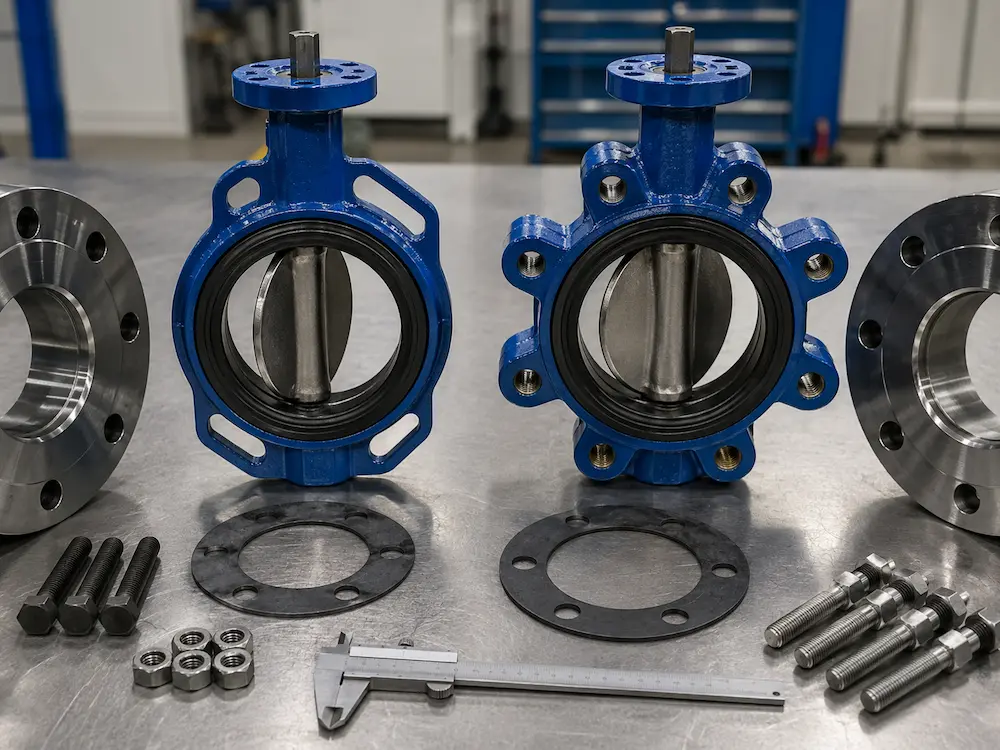
A wafer valve connection is commonly used for butterfly valves and wafer check valves. The valve body is installed between two pipeline flanges and held in place by flange bolts.
Wafer valves are compact, lightweight and economical. They are widely used in water treatment, HVAC, cooling water, wastewater, utility pipelines and general industrial systems.
Wafer connection advantages:
- Compact body length
- Lightweight design
- Lower cost than many flanged designs
- Easy installation between flanges
- Common for butterfly valves and wafer check valves
Wafer connection buyer checks:
- Compatible flange standard
- Correct centering between flanges
- Gasket or seat sealing design
- Pressure rating
- Whether dead-end service is required
- Valve body thickness and bolt length
- Installation space and alignment
For water and wastewater butterfly valve options, review our EPDM Lined Butterfly Valve.
Lug Valve Connection
A lug valve connection is commonly used for butterfly valves. Lug-style butterfly valves have threaded or through-hole lugs around the valve body, allowing bolts to connect the valve to pipeline flanges from both sides.
Lug butterfly valves can provide better installation flexibility than wafer designs. Some lug valves may be used for end-of-line service, but this depends on the valve design, pressure rating and manufacturer approval.
Lug connection advantages:
- More installation flexibility than wafer valves
- Can allow one side of the pipeline to be removed in selected designs
- Common for butterfly valves in water and utility service
- Better bolting support than basic wafer bodies
- Suitable for many maintenance-focused pipeline layouts
Lug connection buyer checks:
- Whether end-of-line service is required
- Allowed end-of-line pressure rating
- Threaded lug or through-hole lug design
- Flange standard compatibility
- Bolt length and bolting material
- Body material and seat material
- Installation direction and pipeline support
Double Flanged Valve Connection
A double flanged valve connection uses integral flanges on both sides of the valve body. It is common for gate valves, globe valves, check valves, large butterfly valves and rubber lined butterfly valves.
Double flanged valves are usually heavier than wafer or lug valves, but they provide stable pipeline installation and are often preferred for larger sizes, higher pipe loads or applications where a more rigid body structure is required.
Double flanged valves are commonly used for:
- Large-diameter water pipelines
- Wastewater systems
- Cooling water pipelines
- Fire protection pipelines
- Industrial process lines
- Rubber lined butterfly valves
- Gate valves, globe valves and check valves
Double flanged connection buyer checks:
- Flange standard
- Face-to-face dimension
- Pressure rating
- Gasket type
- Bolting material
- Valve weight and pipe support
- Installation space
For a lined double flanged butterfly valve structure, review our Rubber Lined Flanged Butterfly Valve.
Clamp Valve Connection
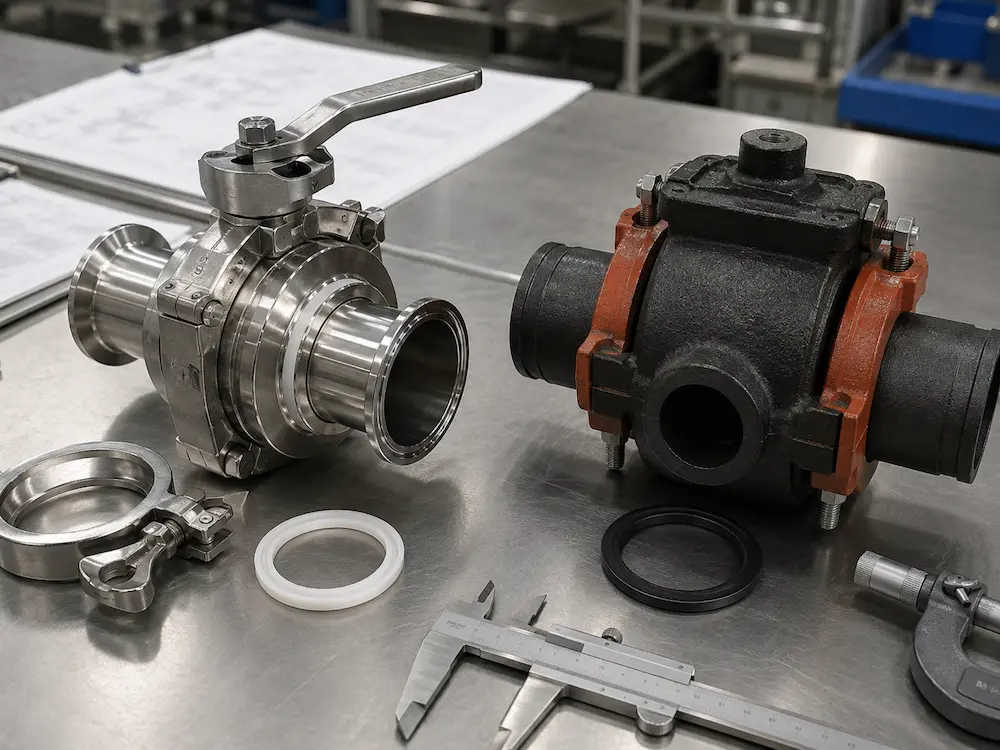
A clamp valve connection is commonly used in sanitary or hygienic piping systems, such as food, beverage, pharmaceutical, biotech and clean-process applications. It allows quick assembly and disassembly for cleaning and maintenance.
Clamp connections should not be confused with grooved pipe coupling systems. Their structure, gasket design, application area and pressure range can be different.
Clamp connection advantages:
- Quick disassembly
- Easy cleaning
- Common for hygienic systems
- Suitable for frequent maintenance
- Compact installation
Clamp connection buyer checks:
- Clamp standard
- Tube size
- Gasket material
- Surface finish requirement
- Cleaning method
- Pressure and temperature limits
- Hygienic certification or project requirement
For a detailed comparison, read our Clamp Connection vs Grooved Connection Guide.
Grooved Valve Connection
A grooved valve connection uses grooved pipe ends and mechanical couplings. It is commonly used in HVAC, fire protection, industrial water, utility piping and some building service systems.
Grooved connections can speed up installation and reduce welding work, but the valve, pipe groove, coupling and gasket must be compatible.
Grooved connection advantages:
- Fast installation
- No field welding in many systems
- Useful for HVAC and fire protection pipelines
- Can simplify maintenance in some systems
- Good for selected water and utility service
Grooved connection buyer checks:
- Groove standard and profile
- Coupling type
- Gasket material
- Pressure rating
- Pipe material
- Fire protection or HVAC project standard
- Whether rigid or flexible coupling is required
How to Choose the Correct Valve End Connection
The correct valve connection type should be selected according to pipeline design, pressure rating, maintenance requirement, installation method and project specification.
| Selection Question | Recommended Direction | Buyer Notes |
|---|---|---|
| Need easy removal and maintenance? | Flanged connection | Best for many industrial valves requiring future inspection or replacement |
| Small size and economical installation? | Threaded connection | Common for small utility valves, but check leakage and vibration risk |
| Small-bore high-pressure welded service? | Socket weld connection | Strong welded connection, common for forged valves |
| Permanent high-integrity pipeline connection? | Butt weld connection | Common for high-pressure, high-temperature and pipeline service |
| Compact butterfly valve installation? | Wafer connection | Lightweight and economical, installed between flanges |
| Butterfly valve with better bolting flexibility? | Lug connection | Check end-of-line rating if required |
| Large valve or stable pipeline installation? | Double flanged connection | Heavier but stable for larger pipelines |
| Hygienic quick-disassembly system? | Clamp connection | Common in sanitary food, beverage and pharmaceutical service |
| HVAC, fire protection or water utility fast installation? | Grooved connection | Requires matching grooved coupling and gasket |
Valve Connection Selection by Pressure and Temperature
Pressure and temperature strongly affect end connection selection. For low-pressure utility systems, threaded, wafer or grooved connections may be suitable. For high-pressure or high-temperature systems, flanged, socket weld or butt weld connections are often reviewed more carefully.
General selection logic:
- Low-pressure water or HVAC: flanged, wafer, lug, grooved or threaded depending on size and system design
- Small-bore high-pressure service: socket weld or threaded forged valves depending on specification
- High-temperature steam: flanged or butt weld valves are commonly reviewed
- High-pressure oil and gas: flanged, butt weld or socket weld depending on pipeline design
- Chemical service: flanged or welded connections depending on leakage risk and maintenance requirement
- Sanitary service: clamp connection is commonly used for quick cleaning
For pressure and temperature rating review, read our Valve Pressure-Temperature Rating Guide.
Valve Connection Selection by Valve Type
Ball Valves
Ball valves can be supplied with flanged, threaded, socket weld, butt weld, clamp or special end connections. Small ball valves are often threaded or socket weld. Industrial process ball valves are often flanged. Pipeline ball valves may use flanged or butt weld ends.
For high-pressure ball valve connection options, review our High Pressure Ball Valve.
Gate Valves
Gate valves are commonly supplied with flanged or butt weld ends for industrial service. Small forged gate valves may also use threaded or socket weld ends. Large water gate valves are usually flanged.
Globe Valves
Globe valves often use flanged, threaded, socket weld or butt weld ends depending on pressure, temperature and size. Steam globe valves and high-temperature globe valves often require careful review of flange standard, gasket, packing and trim material.
Check Valves
Check valves can be flanged, wafer, threaded, socket weld or butt weld depending on design. Wafer check valves are compact, while swing check valves and high-pressure check valves are often flanged or welded.
Butterfly Valves
Butterfly valves commonly use wafer, lug or double flanged body designs. Wafer butterfly valves are compact and economical. Lug butterfly valves provide better bolting flexibility. Double flanged butterfly valves are often used for larger or more stable pipeline installations.
Control Valves
Control valves are commonly flanged, but welded-end designs may be used for special high-pressure or high-temperature service. Connection selection should be reviewed together with actuator access, maintenance clearance and control loop requirements.
Common Buyer Mistakes When Selecting Valve Connections
Mistake 1: Giving Only Valve Size Without Connection Standard
DN50 or 2 inch only defines size. It does not define flange standard, thread standard, weld end preparation or installation method.
Mistake 2: Treating All Flanges as the Same
ASME, EN, DIN, JIS and GB flanges may have different dimensions, drilling patterns, face types and pressure ratings.
Mistake 3: Mixing PN and Class Without Checking Flange Compatibility
PN and Class ratings should not be converted only by rough comparison. Flange drilling, face-to-face dimension and gasket design must be checked.
Mistake 4: Selecting Threaded Valves for Severe Vibration
Threaded connections may not be ideal for high vibration or severe pressure cycling. Flanged or welded connections may be more suitable.
Mistake 5: Choosing Welded Ends Without Considering Maintenance
Socket weld and butt weld connections are strong, but valve removal usually requires cutting or welding work.
Mistake 6: Assuming Lug Butterfly Valves Can Always Be Used End-of-Line
End-of-line service depends on valve design and pressure rating. Buyers should confirm this requirement before ordering.
Mistake 7: Ignoring Gasket and Bolting
Flanged valves need the correct gasket and bolting. Wrong gasket material or bolt grade can cause leakage or installation failure.
Information Buyers Should Provide Before Quotation
| Required Information | Example / Notes |
|---|---|
| Valve type | Ball, gate, globe, check, butterfly, plug, control valve |
| Valve size | DN / NPS |
| Pressure rating | Class 150, Class 300, Class 600, PN16, PN40 or project rating |
| End connection type | Flanged, threaded, socket weld, butt weld, wafer, lug, clamp, grooved |
| Connection standard | ASME B16.5, EN 1092-1, DIN, JIS, GB, NPT, BSP, project standard |
| Flange face type | RF, FF, RTJ or project requirement |
| Pipe specification | Pipe material, wall thickness, schedule, outside diameter |
| Medium | Water, steam, oil, gas, chemical, slurry, air, thermal oil |
| Operating pressure and temperature | Normal working condition |
| Design pressure and temperature | Required for pressure-temperature rating review |
| Gasket and bolting requirement | Spiral wound gasket, PTFE gasket, graphite gasket, stud bolts, nuts |
| Maintenance requirement | Frequent removal, permanent installation, buried service, clean-in-place |
| Testing and documents | MTC, pressure test report, PMI, third-party inspection, drawing approval |
Related Technical Resources
- Flanged Ball Valve — common flanged isolation valve for industrial pipeline shutoff.
- Threaded Ball Valve — compact small-size ball valve for water, oil, gas and air lines.
- Socket Weld Ball Valve — welded-end forged ball valve for small-bore high-pressure systems.
- High Pressure Ball Valve — product page for high-pressure oil, gas, hydraulic, steam, thermal oil and industrial pipeline service.
- EPDM Lined Butterfly Valve — wafer, lug, flanged and actuator options for water treatment service.
- Clamp Connection vs Grooved Connection Guide — detailed comparison of sanitary clamp and grooved pipe coupling systems.
- DN and PN Meaning in Valves Explained — basic guide for valve size and pressure terminology.
- Valve Pressure-Temperature Rating Guide — explains how pressure class changes with temperature and material.
Final Recommendations for Industrial Buyers
Valve end connection type should be confirmed early in the quotation process. It affects installation method, leakage risk, maintenance access, pressure rating, gasket selection, welding procedure and project compatibility.
Choose flanged valves when maintenance access and standard industrial installation are important. Choose threaded valves for small compact utility systems. Choose socket weld or butt weld valves for welded pipeline integrity. Choose wafer or lug butterfly valves for compact water and utility pipelines. Choose clamp connections for hygienic systems and grooved connections for selected HVAC, fire protection and utility systems.
If you need help selecting valve end connection types for ball valves, gate valves, globe valves, check valves, butterfly valves, control valves or special industrial valves, Vcore Valve can review your pipe standard, pressure rating, medium, installation condition and project requirements.
FAQ
1. What are the common valve end connection types?
Common valve end connection types include flanged, threaded, socket weld, butt weld, wafer, lug, double flanged, clamp and grooved connections.
2. When should flanged valves be used?
Flanged valves are commonly used when easy installation, inspection, removal and maintenance are required. They are widely used in industrial pipelines, water systems, oil and gas, chemical processing and power plants.
3. What is the difference between socket weld and butt weld valves?
Socket weld valves use a socket where the pipe is inserted and welded around the joint, usually for small-bore high-pressure service. Butt weld valves use beveled ends welded directly to the pipe, often for high-pressure, high-temperature or pipeline service.
4. What is the difference between wafer and lug butterfly valves?
Wafer butterfly valves are installed between two flanges and held by flange bolts. Lug butterfly valves have lugs around the body and allow more bolting flexibility. Some lug valves may be used for end-of-line service if the design allows it.
5. Are threaded valves suitable for high pressure?
Threaded valves can be used for selected small-size pressure systems, but they are not always suitable for severe vibration, large size, high-temperature cycling or critical leakage-sensitive service.
6. Can PN and Class flanges be directly interchanged?
No. PN and Class flanges may have different dimensions, drilling patterns, face types and pressure-temperature ratings. The correct flange standard must be confirmed before ordering.
7. What connection information should buyers provide before quotation?
Buyers should provide valve type, size, pressure rating, end connection type, connection standard, flange face type, pipe specification, medium, pressure, temperature, gasket, bolting and testing requirements.