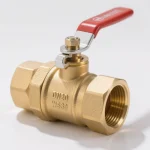
Valve gasket selection is a key part of industrial valve sealing. A valve may have the correct body material, pressure class and end connection, but if the gasket is not suitable for the medium, pressure, temperature or flange type, leakage can still occur at the valve flange or body joint.
In industrial projects, valve gaskets are commonly reviewed together with flange standard, pressure-temperature rating, body material, bolting, packing and seat material. This is especially important for steam valves, chemical valves, high-pressure ball valves, fire-safe valves, refinery valves, power plant valves and high-temperature high-pressure valves.
This guide explains common valve gasket types, including PTFE, graphite, rubber, spiral wound, RTJ, non-asbestos, kammprofile and metal jacketed gaskets. It also explains how to select gaskets by medium, pressure, temperature, flange type and project requirement.
For valve connection selection, read our Valve End Connection Types Guide. For pressure and temperature review, read our Valve Pressure-Temperature Rating Guide.
What Is a Valve Gasket?
A valve gasket is a sealing component placed between two mating surfaces, such as valve flange faces, bonnet joints, body joints or other pressure-containing connections. Its function is to prevent leakage by filling surface irregularities and maintaining sealing stress under pressure, temperature and pipeline load.
In valve applications, gaskets may be used between the valve and pipe flange, between valve body sections, between body and bonnet, or in other bolted pressure joints. The gasket material must match the fluid, pressure, temperature, flange face and bolting force.
Common gasket locations in valves include:
- Valve-to-pipeline flange connection
- Body-to-bonnet joint
- Split body joint in ball valves
- Cover joint in check valves
- Bonnet gasket in gate and globe valves
- Body seal in fire-safe or high-pressure ball valves
- Special gasket interfaces in lined, jacketed or customized valves
Why Gasket Selection Matters in Valve Sealing
Gasket selection affects external leakage, flange sealing, maintenance frequency, pressure safety and long-term valve reliability. A wrong gasket can fail even when the valve body and flange are correctly selected.
Incorrect gasket selection may cause:
- Flange leakage during pressure testing
- External leakage during operation
- Gasket blowout under high pressure
- Compression loss under thermal cycling
- Chemical attack from incompatible media
- Steam leakage in high-temperature service
- Fire-safe sealing failure where fire-resistant sealing is required
- Premature maintenance due to gasket relaxation or damage
For this reason, gasket selection should not be treated as a small accessory detail. It should be confirmed as part of the valve specification.
Common Valve Gasket Types Comparison Table
| Gasket Type | Common Use | Main Advantage | Main Caution |
|---|---|---|---|
| PTFE Gasket | Chemical, corrosion-resistant and clean service | Good chemical resistance in many applications | Temperature, creep and pressure limits must be checked |
| Graphite Gasket | Steam, high-temperature and fire-resistant sealing | Good high-temperature sealing performance | Flange finish, compression and oxidation conditions should be reviewed |
| Spiral Wound Gasket | Higher-pressure flanged valves and process pipelines | Good recovery and sealing under pressure and temperature cycling | Correct inner ring, outer ring, filler and flange type must be specified |
| RTJ Gasket | RTJ flange high-pressure service | Metal-to-metal sealing for suitable RTJ flange systems | Must match RTJ flange groove and material requirement |
| Rubber Gasket | Water, low-pressure utility and selected lined valve service | Flexible and economical | Not suitable for many high-temperature or aggressive chemical services |
| Non-Asbestos / CNAF Gasket | General industrial water, oil and utility service | Common general-purpose sealing option | Medium, temperature and pressure limits must be verified |
| Kammprofile Gasket | High-pressure or high-temperature process service | Good sealing with metal core and soft facing layers | Requires correct flange finish and gasket specification |
| Metal Jacketed Gasket | Heat exchangers and selected process equipment | Metal jacket provides mechanical protection | Less common for standard valve flange connections unless specified |
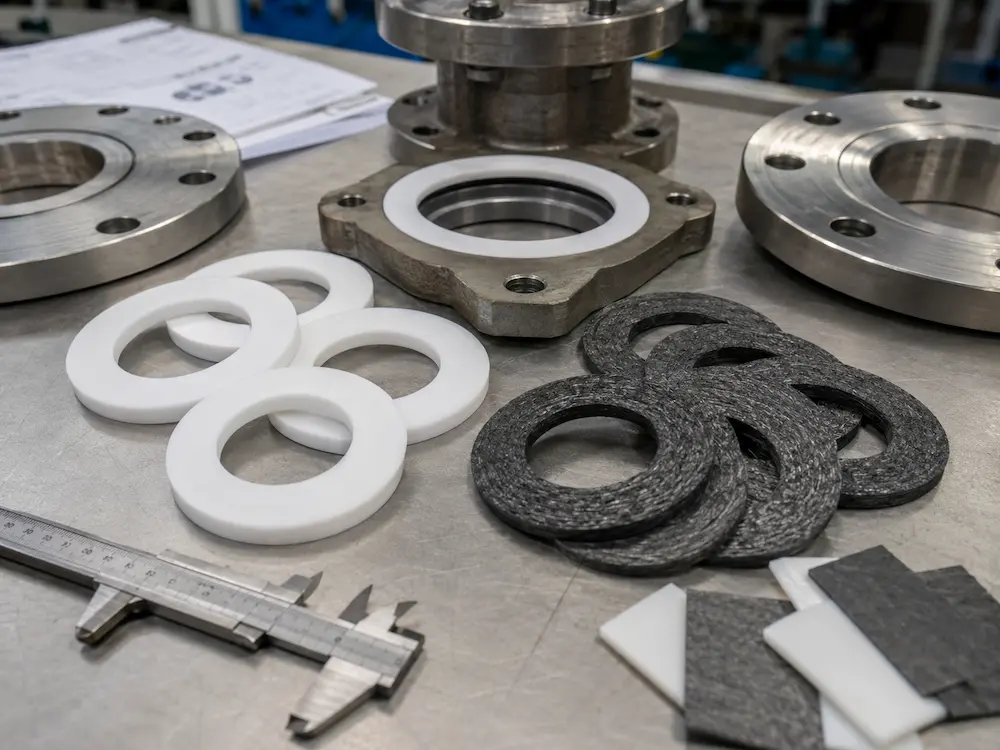
PTFE Valve Gasket
PTFE gaskets are commonly used in chemical, corrosive, clean and general industrial services where chemical resistance is important. PTFE has good compatibility with many fluids, but it should not be selected automatically for every valve application.
PTFE gaskets may be used in flanged valves, lined valves, chemical valves, low-to-moderate temperature service and selected clean-process systems. However, PTFE can be limited by temperature, pressure, creep behavior and flange loading conditions.
PTFE gasket advantages:
- Good chemical resistance in many services
- Clean sealing surface
- Common for chemical valves and lined valves
- Suitable for many corrosive media where compatible
- Available in different forms such as pure PTFE, expanded PTFE or filled PTFE
PTFE gasket buyer checks:
- Medium compatibility
- Design temperature
- Design pressure
- Flange type and surface finish
- Whether creep or cold flow may affect sealing
- Whether the service involves thermal cycling
- Whether a filled or expanded PTFE gasket is required
For chemical valve applications, review our Chemical Processing Valve Solutions.
Graphite Valve Gasket
Graphite gaskets are commonly reviewed for steam, high-temperature, thermal oil, fire-safe, refinery and power plant valve applications. Graphite sealing materials are often used where PTFE or rubber materials cannot handle the temperature requirement.
Graphite may be used in bonnet gaskets, body seals, flange gaskets, fire-safe ball valve body seals and high-temperature valve joints. It is also commonly used as flexible graphite packing for valve stems.
Graphite gasket advantages:
- Suitable for many high-temperature valve sealing applications
- Common for steam and thermal service
- Useful in fire-safe valve sealing design
- Good compressibility and sealing performance
- Often used with alloy steel valves and high-temperature valves
Graphite gasket buyer checks:
- Operating temperature and design temperature
- Steam, thermal oil or fire-safe requirement
- Flange face condition
- Bolting load and gasket compression
- Oxidation or special service concerns
- Whether reinforced graphite gasket is required
- Whether low-emission packing is also required
For steam and power plant applications, review our Power & Steam Valve Solutions.
Spiral Wound Gasket
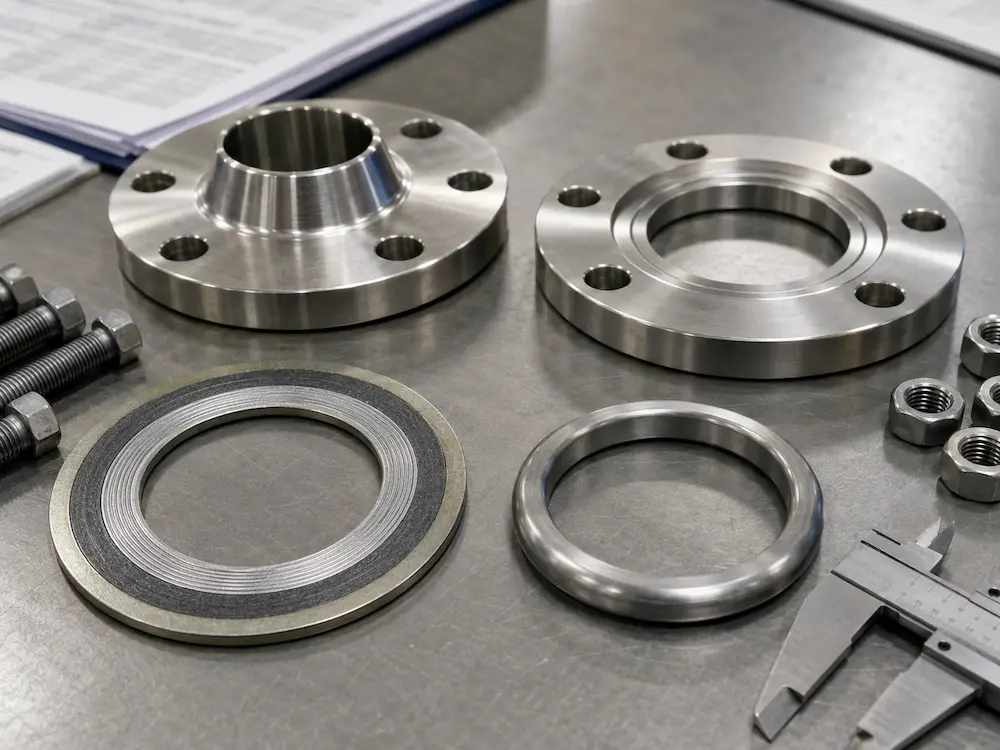
Spiral wound gaskets are widely used in industrial flanged valve and pipeline systems. They are made by winding metal strip and filler material together, often with an outer ring, inner ring or both depending on the flange type and service condition.
Spiral wound gaskets are commonly reviewed for higher-pressure, higher-temperature and process service applications where gasket recovery and sealing reliability are important.
Spiral wound gasket advantages:
- Good sealing performance in many pressure and temperature conditions
- Useful for pressure and thermal cycling
- Common for ASME flanged valve connections
- Available with graphite, PTFE or other filler materials
- Can be specified with inner and outer rings
Spiral wound gasket buyer checks:
- Flange type: RF, FF or other design
- Pressure class
- Filler material: graphite, PTFE or project-specified filler
- Winding material
- Inner ring requirement
- Outer centering ring requirement
- Gasket standard and project specification
- Whether the gasket is suitable for the medium and temperature
Spiral wound gaskets are often used in high-pressure ball valves, fire-safe ball valves, steam valves and process pipeline valve connections where flange sealing reliability is important.
RTJ Gasket
RTJ gaskets, or ring type joint gaskets, are used with RTJ flanges. They are common in high-pressure oil, gas, petrochemical, refinery and severe industrial applications where the flange system is designed for metal ring sealing.
An RTJ gasket should not be used with ordinary raised face flanges. It must match the RTJ flange groove profile, pressure class, material and project requirement.
RTJ gasket advantages:
- Suitable for selected high-pressure flange systems
- Metal-to-metal sealing design
- Common in oil, gas, refinery and petrochemical service
- Used with RTJ flanges and matching groove design
- Useful for severe pressure applications where specified
RTJ gasket buyer checks:
- RTJ flange standard
- Ring type and groove compatibility
- Pressure class
- Gasket material
- Valve and flange material compatibility
- Whether soft iron, stainless steel or alloy ring material is required
- Whether the flange surface or groove has damage
For high-pressure valve applications, review our High Pressure Ball Valve and API 6D Ball Valve.
Rubber Gasket
Rubber gaskets are commonly used in low-pressure water, wastewater, HVAC, utility and selected lined valve applications. Rubber gaskets can provide flexible sealing, but their chemical and temperature limits must be checked carefully.
Common rubber gasket materials may include EPDM, NBR, natural rubber, neoprene or other elastomers depending on the medium and service condition.
Rubber gasket advantages:
- Flexible sealing performance
- Common for water and utility systems
- Economical for many low-pressure applications
- Useful for selected lined valve and butterfly valve installations
- Available in different rubber materials for different media
Rubber gasket buyer checks:
- Water, oil, chemical or slurry service
- Temperature limit
- Rubber material compatibility
- Pressure rating
- Flange face type
- Whether the valve already has an integrated rubber liner or seat
- Whether additional flange gasket is required by installation design
For lined butterfly valve and water treatment service, review our EPDM Lined Butterfly Valve.
Non-Asbestos / CNAF Gasket
Non-asbestos gaskets, also called CNAF gaskets in many industrial specifications, are used for general industrial water, oil, air, utility and selected process services. They are common where a general-purpose compressed fiber gasket is suitable.
Non-asbestos gaskets should still be selected according to pressure, temperature, medium, flange type and project requirement. They should not be used automatically for severe chemical, high-temperature or high-pressure services without confirmation.
Non-asbestos gasket buyer checks:
- Medium compatibility
- Temperature limit
- Pressure class
- Flange face type
- Required gasket thickness
- Whether oil, water, air or mild chemical service is involved
- Whether project specification requires a special gasket grade
Kammprofile Gasket
Kammprofile gaskets use a serrated metal core with soft sealing layers, often graphite or PTFE. They may be selected for higher-pressure or higher-temperature services where controlled sealing stress and good recovery are required.
Kammprofile gaskets are more project-specific than ordinary rubber or PTFE gaskets. They are usually selected according to flange condition, pressure class, temperature, medium and project specification.
Kammprofile gasket advantages:
- Strong metal core construction
- Good sealing stress distribution
- Can use graphite or PTFE facing layers
- Suitable for selected high-pressure and high-temperature services
- Useful where flange sealing reliability is critical
Kammprofile gasket buyer checks:
- Core metal material
- Facing material
- Flange surface finish
- Pressure and temperature
- Medium compatibility
- Gasket standard and project specification
Metal Jacketed Gasket
Metal jacketed gaskets use a soft filler covered by a metal jacket. They are commonly used in heat exchangers and some process equipment. They may also be specified for selected valve or equipment joints, but they are not the default choice for most standard valve flange connections unless required by project design.
Metal jacketed gasket buyer checks:
- Jacket material
- Filler material
- Flange surface finish
- Compression requirement
- Pressure and temperature
- Whether the application is valve flange, bonnet joint or process equipment
Gasket Selection by Medium
The fluid medium is one of the first factors in gasket selection. A gasket that works for water may not be suitable for steam, oil, solvent, acid, alkali, gas or thermal oil.
| Medium | Common Gasket Direction | Buyer Notes |
|---|---|---|
| Water / Utility Water | Rubber, non-asbestos or project-specified gasket | Check pressure, temperature and flange type |
| Steam | Graphite or spiral wound gasket with suitable filler | Check temperature, thermal cycling and bolting |
| Chemicals | PTFE, expanded PTFE or compatible special gasket | Check chemical compatibility and temperature limit |
| Oil / Hydrocarbon | Spiral wound, graphite, non-asbestos or project-specified gasket | Check fire-safe, temperature and pressure requirements |
| Natural Gas | Spiral wound, RTJ or project-specified gasket | Check pressure class, leakage risk and project standard |
| Thermal Oil | Graphite or high-temperature project-specified gasket | Check continuous operating temperature and leakage risk |
| Slurry / Wastewater | Rubber, non-asbestos or project-specified gasket | Check abrasion, flange alignment and gasket compression |
Gasket Selection by Pressure and Temperature
Pressure and temperature directly affect gasket material selection. Higher pressure requires stronger sealing stress and correct bolting. Higher temperature can reduce gasket strength, affect compression behavior or damage unsuitable materials.
General selection logic:
- Low-pressure water service may use rubber or non-asbestos gaskets where compatible.
- Chemical service often requires PTFE or compatible chemical-resistant gasket materials.
- High-temperature steam service commonly requires graphite or suitable spiral wound gaskets.
- High-pressure flanged valves often use spiral wound gaskets or RTJ gaskets depending on flange type.
- Fire-safe valves often require graphite or fire-resistant body sealing materials.
- RTJ flanges require matching RTJ ring gaskets.
For pressure-temperature rating review, read our Valve Pressure-Temperature Rating Guide. For high-temperature valve selection, read our High Temperature High Pressure Valves Guide.
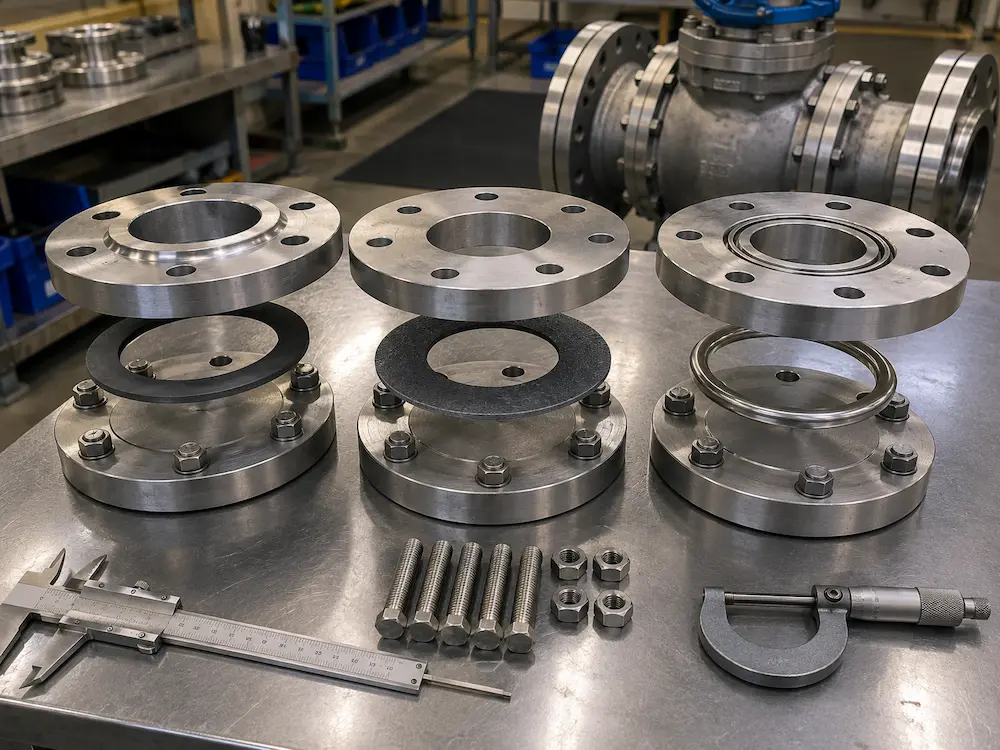
Gasket Selection by Flange Type: RF, FF and RTJ
Flange face type is critical for gasket selection. The gasket must match the flange design, sealing surface and bolting arrangement.
| Flange Face Type | Common Gasket Direction | Selection Note |
|---|---|---|
| RF Raised Face | Spiral wound, PTFE, graphite, non-asbestos or project-specified gasket | Common in industrial valve flanged connections |
| FF Flat Face | Full-face gasket where required | Common in cast iron or low-pressure systems; avoid incorrect gasket stress |
| RTJ Ring Type Joint | RTJ metal ring gasket | Must match RTJ groove and ring specification |
For flange and connection selection, read our Valve End Connection Types Guide.
Gasket Selection for Chemical Valves
Chemical valves require gasket materials that are compatible with the medium. Body material alone does not guarantee chemical resistance. A stainless steel, alloy steel or lined valve can still leak if the gasket is attacked by the fluid.
For chemical valve gasket selection, check:
- Exact chemical name and concentration
- Operating temperature
- Operating pressure
- Whether acid, alkali, solvent or oxidizing media is involved
- PTFE, expanded PTFE or special gasket compatibility
- Whether the valve is lined with PTFE, PFA, rubber or other lining
- Whether flange sealing must match the lining design
- Whether leakage is safety-critical or environmental-critical
For corrosion-resistant valve applications, review our Chemical Processing Valve Solutions and Anti-Corrosion Valve Materials for Chemical Processing.
Gasket Selection for Steam and High Temperature Valves
Steam and high-temperature service require careful gasket selection because temperature, pressure and thermal cycling can affect sealing reliability. PTFE and rubber gaskets are not suitable for many high-temperature steam applications.
For steam valve gasket selection, check:
- Saturated steam or superheated steam
- Steam pressure
- Steam temperature
- Design temperature
- Thermal cycling frequency
- Graphite gasket or spiral wound gasket requirement
- Bolting material and flange loading
- Whether graphite packing is also required
- Whether the valve is gate, globe, check, ball or control valve
For steam valve applications, review our Power & Steam Valve Solutions and Steam Globe Valve.
Gasket Selection for Fire-Safe Valves
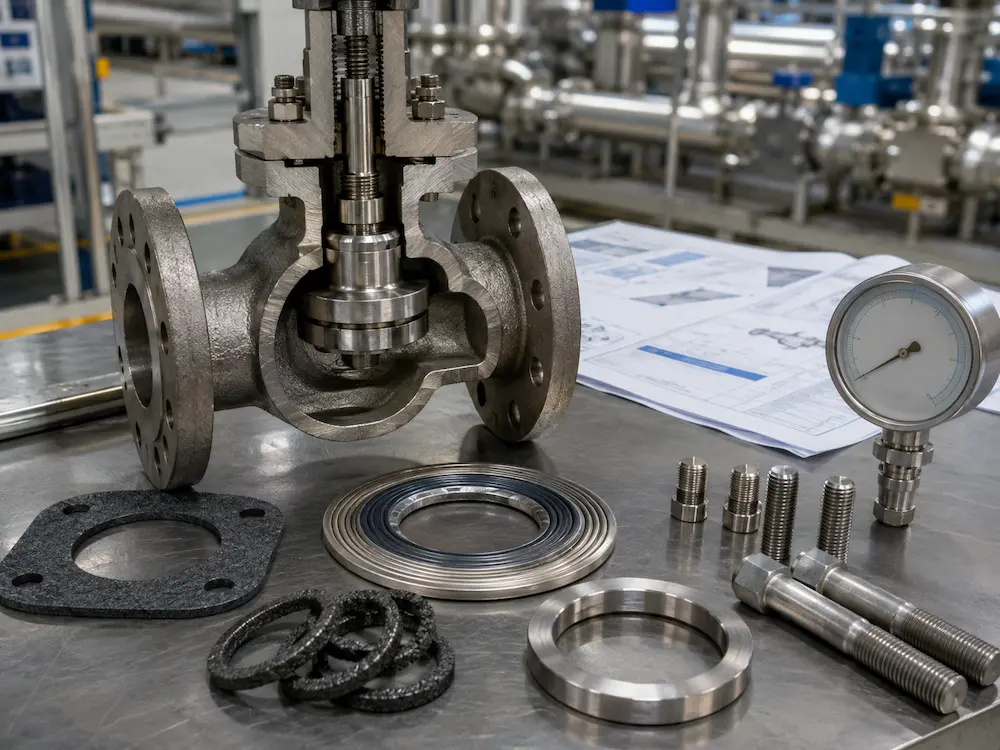
Fire-safe valves require sealing design that can help control leakage during and after specified fire exposure conditions. In many fire-safe ball valves, graphite packing and graphite or spiral wound body seals are reviewed as part of the fire-resistant sealing system.
For fire-safe valve gasket and body seal review, check:
- Applicable fire test standard
- Fire-safe certificate scope
- Valve size and pressure class covered by certificate
- Body seal material
- Stem packing material
- Seat material and secondary metal sealing design
- Bolting and body joint construction
- Whether the selected gasket matches the tested design
For fire-safe isolation service, review our Fire Safe Ball Valve.
Gasket Selection for High Pressure Ball Valves
High pressure ball valves may use PTFE, graphite, spiral wound gasket or project-specific body seals depending on body construction, pressure class, temperature, fire-safe requirement and process condition.
For high pressure ball valve body seals, check:
- Floating or trunnion-mounted design
- Two-piece, three-piece, split-body or top-entry construction
- Pressure class
- Design temperature
- Seat material
- Body seal material
- Fire-safe requirement
- Pressure cycling condition
- Hydrostatic and seat leakage test requirement
For high-pressure service, review our High Pressure Ball Valve and API 6D Ball Valve.
Gasket Selection for Lined Valves
Lined valves, such as PTFE lined valves, PFA lined valves, rubber lined valves and EPDM lined butterfly valves, require special attention at the flange sealing interface. The lining or rubber seat may already extend to the flange face, and the gasket arrangement must match the actual valve design.
For lined valve gasket review, check:
- Whether the valve has integrated flange sealing from the lining
- Whether an additional gasket is required
- Whether the gasket may damage the lining face
- Flange bolt tightening sequence
- Chemical compatibility
- Rubber or PTFE lining material
- Whether full-face sealing is required
- Installation manual or manufacturer recommendation
For lined valve applications, review our Rubber Lined Flanged Butterfly Valve and EPDM Lined Butterfly Valve.
Gasket, Packing and Seat Are Different Parts
Buyers sometimes use gasket, packing and seal interchangeably, but they refer to different valve components.
| Part | Location | Main Function |
|---|---|---|
| Gasket | Flange, bonnet or body joint | Seals static bolted joints |
| Packing | Around valve stem | Prevents leakage along moving or rotating stem |
| Seat | Inside the valve flow path | Provides shutoff between closure member and valve body |
| Body Seal | Split body or body joint | Seals pressure-containing body joint |
For seat material selection, read our Valve Seat Materials Guide. For trim and internal part materials, read our Valve Trim Materials Guide.
Common Buyer Mistakes in Valve Gasket Selection
Mistake 1: Selecting Only by Valve Body Material
A stainless steel or alloy steel valve body does not automatically make the complete valve suitable for the service. Gasket, packing, seat and bolting materials must also match the medium and temperature.
Mistake 2: Using PTFE Gaskets for High-Temperature Steam
PTFE is useful in many chemical applications, but it is not suitable for many high-temperature steam services. Graphite or suitable spiral wound gaskets are often reviewed instead.
Mistake 3: Treating All Spiral Wound Gaskets as the Same
Spiral wound gaskets may have different filler materials, winding materials, inner rings and outer rings. Buyers should specify the required gasket structure.
Mistake 4: Using the Wrong Gasket for RTJ Flanges
RTJ flanges require matching RTJ ring gaskets. They should not be treated like ordinary raised face flanges.
Mistake 5: Ignoring Flange Face Type
RF, FF and RTJ flange faces require different gasket considerations. Wrong gasket selection can cause leakage or flange damage.
Mistake 6: Ignoring Thermal Cycling
Frequent heating and cooling can affect gasket compression and sealing reliability. Steam and thermal oil systems should be reviewed carefully.
Mistake 7: Not Confirming Gasket Requirement Before Quotation
If gasket material is not specified in the inquiry, suppliers may quote a standard option that may not match the final project requirement.
Valve Gasket RFQ Checklist
To select the correct gasket for valve quotation, buyers should provide enough service and connection information.
| Required Information | Example / Notes |
|---|---|
| Valve type | Ball, gate, globe, check, butterfly, plug or control valve |
| Valve size | DN / NPS |
| Pressure rating | Class 150, 300, 600, 900, PN16, PN40 or project rating |
| Design pressure | Required for pressure sealing review |
| Design temperature | Required for gasket material selection |
| Medium | Water, steam, oil, gas, acid, alkali, solvent, slurry, thermal oil |
| Flange type | RF, FF, RTJ or project-specific flange face |
| Flange standard | ASME B16.5, EN 1092-1, DIN, JIS, GB or project standard |
| Valve body material | WCB, CF8M, WC6, WC9, A105, F316, duplex or special alloy |
| Gasket type | PTFE, graphite, spiral wound, RTJ, rubber, non-asbestos, kammprofile |
| Bolting material | Carbon steel, stainless steel, alloy steel or project-specified bolting |
| Fire-safe requirement | Required or not required; specify applicable standard if needed |
| Inspection requirement | Pressure test report, MTC, PMI, third-party inspection or project documents |
Related Technical Resources
- Valve End Connection Types Guide — explains flanged, threaded, socket weld, butt weld, wafer, lug, clamp and grooved valve connections.
- Valve Pressure-Temperature Rating Guide — explains why pressure class changes with temperature, material and standard.
- High Temperature High Pressure Valves — selection guide for steam, thermal oil, refinery, petrochemical and power plant valves.
- Valve Material Selection Guide — main guide for valve body, trim, seat, gasket, packing and bolting materials.
- Chemical Processing Valve Solutions — application page for corrosive chemical, acid, alkali and solvent valve selection.
- Power & Steam Valve Solutions — application page for steam pipelines, boiler systems and power generation units.
- Fire Safe Ball Valve — product page for oil, gas, chemical and fire-tested isolation service.
- Valve Certificates and Quality Documents — explains MTC, PMI, pressure test reports and project documentation.
Final Recommendations for Industrial Buyers
Valve gasket selection should be reviewed together with valve type, flange standard, pressure class, design temperature, medium, body material, bolting and sealing requirement. A correct valve body material does not guarantee sealing reliability if the gasket is wrong.
Choose PTFE gaskets for compatible chemical and corrosion-resistant services. Choose graphite or suitable spiral wound gaskets for many steam and high-temperature applications. Choose RTJ gaskets only for matching RTJ flange systems. Choose rubber or non-asbestos gaskets only where pressure, temperature and medium conditions allow them.
If you need help selecting valve gaskets for chemical, steam, high-temperature, high-pressure, fire-safe, lined or general industrial valve applications, Vcore Valve can review your medium, pressure, temperature, flange type, valve material and project requirements.
FAQ
1. What gasket is commonly used for valve flanges?
Common valve flange gaskets include PTFE, graphite, spiral wound, rubber, non-asbestos and RTJ gaskets depending on medium, pressure, temperature and flange type.
2. When should PTFE valve gaskets be used?
PTFE gaskets are commonly used for many chemical, corrosion-resistant and clean services where PTFE is compatible with the medium, pressure and temperature.
3. When should graphite gaskets be used?
Graphite gaskets are commonly reviewed for steam, high-temperature, thermal oil, fire-safe, refinery and power plant valve applications.
4. What is a spiral wound gasket used for?
Spiral wound gaskets are used for many higher-pressure and higher-temperature flanged valve connections where gasket recovery and sealing reliability are important.
5. What is an RTJ gasket?
An RTJ gasket is a ring type joint gasket used with RTJ flanges. It must match the RTJ flange groove, pressure class and material requirement.
6. Can rubber gaskets be used for all valves?
No. Rubber gaskets are suitable for selected water, utility or lined valve services, but they are not suitable for many high-temperature, high-pressure or aggressive chemical applications.
7. What information is needed for valve gasket selection?
Buyers should provide valve type, size, pressure rating, design pressure, design temperature, medium, flange type, flange standard, body material, gasket requirement and inspection requirements.