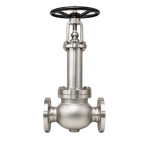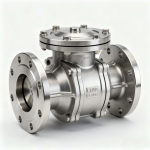
Sour service is one of the most important material-selection issues in oil and gas valve procurement. Hydrogen sulfide, or H2S, can create conditions in which certain steels and alloys become vulnerable to environmentally assisted cracking even when the valve has sufficient nominal pressure rating and has passed normal factory pressure testing.
This is why a valve cannot be considered suitable for sour service merely because it is carbon steel, stainless steel, forged, high pressure, or supplied with a standard material certificate.
The engineering review must consider the actual H2S-containing environment together with the material grade, metallurgical condition, hardness, heat treatment, welding, cold work, component function, stress level, and project specification.
For industrial buyers, the key procurement question is therefore not simply “Is this valve NACE?” A better question is: Which sour-service standard applies, to which valve components, under what environmental limits, and what evidence must the supplier provide?
What Is the Sour Service Valves?
A sour service valve is an industrial valve whose pressure-containing and other specified metallic components have been selected, manufactured, and documented for service in an H2S-containing environment according to the applicable project requirements.
Sour service may occur in:
- Oil and gas production systems.
- Natural gas treatment and sweetening facilities.
- Gathering and production pipelines.
- Wellhead and upstream processing systems.
- Refinery units containing wet H2S.
- Petrochemical or related process systems where a sour-service specification is invoked.
For valve selection across gas transmission, compressor stations, gas processing, isolation, control, and related natural gas applications, see our Natural Gas Valve Solutions.
The exact definition of the environment and the applicable material restrictions depend on the governing standard and the actual process conditions. A supplier should not classify a valve as sour service from H2S concentration alone without reviewing the complete project basis.
NACE MR0175 / ISO 15156 vs NACE MR0103 / ISO 17945
One of the most common mistakes in sour-service valve purchasing is treating all NACE sour-service standards as interchangeable.
| Standard Family | Primary Application Direction | What Buyers Should Understand |
|---|---|---|
| NACE MR0175 / ISO 15156 | Oil and gas production and natural-gas treatment in H2S-containing environments | Focuses on selection and qualification of metallic materials resistant to H2S-related cracking mechanisms within its scope |
| NACE MR0103 / ISO 17945 | Sour petroleum refining and related processing environments | Establishes material requirements primarily aimed at resistance to sulfide stress cracking in applicable refinery environments |
NACE MR0175/ISO 15156 should not automatically be specified for every downstream refinery valve. Likewise, NACE MR0103 should not automatically replace MR0175/ISO 15156 for upstream production equipment.
The purchaser, EPC contractor, or project material engineer should identify the correct standard based on the facility, process environment, and governing project specification.
ISO 15156 also supplements rather than replaces the relevant valve design code, material standard, pressure-temperature requirements, and other construction rules. A valve still needs the correct design standard, pressure rating, material specification, testing, and documentation.
Why “NACE Compliant Valve” Is Not a Complete Specification
The phrase “NACE compliant” is widely used in valve quotations, but by itself it can be ambiguous.
It may leave unanswered questions such as:
- MR0175/ISO 15156 or MR0103/ISO 17945?
- Which edition is contractually applicable?
- Which valve components are included?
- Are only wetted pressure parts included, or are stem, bolting, trim, springs, pins, and other components also within scope?
- What material condition and heat treatment are required?
- What hardness restrictions apply to each material?
- Are repair welds permitted?
- Are weld procedure or weld hardness controls required?
- Is HIC testing required?
- Is SSC qualification testing required?
- What material certificates and inspection records are required?
A good sour-service purchase specification should answer these questions before manufacturing begins.
How H2S Can Damage Valve Materials
H2S-containing aqueous environments can contribute to several forms of environmentally assisted cracking. The exact mechanism depends on material, stress, microstructure, environment, and metallurgical condition.
Sulfide Stress Cracking (SSC)
SSC is a form of cracking associated with susceptible material, tensile stress, and an H2S-containing environment. High hardness, high strength, unsuitable heat treatment, cold work, welding effects, and residual stress can increase susceptibility for certain steels and components.
This is one reason sour-service specifications often control not only the nominal alloy grade but also hardness and metallurgical condition.
Hydrogen-Induced Cracking (HIC)
Hydrogen-induced cracking can develop when hydrogen generated by corrosion enters susceptible steel and accumulates at internal features such as inclusions or other trapping sites.
HIC and SSC are not the same mechanism, and a general statement that a material is “NACE compliant” does not automatically mean that a separate project-specific HIC test has been performed.
Stress-Oriented Hydrogen-Induced Cracking (SOHIC)
SOHIC involves hydrogen-related cracking influenced by applied or residual tensile stress. Welded regions and heat-affected zones can require particular attention where the project specification identifies SOHIC risk.
Stress Corrosion Cracking and Other H2S-Related Damage
For corrosion-resistant alloys and other materials, the applicable sour environment can involve additional environmental-cracking considerations. Material selection must therefore follow the permitted environmental limits and conditions defined by the applicable standard rather than a generic corrosion-resistance assumption.
What Service Data Should Buyers Provide?
Sour-service material selection requires more information than the statement “medium: natural gas.”
Depending on the project and applicable standard, engineering review may need information such as:
- Process medium and composition.
- Presence of free water or aqueous phase.
- H2S content and the basis used by the project to assess the sour environment.
- Operating and design pressure.
- Operating and design temperature.
- pH where applicable.
- Chloride concentration where relevant to the selected alloy.
- CO2 and other corrosive constituents where relevant.
- Elemental sulfur or other special contaminants where applicable.
- Valve location and service function.
- Upset or shutdown conditions that may create a more severe environment.
The supplier should not invent missing sour-service conditions. If the project does not provide enough environmental information to confirm material suitability, clarification should be requested before final material selection.
Sour Service Valve Material Selection by Component
A valve is an assembly of different metallic and nonmetallic components. Sour-service suitability should therefore be reviewed component by component.
Body and Bonnet
Carbon steel, low-alloy steel, stainless steel, duplex stainless steel, nickel alloys, and other materials may be used depending on service conditions and project requirements.
For carbon and low-alloy steel pressure-containing parts, material strength, hardness, heat treatment, welding, repair condition, and applicable sour-service limits should be checked together.
For broader body material selection principles, see the Valve Material Selection Guide.
Stem, Ball, Gate, Disc, Plug, Seat Ring, and Other Trim
Internal valve parts can experience both mechanical stress and direct process exposure. A suitable body material does not guarantee that the stem, ball, wedge, disc, plug, seat ring, spring, pin, or guide is suitable for the same sour environment.
For example, higher-strength stem materials may require careful review because material strength, hardness, heat treatment, and environmental limits can affect cracking resistance.
Trim material selection should therefore be based on the actual component and service rather than a single generic “NACE trim” description. See the Valve Trim Materials Selection Guide for broader trim-selection context.
Bolting
Bolting requires special attention because not all bolts experience the same process exposure.
Internal bolting, wetted bolting, external bolting exposed to a leaking sour environment, and completely isolated external bolting may have different project requirements.
The purchaser should state whether sour-service requirements apply to external bolting rather than assuming that every supplier will interpret the scope in the same way.
Welds and Repair Welds
Welding can change local hardness, residual stress, microstructure, and heat-affected-zone properties. Sour-service projects may therefore impose requirements on:
- Welding procedure qualification.
- Base material and filler material.
- Preheat and post-weld heat treatment where required.
- Hardness survey locations.
- Repair welding.
- NDT after welding or repair.
- Traceability of repaired areas.
Repair welding should not be accepted or prohibited by assumption. The applicable material specification and project requirements should define what is allowed.
Hardfacing and Overlay
Hardfacing and corrosion-resistant overlay can improve wear or corrosion performance, but the complete system still needs engineering review for sour service.
Base material, dilution, heat input, hardness, deposited alloy, final machining, weld procedure, and environmental compatibility may all be relevant.
Seats, Seals, Packing, and Gaskets
NACE MR0175/ISO 15156 and MR0103/ISO 17945 are principally metallic-material standards. Nonmetallic seats, seals, O-rings, packing, and gaskets still need to be selected for the actual process medium, H2S exposure, pressure, temperature, decompression behavior, chemical compatibility, and project specification.
A metallic-material review does not automatically qualify elastomers or polymers for sour gas service.
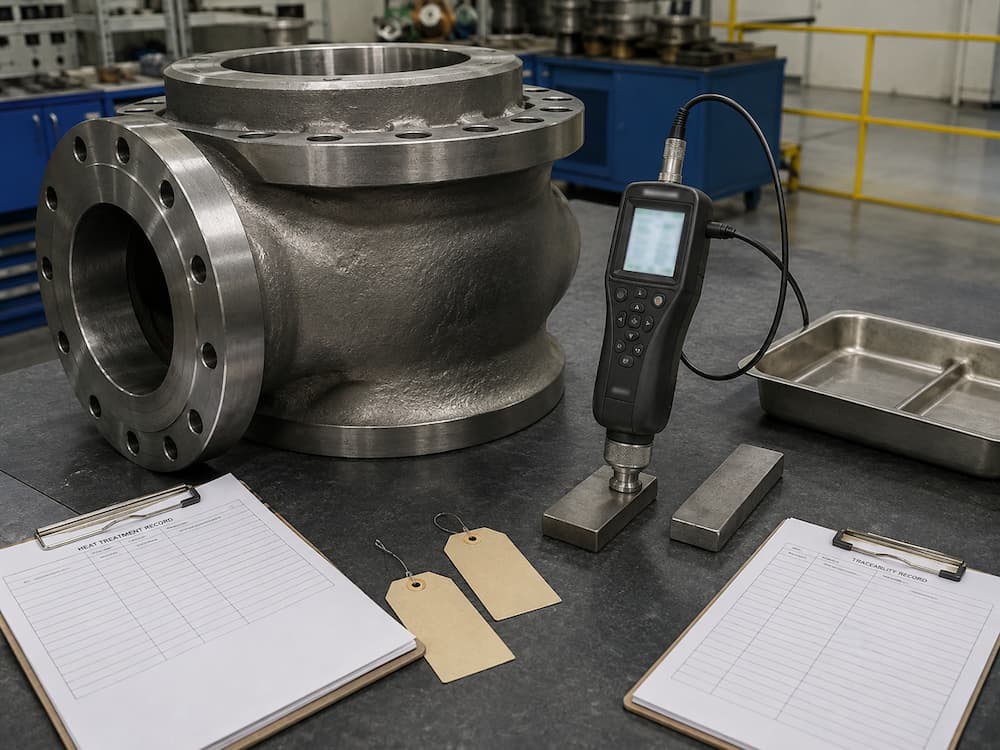
Hardness Control: Why One Universal HRC Number Is Dangerous
Hardness is one of the most visible sour-service procurement requirements, and it is also one of the most frequently oversimplified.
Many carbon and low-alloy steel sour-service applications do impose hardness restrictions, but the exact allowable value depends on the material, product form, heat treatment, welding condition, component, and governing standard.
Therefore, buyers should avoid assuming that one hardness number applies universally to valve bodies, bonnets, forgings, stems, bolting, weld metal, heat-affected zones, stainless steel, or corrosion-resistant alloys.
A better purchase requirement identifies the governing sour-service standard and applicable material condition, then requires hardness verification where specified by that standard or the project.
Heat Treatment and Material Condition Matter
Two components with the same nominal material grade can have different sour-service suitability if their heat treatment, hardness, cold work, microstructure, or manufacturing history is different.
Project review may need to confirm normalized, normalized and tempered, quenched and tempered, solution-annealed, or other required conditions; maximum permitted cold work where applicable; post-weld heat treatment where required; heat-treatment records; and final hardness after manufacturing or welding.
This is why the material designation on an MTC should not be the only sour-service acceptance check.
Is HIC Testing Required for Every Sour Service Valve?
No.
HIC testing is not automatically required for every valve merely because NACE MR0175/ISO 15156 is specified.
When a project specifically requires evaluation of carbon or low-alloy steel for resistance to hydrogen-induced cracking, a recognized test method such as NACE TM0284 may be invoked for applicable product forms and project conditions.
The purchaser should define which material requires HIC testing, the applicable test method and edition, sampling basis, acceptance criteria, heat-specific testing requirement if any, laboratory qualification, and reporting requirements.
Do not assume that a standard MTC proves HIC resistance unless the required HIC testing and acceptance results are actually documented.
SSC Qualification Testing
NACE TM0177 provides standardized laboratory methods used to evaluate metals for resistance to sulfide stress cracking and stress corrosion cracking in H2S environments.
However, TM0177 is a test-method standard. Whether qualification testing is required, which method is used, what specimen condition applies, and what acceptance basis is required should come from the applicable material qualification route or project specification.
Routine production valves should not be subjected to ad hoc sour-gas laboratory testing simply because an RFQ contains the words “NACE required.”
PMI, MTC, and Sour-Service Material Verification
Positive Material Identification can help verify alloy identity when required, but PMI does not prove complete sour-service compliance.
PMI may confirm alloy chemistry for selected components, while sour-service suitability may also depend on material grade, product form, heat treatment, hardness, cold work, welding condition, environmental limits, and required qualification testing.
For PMI scope and limitations, see the Valve PMI Testing Guide.
What Documentation Should Be Requested?
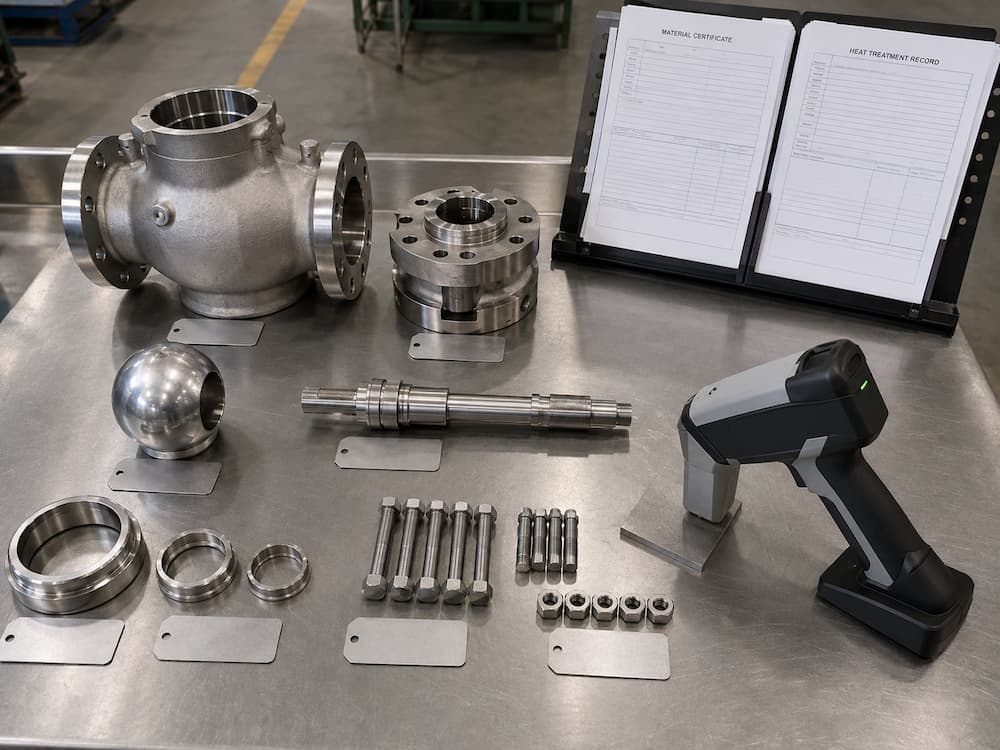
The required documentation package depends on the project, but sour-service valve orders may require some combination of:
- Material Test Certificates for pressure-containing and specified wetted components.
- Heat number or batch traceability.
- Material list or bill of materials identifying sour-service components.
- Heat-treatment records where required.
- Hardness inspection records.
- PMI reports where specified.
- WPS, PQR, or welding records where required.
- Weld hardness records where specified.
- NDT reports for applicable castings, forgings, welds, or repairs.
- HIC test reports where contractually required.
- SSC qualification records where contractually required.
- Pressure and seat leakage test reports.
- Approved datasheet and drawing.
- ITP and inspection release records.
- Project-specific declaration of compliance where required.
A generic certificate stating “NACE compliant” without component traceability, applicable standard, material condition, or supporting records may be insufficient for EPC document approval.
For a broader document package overview, see Valve Certificates and Quality Documents.
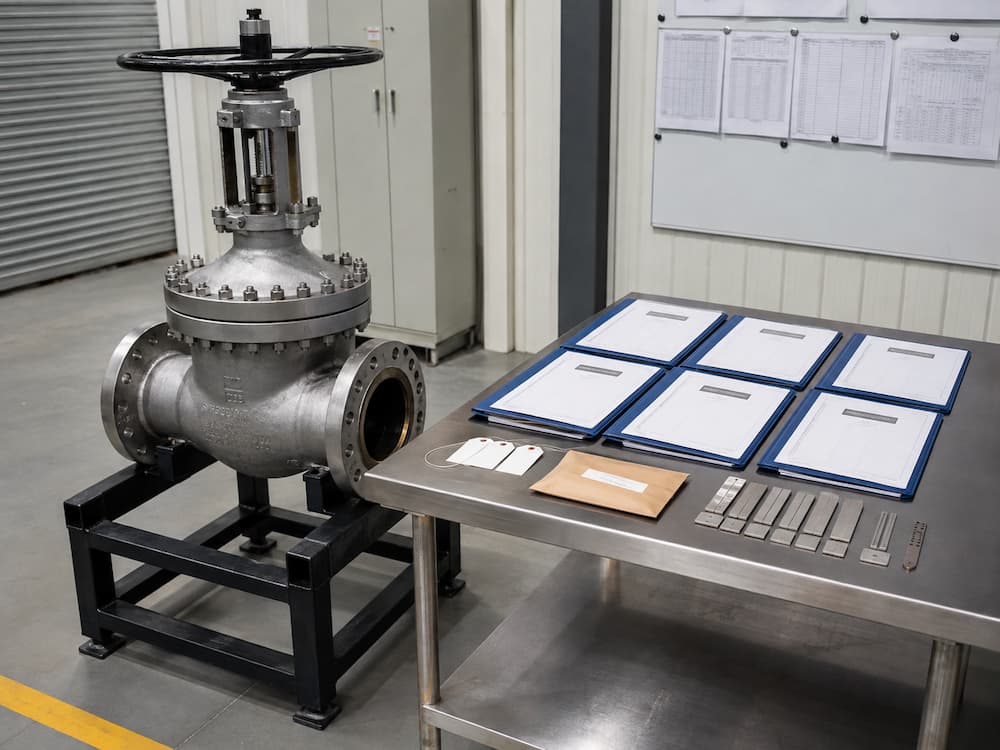
How Sour-Service Requirements Should Appear in the ITP
Important sour-service controls should be planned before manufacturing rather than reviewed only at final inspection.
The approved ITP may include review of material specifications and MTCs, verification of heat treatment, hardness inspection, PMI where required, review of welding and repair procedures, NDT after repair or welding where specified, review of HIC or SSC qualification reports where required, pressure testing, and final document review and release.
If the purchaser or third-party inspector needs to witness a specific inspection, the intervention point should be established in the Valve Inspection and Test Plan before the activity takes place.
Common Sour-Service Valve Procurement Mistakes
1. Writing Only “NACE Valve Required”
This does not identify the correct standard, component scope, material restrictions, or documentation requirement.
2. Treating MR0175 and MR0103 as the Same Standard
They address different primary application environments. The project should identify the correct standard.
3. Applying One Hardness Limit to Every Material
Hardness requirements depend on material, product form, component, heat treatment, and governing standard.
4. Checking Only the Body Material
The stem, trim, bolting, welds, springs, pins, and other exposed metallic parts may also require sour-service review.
5. Assuming Stainless Steel Is Automatically Suitable
Corrosion-resistant alloys have environmental and metallurgical limitations. Alloy name alone does not establish sour-service suitability.
6. Assuming PMI Proves NACE Compliance
PMI primarily verifies alloy chemistry. It does not verify hardness, heat treatment, cracking resistance, welding condition, or complete environmental qualification.
7. Requesting HIC Testing Without Defining the Material and Acceptance Basis
HIC testing should be tied to the applicable product form, test method, sampling plan, and project acceptance criteria.
8. Ignoring External Bolting Scope
The purchaser should clarify whether external bolting must meet sour-service requirements based on exposure and project philosophy.
9. Reviewing Sour-Service Requirements Only at FAT
By FAT, material procurement, heat treatment, welding, and component manufacturing are already complete. Critical requirements must be confirmed before production.
10. Accepting an Untraceable “NACE Certificate”
Compliance evidence should connect the actual supplied valve components to the material and inspection records required by the purchase order.
Sour Service Valve RFQ Checklist
| RFQ Item | What the Buyer Should Provide or Confirm |
|---|---|
| Valve type | Ball, gate, globe, check, plug, control valve, DBB, or other design |
| Size and pressure rating | DN / NPS and Class / PN |
| Process medium | Gas, liquid, multiphase fluid, hydrocarbon composition, and relevant contaminants |
| Sour-service environment | Project-defined H2S condition and other parameters needed for material selection |
| Pressure and temperature | Operating, design, maximum, minimum, and relevant upset conditions |
| Applicable standard | NACE MR0175/ISO 15156, NACE MR0103/ISO 17945, or other project requirement |
| Standard edition | Contractually applicable edition or project specification |
| Component scope | Body, bonnet, trim, stem, bolting, springs, pins, welds, overlays, or other specified components |
| Materials | Required grades, product forms, and metallurgical condition |
| Hardness | Applicable component-specific hardness requirements and inspection method |
| Special testing | HIC, SSC qualification, PMI, NDT, weld hardness, or other tests only where required |
| Welding | Repair restrictions, WPS/PQR, PWHT, hardness, NDT, and traceability requirements |
| Inspection | Manufacturer inspection, purchaser witness, third-party inspection, Hold or Witness Points |
| Documentation | MTC, heat treatment, hardness, PMI, HIC/SSC records, NDT, test reports, drawings, and final dossier as applicable |
Key Standards for Sour-Service Valve Projects
The exact standard set depends on the project. Common references include:
- NACE MR0175 / ISO 15156: Metallic-material selection and qualification for H2S-containing environments in oil and gas production and natural-gas treatment within its defined scope.
- NACE MR0103 / ISO 17945: Metallic-material requirements for resistance to sulfide stress cracking in applicable sour petroleum refining and related processing environments.
- NACE TM0177: Laboratory testing of metals for resistance to sulfide stress cracking and stress corrosion cracking in H2S environments.
- NACE TM0284: Evaluation of applicable pipeline and pressure-vessel steels for resistance to hydrogen-induced cracking.
- Applicable valve design and test standards: API, ASME, ISO, or project-specific standards remain necessary in addition to sour-service material requirements.
Because these standards are maintained and project editions can differ, the purchase order should identify the contractually applicable edition. Do not copy hardness limits, environmental boundaries, or alloy restrictions from unrelated projects.
Final Recommendations for Industrial Buyers
Sour-service valve procurement is primarily a materials-and-environment control problem, not a label-selection problem.
A technically defensible order should connect the actual H2S service condition to the correct standard, then define the required materials, component scope, metallurgical condition, hardness, welding controls, testing, inspection, and documentation.
For sour-service valve quotations, provide the valve type, size, pressure class, H2S service data, operating and design conditions, applicable NACE/ISO standard, body and trim material requirements, hardness requirements, welding restrictions, special testing, inspection points, and final documentation scope with the RFQ.
FAQ
What is a sour service valve?
A sour service valve is a valve whose specified metallic components are selected and controlled for an H2S-containing environment according to the applicable sour-service standard and project requirements. The complete requirement can include material grade, heat treatment, hardness, welding, testing, traceability, and documentation.
What is NACE MR0175 / ISO 15156 used for?
NACE MR0175/ISO 15156 addresses selection and qualification of metallic materials for H2S-containing environments in oil and gas production and natural-gas treatment within its defined scope. It supplements rather than replaces the applicable valve design and construction standards.
What is the difference between NACE MR0175 and NACE MR0103?
MR0175/ISO 15156 is primarily associated with oil and gas production and natural-gas treatment. MR0103/ISO 17945 addresses applicable sour petroleum refining and related processing environments. The project should identify which standard applies rather than treating them as interchangeable.
Does NACE compliance always mean 22 HRC maximum?
No. It is unsafe to apply one universal hardness value to every valve material and component. Hardness requirements depend on the material, product form, heat treatment, component, welding condition, applicable standard, and project specification.
Does every sour service valve need HIC testing?
No. HIC testing is required only when the applicable project or material specification invokes it. The buyer should define the material, test method, sampling, acceptance criteria, and reporting requirements.
Does PMI prove that a valve is NACE compliant?
No. PMI can verify alloy chemistry when specified, but sour-service suitability can also depend on hardness, heat treatment, cold work, welding, material condition, environmental limits, and qualification testing.
What documents should I request for a sour service valve?
Depending on the project, documents may include MTCs, heat traceability, heat-treatment records, hardness reports, PMI reports, welding records, NDT reports, HIC or SSC qualification reports where required, pressure test reports, approved drawings, ITP records, and project-specific compliance documentation.