Valve bolting materials are an important part of industrial valve selection. Bolts, studs and nuts are not just accessories. They help maintain gasket compression, bonnet sealing, body joint integrity and flange sealing under pressure, temperature, vibration and pipeline load.
Many valve leakage problems are not caused by the valve body itself, but by incorrect gasket compression, wrong bolting material, poor tightening practice, flange mismatch or bolting that is not suitable for the actual service temperature and corrosion environment.
This guide explains common industrial valve bolting materials, including ASTM A193 B7, B8, B8M, L7 and ASTM A194 nuts. It also explains how to select bolting by pressure, temperature, corrosion, gasket load, fire-safe service, high-pressure ball valves and project documentation requirements.
For valve connection selection, read our Valve End Connection Types Guide. For gasket selection, read our Valve Gasket Selection Guide. For pressure and temperature review, read our Valve Pressure-Temperature Rating Guide.
What Are Valve Bolting Materials?
Valve bolting materials refer to the studs, bolts and nuts used in valve pressure-containing joints and pipeline connections. These parts are used to clamp valve flanges, bonnet joints, body joints, cover plates and other bolted assemblies.
In industrial valves, bolting may be used in several locations, including valve-to-pipeline flanges, body-to-bonnet joints, split-body ball valves, bolted covers, gland flanges and actuator mounting interfaces. The most critical bolting is usually the bolting used for pressure-containing joints.
Common bolting locations in valves include:
- Valve flange-to-pipeline flange connection
- Body-to-bonnet joint in gate valves and globe valves
- Split-body joint in ball valves
- Cover joint in check valves
- Gland flange bolting around valve packing
- Bolted body joints in high-pressure valves
- Actuator bracket and mounting bolts
Pressure-containing bolting must be selected more carefully than non-pressure structural bolts. For quotation and procurement, buyers should confirm whether the bolting requirement applies to flange bolting, bonnet bolting, body bolting, gland bolting or all pressure joint bolting.
Why Bolting Material Matters in Valve Sealing
Bolting provides the clamping force needed to compress the gasket and keep the pressure joint sealed. If the bolting material is too weak, unsuitable for temperature, incompatible with the environment or incorrectly paired with nuts, the valve may leak even if the valve body and gasket are correct.
Incorrect bolting selection may cause:
- Flange leakage during hydrostatic testing
- Bonnet leakage during operation
- Loss of gasket compression under thermal cycling
- Stud or nut corrosion in chemical or marine environments
- Bolting relaxation in high-temperature service
- Insufficient clamping force for spiral wound or RTJ gaskets
- Failure to meet project material specification
- Mismatch between valve material, flange material and bolting material
Bolting, gasket and flange face should be reviewed together. The correct gasket cannot seal reliably if the bolting cannot maintain the required compression.
Common Valve Bolting Materials Comparison Table
| Bolting Material | Common Description | Typical Use | Common Nut Pairing |
|---|---|---|---|
| ASTM A193 B7 | Alloy steel bolting | General high-pressure and high-temperature industrial valve bolting | ASTM A194 2H |
| ASTM A193 B8 | 304-type stainless steel bolting | Corrosion-resistant service where 304 stainless bolting is suitable | ASTM A194 Grade 8 |
| ASTM A193 B8M | 316-type stainless steel bolting | More corrosion-resistant stainless bolting for chemical or chloride-related service | ASTM A194 Grade 8M |
| ASTM A193 L7 | Low-temperature alloy steel bolting | Low-temperature valve applications where impact toughness is required | ASTM A194 Grade 7 / 7M or project-specified nuts |
| ASTM A194 2H | Heavy hex carbon steel nut | Common nut for ASTM A193 B7 studs | Used with B7 in many valve flange and body joints |
| ASTM A194 8 | Stainless steel nut | Common nut for B8 stainless bolting | Used where stainless nut material is required |
| ASTM A194 8M | 316-type stainless steel nut | Common nut for B8M stainless bolting | Used for more corrosion-resistant stainless bolting systems |
ASTM A193 B7 Bolting
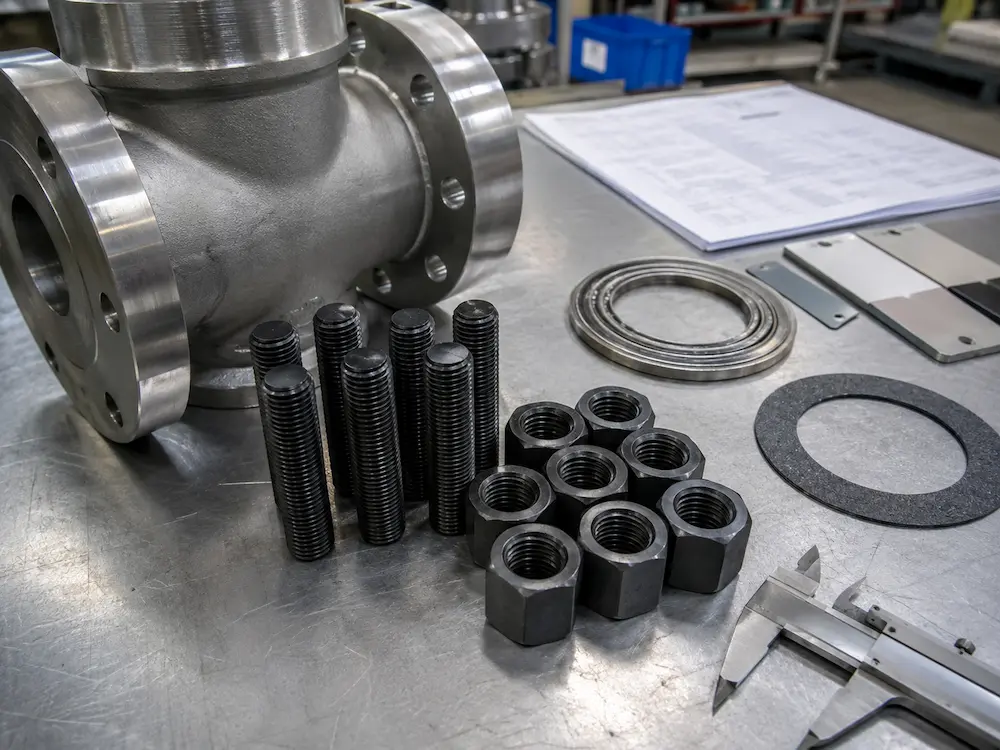
ASTM A193 B7 is one of the most common bolting materials used for industrial valves. It is widely used with carbon steel, alloy steel and many general industrial valve assemblies where high strength bolting is required.
B7 studs are commonly paired with ASTM A194 2H nuts. This combination is frequently used for valve flanges, bonnet bolting, split-body joints and pressure-containing bolted connections in oil, gas, steam, chemical, refinery, power plant and general process applications.
ASTM A193 B7 is commonly used for:
- Carbon steel valves
- Alloy steel valves
- Flanged ball valves
- Gate valves, globe valves and check valves
- High-pressure valve flanges
- Bonnet and cover bolting
- General refinery, petrochemical and power plant service
B7 bolting buyer checks:
- Pressure class
- Design temperature
- Valve body material
- Flange standard
- Gasket type and required compression
- Nut material, commonly ASTM A194 2H
- Whether coating or corrosion protection is required
- Whether project specification allows B7 bolting
B7 is common, but it should not be treated as universal for every service. Low-temperature, stainless steel, sour service, marine, chemical or special corrosion environments may require different bolting materials.
ASTM A193 B8 Bolting
ASTM A193 B8 is a stainless steel bolting material often associated with 304-type stainless steel. It may be selected where corrosion resistance is required and where the project specification allows B8 bolting.
B8 bolting is commonly paired with ASTM A194 Grade 8 nuts. It may be used with stainless steel valves, clean service, selected chemical service and environments where carbon steel bolting may corrode too quickly.
B8 bolting may be reviewed for:
- Stainless steel valve assemblies
- General corrosion-resistant service
- Clean water or clean process systems
- Selected chemical applications
- Food, beverage or clean industrial systems where applicable
- Applications where carbon steel bolting is not preferred
B8 bolting buyer checks:
- Corrosion environment
- Valve body material
- Pressure class and temperature
- Whether 304-type stainless bolting is sufficient
- Whether B8M is more suitable due to chloride or chemical exposure
- Nut material, commonly ASTM A194 Grade 8
- Project standard and material certificate requirements
B8 is not automatically better than B7 in every application. It provides stainless corrosion resistance, but final selection should still consider mechanical strength, temperature, galling risk, coating, lubrication and project specification.
ASTM A193 B8M Bolting
ASTM A193 B8M is a stainless steel bolting material often associated with 316-type stainless steel. It is commonly reviewed where better corrosion resistance than B8 is required, especially in chemical, marine, coastal or chloride-related environments.
B8M bolting is commonly paired with ASTM A194 Grade 8M nuts. It may be selected for stainless steel valves, chemical valves, offshore valves, desalination service, corrosion-resistant valve assemblies and some clean process systems.
B8M bolting may be reviewed for:
- 316 stainless steel valve assemblies
- Chemical processing valves
- Marine or coastal environments
- Offshore and desalination applications
- Chloride-containing service where suitable
- Corrosion-resistant bolting systems
B8M bolting buyer checks:
- Chloride exposure
- Chemical compatibility
- Valve body material: CF8M, F316, duplex or special alloy
- Pressure and temperature requirements
- Nut material, commonly ASTM A194 Grade 8M
- Galling prevention, lubrication or coating requirements
- Whether duplex or special alloy bolting is required by project specification
B8M is often selected when corrosion resistance is more important than basic carbon steel bolting cost. However, stainless bolting still needs correct installation practice to avoid galling and tightening problems.
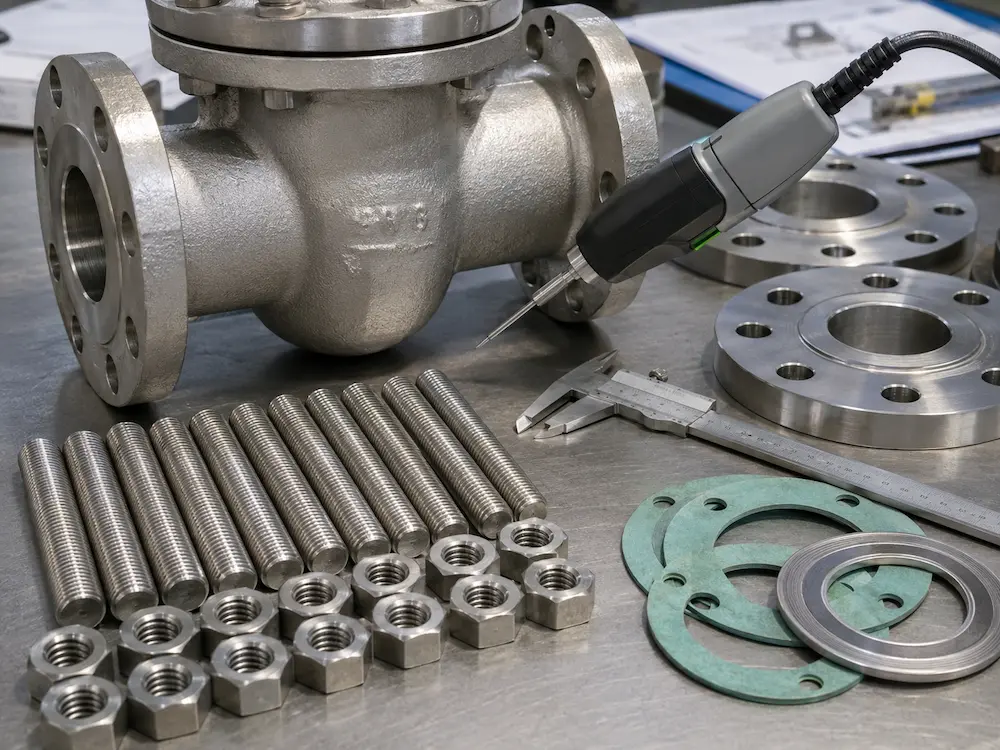
ASTM A193 L7 Bolting
ASTM A193 L7 is commonly reviewed for low-temperature pressure service where bolting impact toughness is important. It may be used with low-temperature carbon steel valves such as LCB or LF2 valve assemblies, depending on project requirements.
L7 bolting is not simply a stronger version of B7. Its main purpose is low-temperature service suitability. Buyers should confirm temperature requirement, impact testing, nut pairing and project specification before selecting L7 bolting.
L7 bolting may be reviewed for:
- Low-temperature valve applications
- LCB cast low-temperature carbon steel valves
- LF2 forged low-temperature carbon steel valves
- Cryogenic-adjacent or cold service where specified
- Outdoor cold climate projects
- Oil and gas projects requiring low-temperature bolting
L7 bolting buyer checks:
- Minimum design temperature
- Impact test requirement
- Nut material, commonly ASTM A194 Grade 7 / 7M or project-specified nuts
- Valve body material and temperature rating
- Whether coating or corrosion protection is required
- Whether the project requires NACE or other special conditions
- Material certificate and heat number traceability
For low-temperature body material selection, review our WCB vs LCB Valve Material and A105 vs LF2 Valve Material if available on your site.
ASTM A194 Nuts: 2H, 8, 8M and 7
ASTM A194 nuts are commonly used with ASTM A193 bolting materials in valve and flange assemblies. The nut grade should match the stud or bolt material, pressure-temperature requirement and project specification.
| Nut Grade | Common Use | Typical Pairing | Buyer Note |
|---|---|---|---|
| ASTM A194 2H | General high-strength carbon steel nut | Commonly used with A193 B7 | Very common for industrial valve flange and bonnet bolting |
| ASTM A194 8 | Stainless steel nut | Commonly used with A193 B8 | Used where stainless steel nut material is required |
| ASTM A194 8M | 316-type stainless steel nut | Commonly used with A193 B8M | Reviewed for more corrosion-resistant stainless bolting systems |
| ASTM A194 7 / 7M | Low-temperature alloy steel nut | Commonly reviewed with A193 L7 | Used where low-temperature toughness is required |
Nut grade should not be selected randomly. Incorrect stud and nut pairing can affect strength, thread engagement, corrosion resistance, galling behavior and project compliance.
Bolting Selection by Service
| Service | Common Bolting Direction | Buyer Notes |
|---|---|---|
| General water and utility service | B7 / 2H or project-specified bolting | Check corrosion environment and coating requirement |
| Steam and high-temperature service | B7 / 2H or high-temperature project-specified bolting | Check temperature, gasket load and pressure-temperature rating |
| Low-temperature service | L7 with suitable A194 low-temperature nuts | Check minimum design temperature and impact testing |
| Chemical corrosion service | B8, B8M or special alloy bolting | Check chemical compatibility and external corrosion |
| Marine or coastal service | B8M or project-specified corrosion-resistant bolting | Check chloride exposure and corrosion protection |
| Oil and gas service | B7 / 2H, L7 or project-specified bolting | Check pressure, temperature, sour service and project standard |
| Fire-safe valve service | Project-specified bolting with fire-safe design compatibility | Check fire test certificate scope and tested construction |
Bolting Selection by Temperature
Temperature affects bolting performance. A bolting material that is suitable for room temperature may not be suitable for high-temperature steam, thermal cycling or low-temperature service.
For high-temperature service, check:
- Design temperature
- Pressure-temperature rating
- Gasket type and compression requirement
- Bolting strength at temperature
- Thermal expansion difference between valve body, flange and bolting
- Whether retightening or special installation procedure is required
- Whether graphite gasket or spiral wound gasket is used
For low-temperature service, check:
- Minimum design temperature
- Impact test requirement
- Whether L7 bolting is required
- Compatible nut grade
- Valve body material such as LCB or LF2
- Project specification for low-temperature bolting
For high-temperature valve selection, read our High Temperature High Pressure Valves Guide. For pressure-temperature logic, read our Valve Pressure-Temperature Rating Guide.
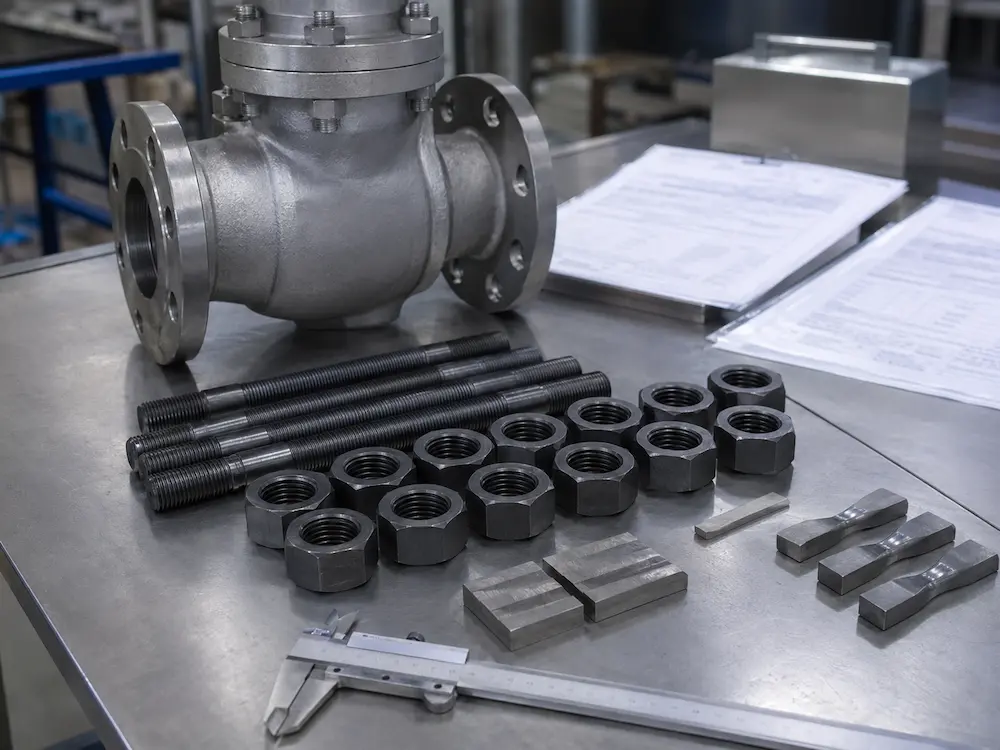
Bolting Selection by Corrosion Environment
External corrosion is often overlooked in valve bolting selection. Even if the valve body is stainless steel or coated carbon steel, exposed studs and nuts may corrode if the bolting material is not suitable for the environment.
Corrosion-related bolting questions:
- Is the valve installed indoors or outdoors?
- Is the environment coastal or marine?
- Is there chemical vapor or splash exposure?
- Is chloride present?
- Is the valve insulated, buried or difficult to inspect?
- Is coating, plating or stainless bolting required?
- Is galling prevention required for stainless bolting?
For chemical and corrosion-resistant valve selection, review our Chemical Processing Valve Solutions and Anti-Corrosion Valve Materials for Chemical Processing.
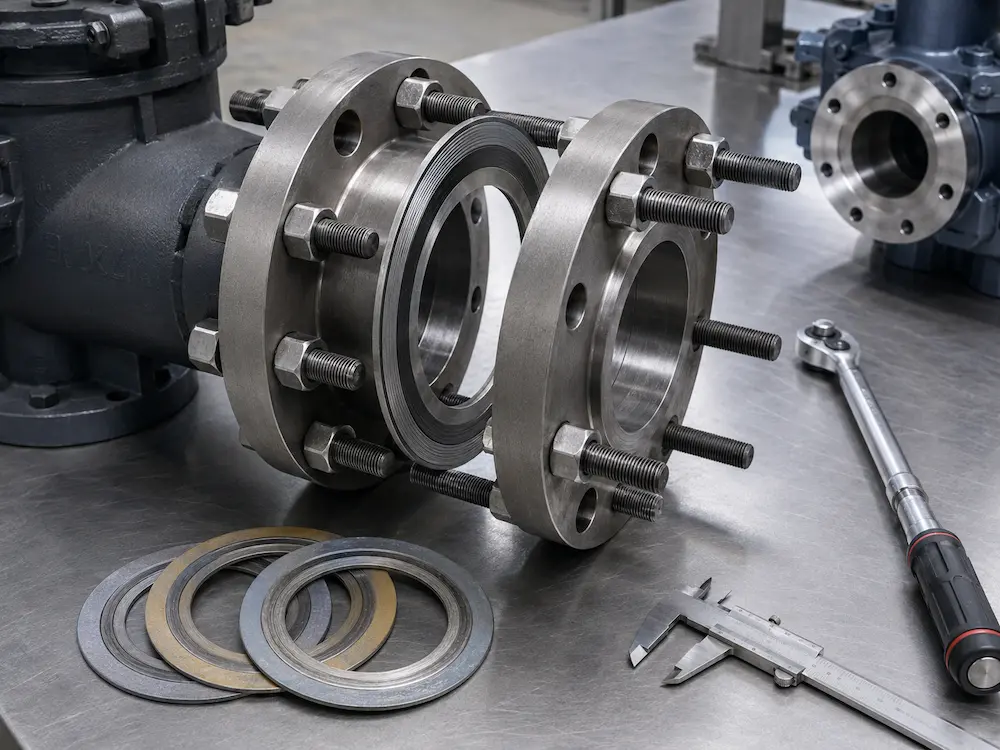
Bolting, Gasket Load and Flange Leakage
Bolting and gasket selection must work together. The gasket requires enough compression to seal, and the bolts must provide and maintain that load under pressure and temperature.
If the bolting is too weak, too corroded, incorrectly tightened or unsuitable for thermal cycling, the gasket may lose compression and the flange may leak. If the gasket is wrong, even strong bolting cannot guarantee reliable sealing.
Flange leakage may be related to:
- Incorrect bolting material
- Incorrect nut grade
- Wrong gasket material
- Insufficient tightening load
- Uneven tightening sequence
- Flange misalignment
- Damaged flange face
- Thermal cycling
- Wrong lubricant or galling on stainless bolts
- Incorrect gasket for RF, FF or RTJ flange
For gasket selection, read our Valve Gasket Selection Guide. For flange and end connection selection, read our Valve End Connection Types Guide.
Bolting for Fire-Safe Valves
Fire-safe valves require sealing and pressure joint designs that can help control leakage during and after fire exposure according to the applicable fire test standard. Bolting is part of this pressure joint system.
When selecting fire-safe valves, buyers should not only ask for a fire-safe certificate. They should also check whether the body seal, stem packing, seat design, gasket, bolting and valve construction match the certified design scope.
For fire-safe valve bolting review, check:
- Applicable fire test standard
- Fire-safe certificate scope
- Valve size and pressure class covered
- Body bolting material
- Body seal or gasket material
- Stem packing material
- Whether the quoted design matches the tested design
- Whether special bolting coating is allowed by the project
For fire-tested isolation service, review our Fire Safe Ball Valve.
Bolting for High Pressure Ball Valves and API 6D Valves
High pressure ball valves and API 6D pipeline valves often use bolted body joints, flange joints and pressure-containing connections that require careful bolting review. The bolting must match pressure class, body material, gasket or body seal, fire-safe requirement and project documentation.
For high pressure ball valve bolting, check:
- Floating or trunnion-mounted design
- Two-piece, three-piece, split-body or top-entry construction
- Pressure class
- Design pressure and temperature
- Body material
- Body seal material
- Flange gasket type
- Stud and nut grade
- Fire-safe or anti-static requirement
- MTC and test report requirements
For high-pressure isolation valves, review our High Pressure Ball Valve. For pipeline isolation service, review our API 6D Ball Valve.
Bolting for Stainless Steel and Special Alloy Valves
Stainless steel valves do not always require stainless steel bolting, and carbon steel valves do not always require B7 bolting. Bolting selection depends on project specification, corrosion exposure, pressure, temperature and installation environment.
For stainless steel valves in clean indoor service, project specifications may allow standard bolting. For chemical, marine, coastal or chloride service, B8, B8M, duplex or special alloy bolting may be required depending on the corrosion condition.
For stainless steel valve bolting, check:
- Valve body material: CF8, CF8M, F304, F316, duplex or special alloy
- Internal medium and external environment
- Whether bolting is exposed to corrosive atmosphere
- Whether stainless bolting is required by project standard
- Whether B8 or B8M is sufficient
- Whether galling risk needs anti-seize compound or coating
- Whether PMI is required for bolting
For stainless steel material comparison, read our 304 vs 316 Stainless Steel Valves Guide.
Stud Bolts vs Hex Bolts for Valve Flanges
Industrial valve flanges commonly use stud bolts with nuts on both sides, especially in ASME flanged systems. Hex bolts may also appear in some applications, but stud bolts are very common for industrial valve flange joints because they are easier to install, tension and remove in many flange assemblies.
| Bolting Type | Common Use | Buyer Note |
|---|---|---|
| Stud Bolt | Industrial flanged valve connections | Common with two heavy hex nuts for ASME flanges |
| Hex Bolt | Selected low-pressure or equipment connections | May be used depending on flange design and standard |
| Cap Screw / Internal Bolt | Some compact valve body or bonnet designs | Must follow manufacturer design and project specification |
Coating and Surface Protection for Valve Bolting
Bolting may require surface protection depending on environment and project specification. Common options may include zinc plating, hot-dip galvanizing, PTFE coating, Xylan-type coating, black oxide, phosphate coating or other project-specified protection.
Coating selection should consider:
- Corrosion environment
- Installation location
- Operating temperature
- Thread friction and tightening behavior
- Compatibility with nuts and washers
- Whether coating is allowed by project specification
- Whether coating affects fit-up or torque control
Coating can improve corrosion resistance, but it does not replace correct base material selection. For severe corrosion or high-temperature service, coating must be approved by project engineering.
Material Certificates and Traceability for Valve Bolting
For project valves, bolting materials may require material certificates, heat number traceability and inspection records. This is especially important for high-pressure, high-temperature, low-temperature, stainless steel, alloy steel, API, fire-safe and third-party inspected valve orders.
Bolting documentation may include:
- Material Test Certificate / MTC
- Heat number traceability
- Chemical composition
- Mechanical properties
- Impact test record if required
- Hardness test if required
- Coating certificate if applicable
- PMI report if required
- Inspection report
For quality document requirements, read our Valve Certificates and Quality Documents Guide.
Common Buyer Mistakes in Valve Bolting Selection
Mistake 1: Treating Bolts as Accessories Only
Bolting is part of the pressure joint. Incorrect bolting can cause flange leakage, bonnet leakage or failure to meet project requirements.
Mistake 2: Using B7 for Every Valve
B7 is common, but low-temperature service, stainless service, chemical exposure, marine environments or special projects may require different bolting.
Mistake 3: Ignoring Nut Grade
Stud material and nut grade must be compatible. B7 commonly uses A194 2H nuts, while B8 and B8M commonly use stainless nut grades.
Mistake 4: Ignoring Gasket Load
The bolts must provide enough compression for the gasket. Spiral wound, RTJ, graphite and PTFE gaskets may require different sealing considerations.
Mistake 5: Ignoring Temperature
High temperature can affect bolting strength and gasket compression. Low temperature may require impact-tested bolting such as L7.
Mistake 6: Ignoring External Corrosion
Bolts are often exposed to the environment. Outdoor, marine, chemical and insulated installations may require corrosion-resistant or coated bolting.
Mistake 7: Not Asking for Bolting MTC
For project valves, bolting material certificates may be required. This should be confirmed before quotation and production.
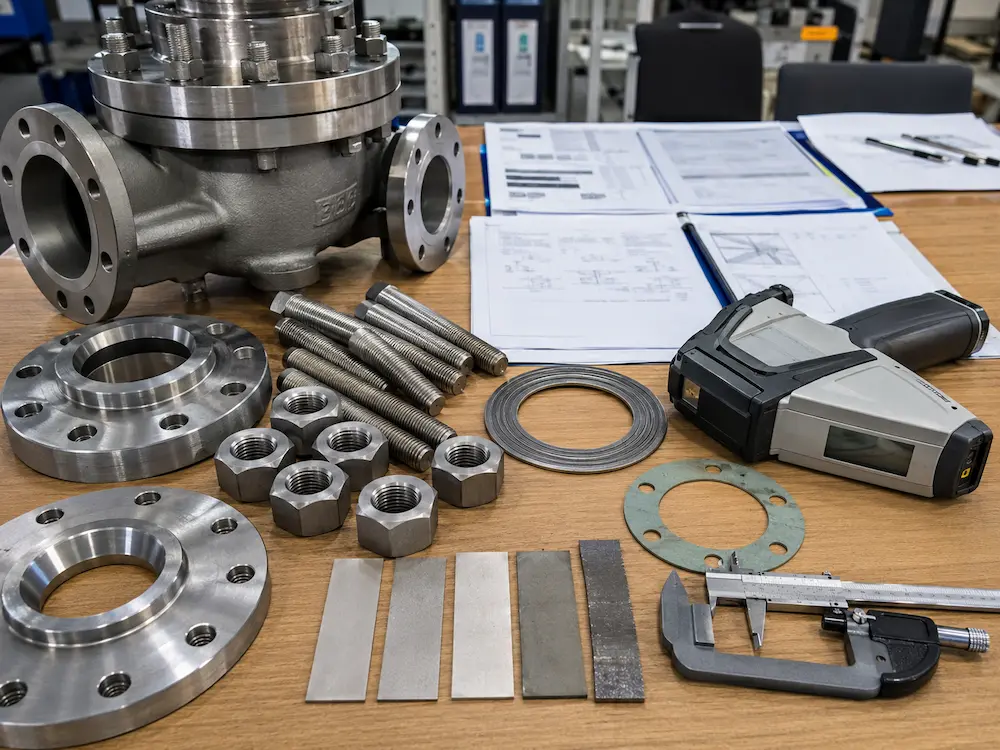
Valve Bolting RFQ Checklist
To select the correct bolting material, buyers should provide service, pressure, temperature, connection and documentation requirements before quotation.
| Required Information | Example / Notes |
|---|---|
| Valve type | Ball, gate, globe, check, butterfly, plug or control valve |
| Valve size | DN / NPS |
| Pressure rating | Class 150, 300, 600, 900, 1500, PN16, PN40 or project rating |
| Design pressure | Required for pressure joint review |
| Design temperature | Required for bolting and gasket review |
| Medium | Water, steam, oil, gas, chemical, thermal oil, slurry or other fluid |
| Valve body material | WCB, A105, LCB, LF2, WC6, WC9, CF8M, F316, duplex or special alloy |
| Flange type | RF, FF, RTJ or project-specific flange face |
| Gasket type | PTFE, graphite, spiral wound, RTJ, rubber, non-asbestos or project-specified gasket |
| Bolting material | A193 B7, B8, B8M, L7 or project-specified material |
| Nut material | A194 2H, 8, 8M, 7 / 7M or project-specified nut |
| Coating requirement | Plain, zinc plated, hot-dip galvanized, PTFE coated or project requirement |
| Special requirement | Low temperature, fire-safe, NACE, PMI, sour service, marine service, third-party inspection |
| Documents | MTC, heat number traceability, PMI, test report, inspection record |
Related Technical Resources
- Valve End Connection Types Guide — explains flanged, threaded, socket weld, butt weld, wafer, lug, clamp and grooved valve connections.
- Valve Gasket Selection Guide — explains PTFE, graphite, spiral wound, RTJ, rubber and non-asbestos gasket selection.
- Valve Pressure-Temperature Rating Guide — explains how pressure class changes with temperature and material.
- High Temperature High Pressure Valves — selection guide for steam, thermal oil, refinery, petrochemical and power plant valves.
- Fire Safe Ball Valve — product page for fire-tested oil, gas and chemical isolation service.
- High Pressure Ball Valve — product page for high-pressure oil, gas, hydraulic, steam and thermal oil service.
- API 6D Ball Valve — pipeline ball valve product page for oil, gas and high-pressure isolation service.
- Valve Certificates and Quality Documents — explains MTC, PMI, pressure test reports and project documentation.
Final Recommendations for Industrial Buyers
Valve bolting materials should be selected together with valve body material, gasket type, flange standard, pressure class, design pressure, design temperature, corrosion environment and project documentation requirements.
ASTM A193 B7 with ASTM A194 2H nuts is common for many industrial valve applications. ASTM A193 B8 and B8M are selected where stainless or corrosion-resistant bolting is required. ASTM A193 L7 is reviewed for low-temperature service. For severe chemical, marine, high-temperature, low-temperature, fire-safe or API project service, always confirm bolting requirements before quotation.
If you need help selecting valve bolting materials for flanged valves, high-pressure ball valves, API 6D valves, fire-safe valves, steam valves, chemical valves or low-temperature valves, Vcore Valve can review your pressure, temperature, medium, gasket, flange type and documentation requirements.
FAQ
1. What are common valve bolting materials?
Common valve bolting materials include ASTM A193 B7, B8, B8M, L7 and matching ASTM A194 nuts such as 2H, 8, 8M and 7 / 7M depending on service conditions.
2. What nuts are commonly used with ASTM A193 B7 bolts?
ASTM A193 B7 studs are commonly paired with ASTM A194 2H heavy hex nuts in many industrial valve flange and pressure joint applications.
3. When should ASTM A193 B8 bolting be used?
ASTM A193 B8 bolting is commonly reviewed for stainless steel or corrosion-resistant applications where 304-type stainless bolting is suitable.
4. What is the difference between B8 and B8M bolting?
B8 is commonly associated with 304-type stainless steel bolting, while B8M is commonly associated with 316-type stainless steel bolting and is reviewed where better corrosion resistance is required.
5. When should ASTM A193 L7 bolting be used?
ASTM A193 L7 bolting is commonly reviewed for low-temperature valve applications where impact toughness and low-temperature service suitability are required.
6. Does valve bolting affect gasket sealing?
Yes. Bolting provides the clamping force needed to compress the gasket. Wrong bolting material, nut grade or tightening practice can cause flange or bonnet leakage.
7. What information is needed to select valve bolting?
Buyers should provide valve type, size, pressure rating, design pressure, design temperature, medium, body material, flange type, gasket type, bolting material, nut material, coating and documentation requirements.